
What Does Joint Commission (JCAHO) Accreditation Mean for a Women’s Mental Health Treatment Center?
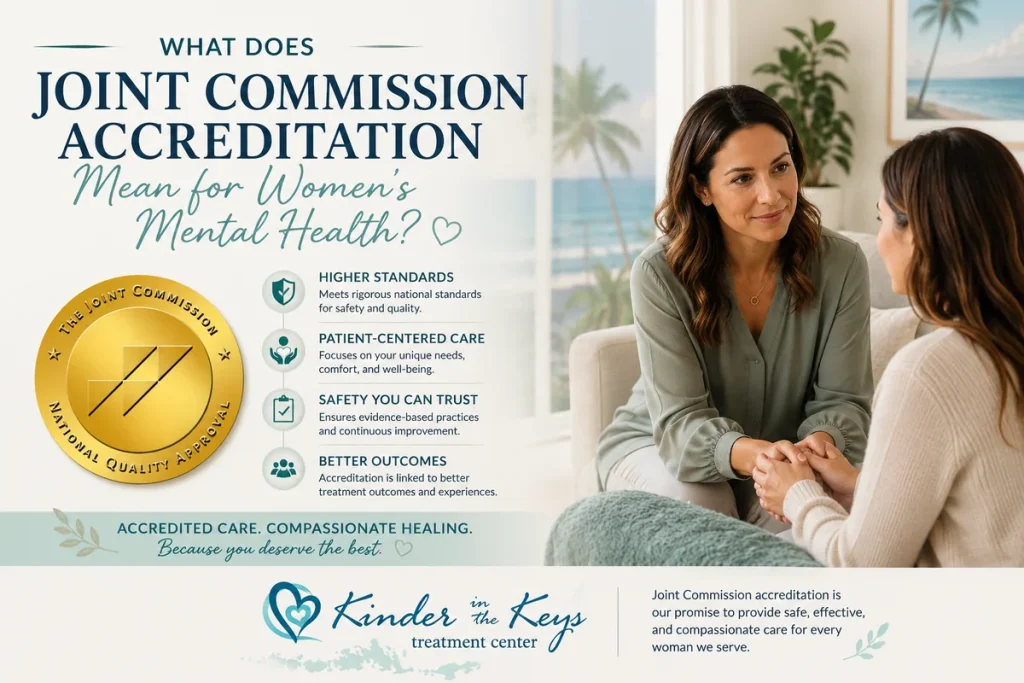
Joint Commission accreditation reflects a treatment center’s commitment to established standards for quality, safety, and patient care. Learn what JCAHO accreditation means and why it matters when choosing a mental health treatment program.
How Long Do Mental Breakdowns Last? Understanding Duration and Recovery
When someone becomes overwhelmed by psychological distress and begins having difficulty functioning, one of the first questions may be: how long do mental breakdowns last? There is no single answer because “mental breakdown” is not a medical or psychiatric diagnosis and therefore has no established clinical duration. People commonly use the term to describe a […]
Adderall Side Effects in Females: What Women Should Know
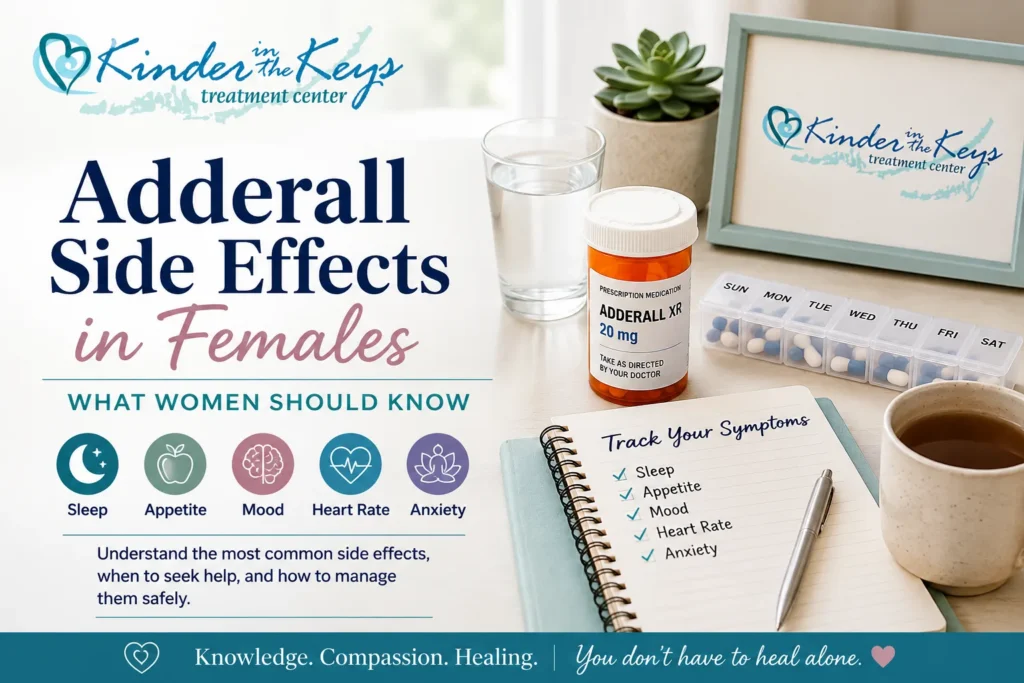
Adderall side effects in females can affect sleep, appetite, mood, heart rate, blood pressure, and overall well-being. Some women experience relatively mild effects that improve as treatment is adjusted, while others find that side effects interfere with daily functioning or mental health. Adderall is a prescription stimulant containing mixed amphetamine salts. When appropriately prescribed and […]
How to Help a Family Member with Depression and Anxiety: 7 Practical Tips
Knowing how to help a family member with depression or anxiety can be difficult. You may see someone you love withdrawing, struggling to function, worrying constantly, avoiding situations, or simply seeming unlike herself. You want to help. But you may also be afraid of saying the wrong thing, pushing too hard, enabling avoidance, or making […]
How Emotional Abuse Impacts Mental Health Long-Term
Emotional abuse impacts mental health in ways that can persist long after an unhealthy relationship or environment has ended. Repeated criticism, humiliation, manipulation, intimidation, coercive control, isolation, and other emotionally abusive behaviors can gradually affect self-esteem, emotional safety, relationships, decision-making, and a person’s ability to trust her own perceptions. Unlike physical abuse, emotional abuse may […]
Women-Only Residential Treatment: Benefits for Trauma Recovery
For women living with trauma, PTSD, anxiety, depression, or the effects of abusive relationships, the environment in which treatment occurs can matter almost as much as the treatment itself. A woman may enter residential treatment after spending years feeling unsafe, hypervigilant, emotionally guarded, or responsible for the needs of everyone around her. Even after the […]
Understanding Coercive Control: The Invisible Chains of Abuse
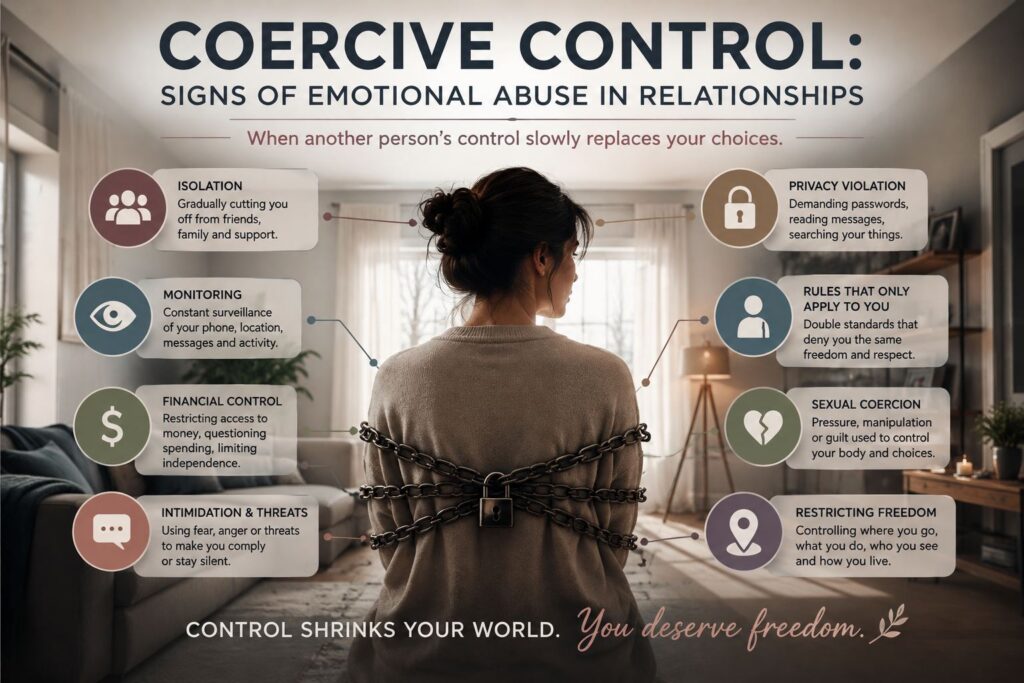
Coercive control is a pattern of behavior used to restrict another person’s freedom, independence, choices, or sense of safety within a relationship. It may involve isolation, intimidation, monitoring, financial restriction, threats, sexual coercion, humiliation, or gradually taking control over ordinary decisions. Unlike a single argument or one controlling incident, coercive control is about a pattern […]
Residential vs PHP vs IOP for Women: Understanding Your Treatment Options
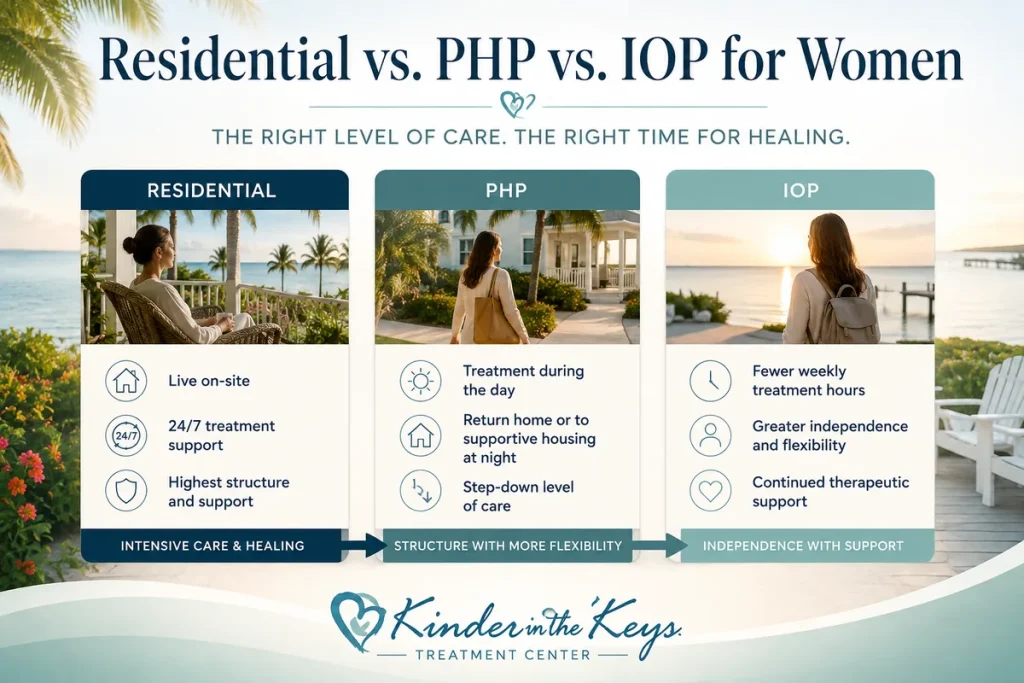
Choosing between residential vs PHP vs IOP for women is about much more than deciding how many hours a week someone will attend therapy. The appropriate level of mental health care depends on how significantly symptoms are affecting daily life, whether a woman can remain stable outside of treatment, the support available in her home […]
Family Support & Boundaries for Women in Residential Care
Family support and boundaries can play an important role when a woman enters residential mental health treatment. Treatment may bring longstanding family patterns, expectations, communication styles, and relationship dynamics into clearer focus. Loved ones often want to help but may be unsure what support should look like—or when giving someone space is actually more helpful. […]
Victim Energy: How a Victim Mindset Can Keep You Stuck—and How to Take Your Power Back

A victim mindset can keep a woman focused on who hurt her, who failed her, and who is responsible for the problems in her life today. At Kinder in the Keys, we sometimes describe this pattern as victim energy. Being a victim and living in victim energy are not the same thing. That distinction matters. […]