
Adderall side effects in females can affect sleep, appetite, mood, heart rate, blood pressure, and overall well-being. Some women experience relatively mild effects that improve as treatment is adjusted, while others find that side effects interfere with daily functioning or mental health.
Adderall is a prescription stimulant containing mixed amphetamine salts. When appropriately prescribed and monitored, it can be an effective treatment for attention-deficit/hyperactivity disorder (ADHD). Experiencing side effects does not automatically mean the medication is unsafe or that someone should stop taking it.
It does mean those effects are worth discussing with the prescribing clinician.
Women may also wonder whether menstrual cycles, hormonal contraception, pregnancy, breastfeeding, perimenopause, or other female-specific factors change how Adderall affects them. Research in some of these areas is still developing, so it is important to separate what is well established from claims that go beyond the available evidence.
What Is Adderall and How Does It Work?
Adderall contains amphetamine and dextroamphetamine, which are central nervous system stimulants.
These medications increase activity involving neurotransmitters including dopamine and norepinephrine. For someone with ADHD, stimulant treatment may improve attention, organization, impulse control, and the ability to complete tasks.
Adderall is available in immediate-release formulations as well as extended-release formulations such as Adderall XR.
Because stimulants affect more than attention, they can also produce physical and psychological side effects.
The appropriate dose and formulation vary by individual. Medication decisions should be made with the healthcare professional prescribing and monitoring the medication.
Common Adderall Side Effects in Females
Many side effects of Adderall in women are the same effects that can occur in men.
What differs considerably is the individual experience.
Age, dose, other medications, medical conditions, sleep, nutrition, anxiety, hormonal stage, and other factors may influence how a woman feels while taking a stimulant.
Appetite Changes and Weight Loss
Decreased appetite is a well-recognized effect of stimulant medications.
Some women notice that they:
Forget to eat
Feel less hungry during the day
Eat substantially less after taking medication
Lose weight unintentionally
Become very hungry once the medication wears off
Weight loss can occur when appetite suppression leads to reduced food intake.
This deserves particular attention when a woman is already struggling with restrictive eating, body-image concerns, significant weight changes, or an eating disorder.
Adderall should not be used as a weight-loss medication unless a qualified healthcare professional has prescribed a medication for an FDA-approved indication and is monitoring its use accordingly.
Using prescribed stimulants primarily to suppress appetite or control weight should be discussed with the prescribing clinician.
Insomnia and Sleep Problems
Difficulty sleeping is another common stimulant side effect.
Depending on the medication, dose, formulation, and timing, a woman may have trouble falling asleep or notice that she does not feel tired when she normally would.
Sleep loss can then affect:
Concentration
Irritability
Anxiety
Energy
Emotional regulation
Physical health
If Adderall consistently interferes with sleep, discuss it with the prescriber rather than independently changing the dose or schedule.
Increased Heart Rate and Blood Pressure
Prescription stimulants can increase heart rate and blood pressure.
That is one reason healthcare professionals consider cardiovascular history and monitor patients appropriately during stimulant treatment.
Tell your prescriber about cardiovascular conditions, high blood pressure, fainting, significant palpitations, or other relevant medical history.
New or concerning cardiovascular symptoms should not simply be assumed to be a normal medication effect.
Headache, Dry Mouth, and Digestive Symptoms
Other possible Adderall side effects can include:
Dry mouth
Headache
Nausea
Abdominal discomfort
Dizziness
Changes in bowel habits
Persistent or troublesome symptoms should be discussed with the prescribing clinician.
A symptom occurring while taking medication is not automatically caused by the medication, particularly when other medical or lifestyle factors may be involved.
Anxiety, Irritability, and Mood Changes
Some women notice increased nervousness, irritability, restlessness, or changes in mood while taking stimulant medication.
These effects deserve particular attention when someone already experiences anxiety, panic symptoms, bipolar disorder, depression, trauma-related symptoms, or another mental health condition.
The relationship can be complicated.
ADHD itself can affect emotional regulation, anxiety can coexist with ADHD, inadequate sleep can increase irritability, and stimulant effects can sometimes contribute to uncomfortable activation.
A clinician needs to look at the whole picture rather than assuming every emotional symptom is caused by Adderall.
Does Adderall Affect Women Differently?
There is growing interest in whether ADHD symptoms and responses to stimulant medications vary across hormonal stages in women.
However, this area requires careful language.
It is too simplistic to say that all women absorb a certain percentage more Adderall than men or that the same dose predictably becomes stronger during a particular phase of every woman’s menstrual cycle.
Individual responses vary, and research specifically examining sex hormones and stimulant response remains more limited than many online articles suggest.
Menstrual Cycle and Hormonal Changes
Some women report changes in ADHD symptoms or perceived medication effectiveness at different points in the menstrual cycle.
Hormonal changes may be one factor involved, but that does not mean every change in mood, concentration, or medication response is caused by estrogen or progesterone.
If you notice a consistent pattern, consider tracking:
Menstrual-cycle dates
Medication timing
Sleep
Mood
Anxiety
Appetite
ADHD symptoms
Side effects
Bring that information to your prescriber.
Patterns observed over several cycles can provide more useful information than trying to interpret one difficult day.
Hormonal Contraceptives
Women taking hormonal contraception should make sure their prescribing clinicians know all medications and supplements they use.
Do not assume that a change in how you feel means there is a direct interaction between Adderall and a contraceptive.
A pharmacist or prescribing healthcare professional can review known medication interactions and individual circumstances.
Perimenopause and Menopause
Perimenopause and menopause can affect sleep, mood, concentration, anxiety, and energy.
Those symptoms can overlap with both ADHD and medication side effects.
For women entering this stage of life, changes in concentration or stimulant response deserve a broader evaluation rather than automatically increasing or decreasing medication.
Adderall and Women’s Mental Health
Medication effects do not occur in isolation from mental health.
A woman taking Adderall may also be living with anxiety, depression, PTSD, trauma-related symptoms, relationship stress, sleep disruption, or other conditions.
Understanding which symptoms come from ADHD, which reflect another mental health condition, and which may be medication-related can require careful assessment.
Can Adderall Make Anxiety Worse?
It can contribute to anxiety or feelings of activation in some people.
A stimulant may cause someone to feel restless, jittery, tense, or physically activated. For a person prone to panic, those physical sensations may be particularly uncomfortable.
But anxiety occurring in someone who takes Adderall does not prove that Adderall caused an anxiety disorder.
If anxiety appeared after starting medication, became substantially worse after a dose change, or repeatedly follows medication timing, tell the prescriber.
Mood Changes and Depression
Changes in mood can have several possible explanations.
Some people notice irritability as stimulant effects begin or wear off. Others may experience depressive symptoms independent of medication.
Significant mood changes deserve professional evaluation, particularly when they involve:
Persistent depression
Marked agitation
Extreme changes in mood
Symptoms suggestive of mania
Severe anxiety
Suicidal thoughts
Psychotic symptoms
Do not try to diagnose the cause based solely on timing.
Adderall, Appetite, and Eating Patterns
For women, appetite suppression deserves more attention than simply watching the number on a scale.
A medication that repeatedly reduces hunger can change eating patterns throughout the day.
That can become especially concerning when someone begins intentionally using the appetite-suppressing effect.
Warning signs may include:
Skipping meals deliberately after taking medication
Taking medication partly to avoid eating
Becoming distressed when appetite returns
Taking more medication than prescribed to suppress hunger
Significant or rapid weight change
Increasing preoccupation with weight or food
These behaviors should be discussed with a healthcare professional.
Women with current or previous eating-disorder symptoms may require particularly thoughtful monitoring when taking medications that affect appetite.
Adderall Misuse, Dependence, and Stimulant Use Disorder
Amphetamine-containing medications such as Adderall are classified as Schedule II controlled substances in the United States.
There is an important difference between taking Adderall as prescribed and misusing a prescription stimulant.
Misuse can include:
Taking more than prescribed
Taking doses more frequently than prescribed
Using someone else’s medication
Using Adderall primarily for weight loss
Using it to stay awake or increase productivity outside prescribed treatment
Changing the route of administration
Combining it with other substances in unsafe ways
Prescription stimulants have misuse and addiction potential, which is one reason amphetamine-containing medications are controlled substances.
Dependence Is Not the Same as Addiction
Physical dependence and a substance use disorder are related concepts, but they are not identical.
Someone taking a medication over time can develop physiological adaptation without meeting criteria for addiction or stimulant use disorder.
Stimulant use disorder involves a broader problematic pattern of use and impairment.
A clinician should evaluate concerns about dependence, tolerance, misuse, or addiction rather than assuming that needing prescribed medication means someone is addicted.
What Can Happen When Adderall Is Stopped?
Stopping or substantially reducing stimulant use can be associated with symptoms such as fatigue, depressed mood, changes in sleep, increased appetite, and difficulty concentrating, particularly after prolonged or high-dose use or misuse.
Do not abruptly change a prescribed medication regimen simply because you are worried about side effects.
Talk with the prescribing clinician about the safest approach for your circumstances.
Pregnancy and Breastfeeding
Medication decisions during pregnancy and breastfeeding require individualized risk-benefit discussions.
Women who become pregnant while taking Adderall should not automatically stop the medication without speaking with their healthcare professional.
Current evidence on prescribed dextroamphetamine-amphetamine during pregnancy does not show a consistent increase in major birth defects. Some studies have suggested possible associations with outcomes such as low birth weight, impaired fetal growth, preterm delivery, or hypertensive disorders, while findings across studies are not entirely consistent.
The condition being treated and other health factors can also influence pregnancy outcomes.
Breastfeeding guidance is similarly individualized.
Amphetamine and dextroamphetamine can pass into breast milk. Available infant data are limited, and product labeling recommends caution. For some women, however, clinicians may determine that the benefits of treatment and breastfeeding outweigh potential risks.
Pregnant or breastfeeding women should discuss medication decisions with the prescribing clinician and the healthcare professional caring for the pregnancy or infant.
When Adderall Side Effects Require Medical Attention
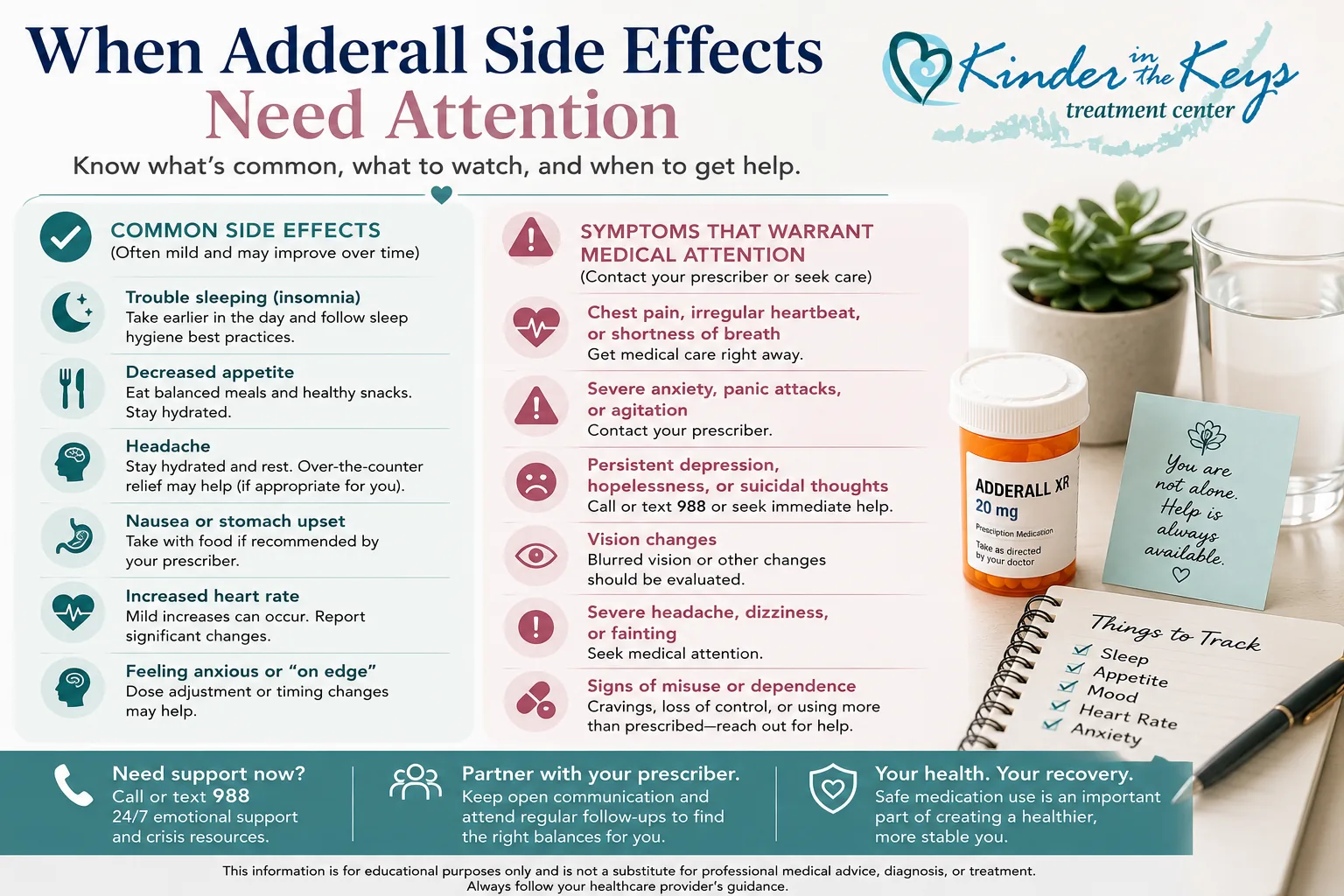
Many medication side effects are uncomfortable rather than dangerous.
Others require prompt medical evaluation.
Contact your healthcare professional when side effects are persistent, worsening, or interfering significantly with daily functioning.
Seek urgent or emergency medical care for symptoms such as:
Chest pain
Severe difficulty breathing
Fainting
Seizure
Severe confusion
New psychotic symptoms
Signs of a serious allergic reaction
Other severe or rapidly worsening symptoms
Suicidal thoughts or an inability to remain safe also require immediate attention.
In the United States, people experiencing a suicidal or mental health crisis can call or text 988. If there is an immediate life-threatening emergency, call 911 or go to the nearest emergency department.
How to Manage Adderall Side Effects Safely
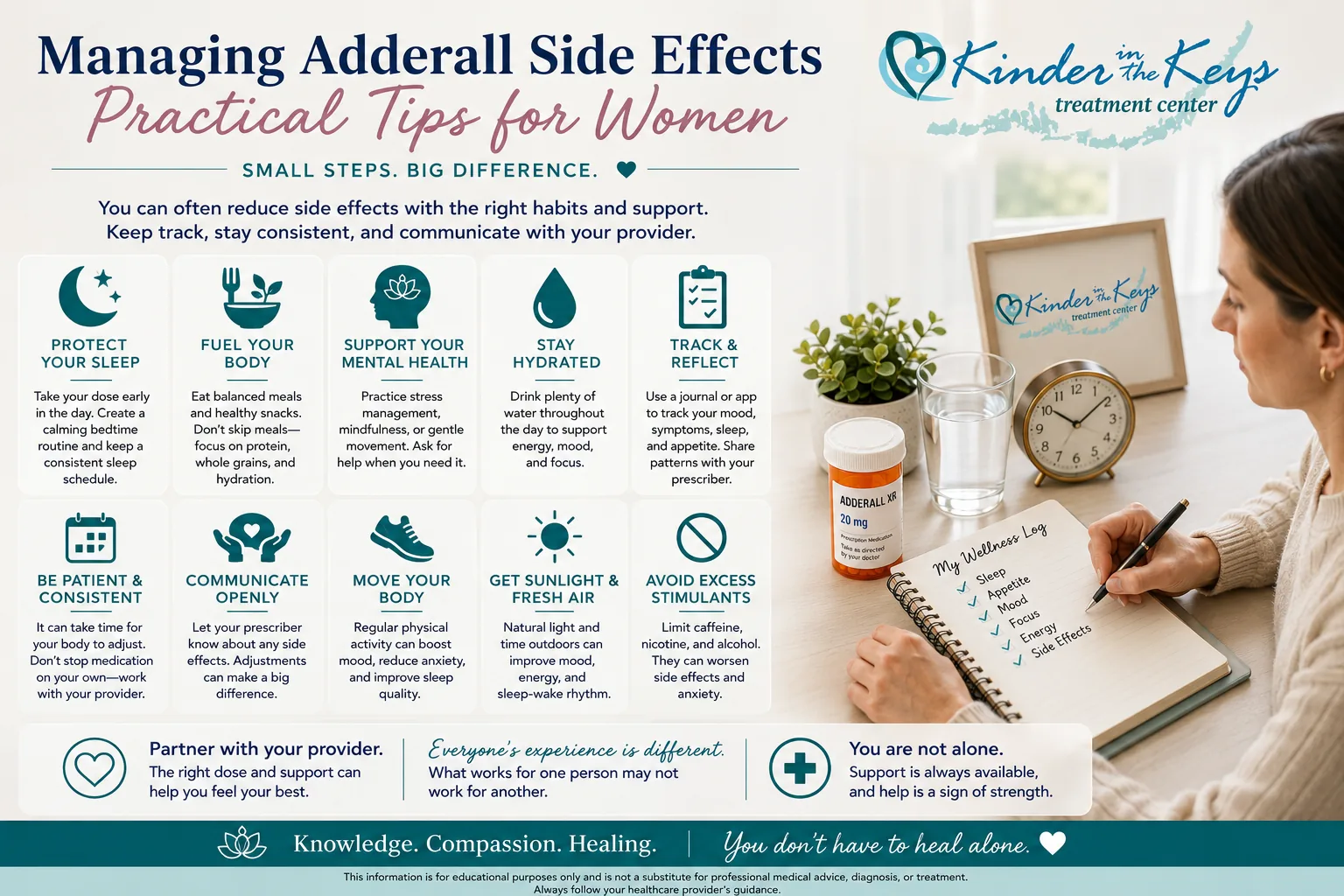
The first step is usually communication with the person prescribing the medication.
Depending on the situation, the clinician may consider whether changes involving dose, timing, formulation, other medications, or the overall treatment plan are appropriate.
Helpful information to track may include:
When the medication is taken
When side effects begin
Sleep patterns
Appetite
Mood
Anxiety
Menstrual-cycle patterns when relevant
Caffeine intake
Other medications and supplements
Basic health habits can also support overall well-being.
Regular meals, adequate hydration, consistent sleep opportunities, physical activity, and avoiding excessive caffeine may help reduce factors that can compound stimulant-related discomfort.
These strategies do not replace medication monitoring.
When Mental Health Treatment May Help
Having Adderall side effects in females does not mean someone needs residential mental health treatment.
Most medication side effects should first be discussed with the prescribing healthcare professional.
However, sometimes concerns about stimulant medication occur within a much larger mental health picture.
A woman may simultaneously be experiencing:
Significant anxiety
Depression
Severe emotional dysregulation
Difficulty functioning
Problematic eating behaviors
Relationship difficulties
Other psychiatric symptoms
In those circumstances, treating only the medication question may not address everything that is happening.
A comprehensive mental health evaluation can help determine what symptoms are related to ADHD, what may be medication-related, whether another mental health condition is present, and what level of treatment is appropriate.
Kinder in the Keys provides residential mental health treatment for adult women in Key Largo, Florida.
Kinder is not a substance use treatment or detoxification facility. Women whose primary need is detoxification or treatment of a substance use disorder may require a program specifically designed for that level and type of care.
For women whose primary treatment needs involve mental health conditions such as depression, anxiety, PTSD, trauma, or related concerns, residential treatment may be considered when clinically appropriate.
Adderall Side Effects in Females: Frequently Asked Questions
What are the most common Adderall side effects in females?
Possible side effects include decreased appetite, difficulty sleeping, dry mouth, headache, nausea, increased heart rate or blood pressure, nervousness, restlessness, irritability, and other physical or emotional changes.
Individual responses vary.
Can Adderall make anxiety worse?
Adderall can contribute to nervousness, restlessness, or feelings of activation in some people.
If anxiety begins or substantially worsens after starting medication or changing the dose, discuss the pattern with the prescribing clinician.
Can Adderall affect your menstrual cycle?
Some women report changes in symptoms or medication response across their menstrual cycle, but research on exactly how hormonal fluctuations alter stimulant response remains limited.
Menstrual changes can also have many other causes.
Track persistent changes and discuss them with a healthcare professional rather than assuming Adderall is responsible.
Does Adderall cause weight loss?
Decreased appetite can lead to reduced food intake and weight loss in some people.
Significant or unintended weight loss should be discussed with the prescribing clinician.
Using Adderall primarily for appetite suppression or weight control is concerning and should also be discussed with a healthcare professional.
Can you become dependent on Adderall if it is prescribed?
Physiological dependence can occur with medications without necessarily meaning someone has an addiction.
Misuse, loss of control over use, continued use despite harm, or other concerning behaviors warrant professional evaluation.
Should I stop Adderall if I’m having side effects?
Do not independently stop or substantially change prescribed medication solely because you are experiencing side effects.
Contact the prescribing clinician, who can evaluate the symptoms and recommend an appropriate course of action.
Understanding Adderall Side Effects in Women
The most important thing to remember about Adderall side effects in females is that individual experiences vary.
A symptom that appears while taking medication is worth noticing, but it does not automatically establish why the symptom is occurring.
Pay attention to patterns.
Track meaningful changes.
Tell your prescriber what you are experiencing.
And if medication concerns are occurring alongside significant depression, anxiety, trauma symptoms, eating problems, or impaired functioning, consider whether a broader mental health evaluation is appropriate.
The goal is not simply to tolerate medication or abandon it at the first sign of discomfort.
The goal is to find a treatment plan that is safe, clinically appropriate, and effective for you.
Medically Reviewed By
Dr. Laura Tanzini, DrPH, LMFT
Doctor of Public Health | Specialty in Lifestyle Medicine
Licensed Marriage and Family Therapist (Florida & California)
Founder & CEO, Kinder in the Keys
This article has been clinically reviewed for accuracy and consistency with current behavioral-health principles and medication-safety information.
Medical Disclaimer: This article is for educational and informational purposes only and does not provide medical advice or instructions for starting, stopping, or changing prescription medication. Medication decisions should be made with an appropriately qualified healthcare professional.