
Does caffeine make anxiety worse? For some people, it can. Caffeine can cause physical sensations that overlap with anxiety, including a faster heartbeat, jitteriness, restlessness, and difficulty sleeping. For someone already prone to anxiety or panic, those sensations can sometimes intensify anxious feelings.
Individual response matters. Genetics, medications, sleep, health conditions, habitual caffeine use, and the amount consumed can all influence how strongly someone responds to caffeine.
Research also suggests that dose matters. A 2024 meta-analysis found that caffeine consumption was associated with increased anxiety, with substantially greater effects at doses above 400 mg.
2024 meta-analysis on caffeine and anxiet
Symptom Overlap: Anxiety or Too Much Caffeine?
One reason caffeine and anxiety can be difficult to separate is that they can produce some of the same physical sensations.
Too much caffeine may cause:
- Nervousness or jitteriness
- Restlessness
- Increased heart rate
- Heart palpitations
- Difficulty sleeping
- Headache
- Gastrointestinal discomfort
The FDA specifically identifies anxiety, jitters, insomnia, increased heart rate, and heart palpitations among signs that someone may have consumed too much caffeine.
For someone with an anxiety disorder, those sensations may be particularly uncomfortable because they can resemble the body’s response to anxiety itself.
That does not necessarily mean caffeine is the underlying cause of the person’s anxiety. It may mean that caffeine is amplifying symptoms that are already present.
Can Caffeine Cause Anxiety?
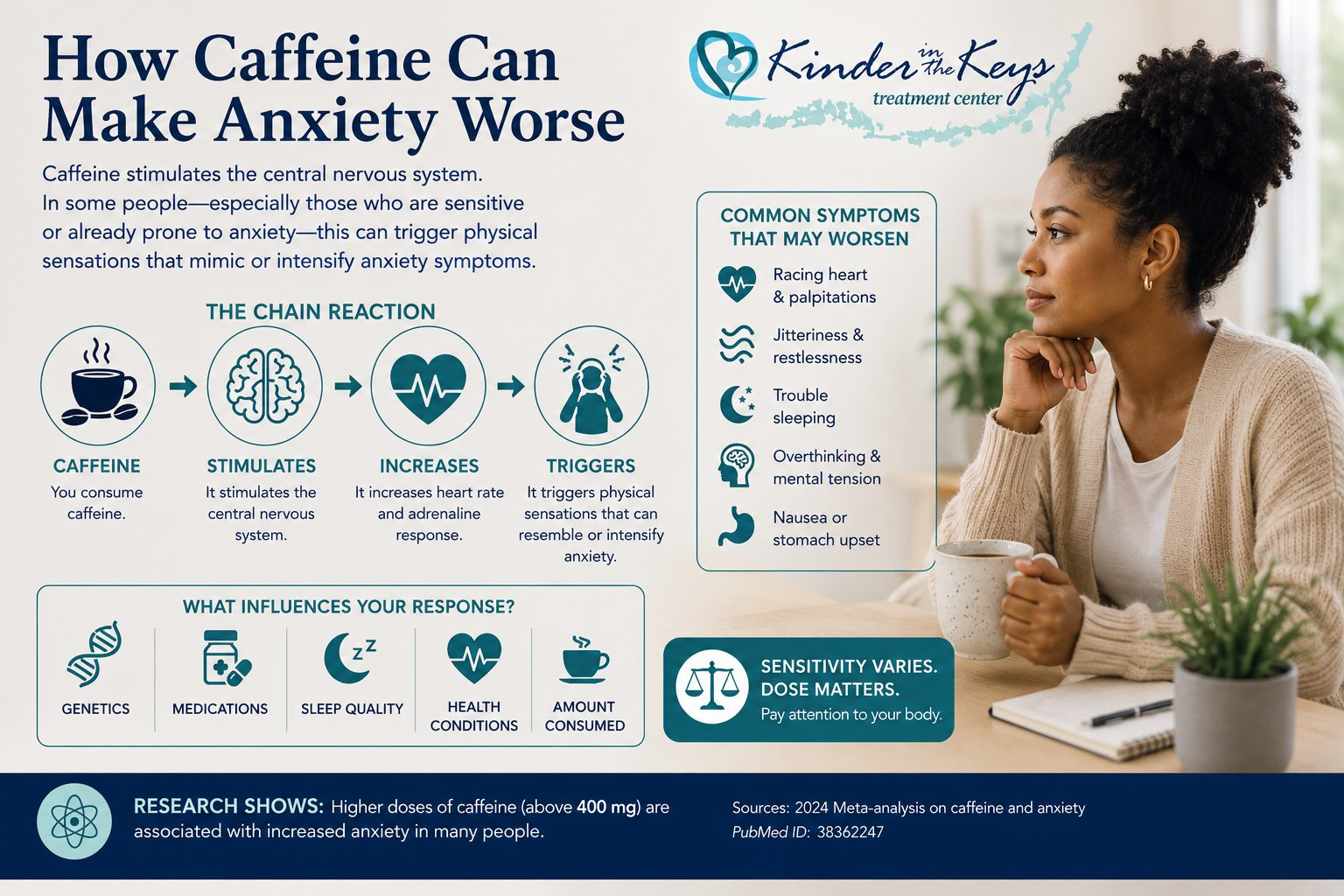
Caffeine can cause or intensify anxiety symptoms, but that is not the same thing as saying that drinking coffee inevitably causes a chronic anxiety disorder.
Caffeine is a central nervous system stimulant. In susceptible individuals, its effects can include nervousness, restlessness, increased heart rate, difficulty sleeping, and feelings that resemble or intensify anxiety.
Higher doses appear particularly important. The 2024 meta-analysis examining caffeine and anxiety found increased anxiety following caffeine intake, with a larger effect at doses above 400 mg.
Individual sensitivity varies considerably, however. Some people can drink several cups of coffee without feeling anxious, while others experience uncomfortable symptoms after a much smaller amount.
For someone with an existing anxiety or panic disorder, caffeine-related physical arousal may also be particularly uncomfortable because sensations such as a racing heart, trembling, or feeling “wired” can resemble sensations experienced during anxiety or panic.
Does Coffee Make Anxiety Worse?
It can.
Coffee is one of the most common sources of caffeine, but the amount of caffeine in a cup of coffee can vary substantially depending on the type of coffee, serving size, and preparation method.
This matters because someone may think she drinks “two cups of coffee a day,” while the actual caffeine dose may be very different depending on what those two cups contain.
Coffee can make anxiety feel worse through several pathways.
The stimulant effect itself can increase physiological arousal. Caffeine consumed later in the day can also interfere with sleep, and inadequate sleep may make emotional regulation and anxiety more difficult the following day.
This can sometimes create a cycle:
Poor sleep → fatigue → more caffeine → increased arousal or disrupted sleep → greater difficulty managing anxiety.
For someone trying to understand whether caffeine contributes to her symptoms, looking at both the amount consumed and the timing can be useful.
What the Research Says About Coffee and Anxiety
The relationship between caffeine and anxiety is more nuanced than simply saying that coffee is either “good” or “bad” for anxiety.
Research suggests that higher doses of caffeine are more likely to increase anxiety symptoms. The 2024 meta-analysis found an overall anxiety-increasing effect from caffeine and a considerably greater effect among studies using doses above 400 mg.
At the same time, observational studies have sometimes found associations between moderate coffee consumption and lower rates of certain mental health outcomes.
That does not prove that coffee prevents anxiety.
Observational research can identify associations, but it cannot establish that coffee itself caused the difference. People who consume moderate amounts of coffee may differ from non-coffee drinkers in many other ways.
The more clinically useful question is therefore not:
“Is coffee bad for everyone with anxiety?”
It is:
“What happens to my anxiety when I consume caffeine?”
That answer may be different from one woman to another.
Why Does Caffeine Sensitivity Vary?
Two people can consume the same amount of caffeine and have very different reactions.
Several factors can influence caffeine sensitivity, including:
- Genetics
- Habitual caffeine consumption
- Medications
- Pregnancy
- Smoking status
- Health conditions
- Sleep
- Stress
- The amount of caffeine consumed
- How quickly the caffeine is consumed
This is why a universal caffeine limit doesn’t tell us everything about an individual’s response.
Someone who experiences anxiety, insomnia, trembling, gastrointestinal symptoms, or palpitations after caffeine may benefit from reducing her intake even when her consumption falls below general population guidelines.
Why Does Coffee Suddenly Make Me Anxious?
Some people tolerate caffeine for years and then notice that coffee suddenly seems to produce jitteriness, anxiety, insomnia, or palpitations.
There isn’t one explanation for why this happens.
Changes in sleep, stress, medications, health conditions, hormonal status, the amount or concentration of caffeine consumed, and other factors may affect how caffeine feels.
Even the coffee itself may have changed. A larger serving or stronger preparation can contain considerably more caffeine than someone realizes.
If your response to caffeine changes substantially—particularly if you develop new palpitations, chest symptoms, tremors, or other physical symptoms—talk with a healthcare professional rather than automatically assuming anxiety is the cause.
Can Caffeine Cause Heart Palpitations?
Caffeine can cause an increased heart rate or the sensation of heart palpitations in some people, particularly when consumed in larger amounts or by someone sensitive to stimulants. The FDA includes increased heart rate and heart palpitations among possible signs of excessive caffeine intake.
For someone with anxiety or panic, this can become particularly uncomfortable.
Feeling the heart beat faster can produce fear, which can increase physiological arousal further. The person may then become increasingly focused on the sensation.
However, not every palpitation is caused by caffeine or anxiety.
New, severe, persistent, or concerning heart symptoms should be evaluated by an appropriate healthcare professional rather than assumed to be psychological.
How Much Caffeine Is Too Much?
For most adults, the FDA cites 400 milligrams of caffeine per day—approximately four or five cups of coffee—as an amount not generally associated with negative effects.
That is not a recommendation that everyone should consume 400 mg, nor does it mean everyone will tolerate that amount.
The FDA specifically notes that sensitivity to caffeine varies considerably among individuals.
Someone with anxiety may discover that her personal threshold is substantially lower.
That is why paying attention to symptoms can be more useful than trying to reach a particular number.
How Can You Tell Whether Caffeine Is Making Your Anxiety Worse?
One of the simplest approaches is to track what happens.
For one or two weeks, record:
What you consumed: Coffee, tea, energy drinks, soda, chocolate, supplements, or other caffeine sources.
How much: Include serving size whenever possible.
When: Record the time caffeine was consumed.
Symptoms: Note anxiety, jitteriness, racing thoughts, heart rate, gastrointestinal symptoms, irritability, or panic-like sensations.
Sleep: Record when you went to bed, approximately how long you slept, and how rested you felt the following morning.
Patterns may become easier to recognize when they are written down.
For example, someone may discover that morning coffee doesn’t bother her but an afternoon energy drink interferes with sleep. Another woman may notice that anxiety reliably increases within a few hours of consuming larger amounts of caffeine.
Should You Stop Caffeine If You Have Anxiety?
Not necessarily.
Some people with anxiety tolerate moderate caffeine without significant problems. Others notice a clear relationship between caffeine and their symptoms.
If caffeine appears to worsen your anxiety, reducing the amount may be worth trying.
However, someone who regularly consumes caffeine may not want to stop abruptly.
What Happens During Caffeine Withdrawal?
Regular caffeine consumption can lead to physical dependence, and suddenly stopping or substantially reducing caffeine may produce withdrawal symptoms.
Common symptoms can include:
- Headache
- Fatigue or drowsiness
- Irritability or low mood
- Difficulty concentrating
- Flu-like symptoms
Withdrawal symptoms can temporarily affect mood, energy, and concentration. Someone who abruptly stops caffeine may therefore feel worse before she feels better.
For regular caffeine users who want to reduce their intake, gradually decreasing consumption may be more comfortable than abruptly stopping.
That might mean reducing serving sizes, replacing one caffeinated beverage with decaffeinated coffee or herbal tea, or gradually decreasing the number of caffeinated drinks consumed each day.
Caffeine, Sleep, and Anxiety
The effect of caffeine on anxiety isn’t limited to the period immediately after drinking coffee.
Caffeine can also affect sleep.
For someone already struggling with anxiety, inadequate sleep can make the following day more difficult. Fatigue may reduce patience, concentration, and emotional regulation while increasing the temptation to consume more caffeine.
That can create a self-reinforcing pattern.
When evaluating caffeine and anxiety, therefore, don’t look only at whether you feel jittery immediately after drinking coffee.
Also ask:
How am I sleeping?
Am I relying on caffeine because I’m exhausted?
Does afternoon caffeine affect my ability to fall asleep?
Do I feel more anxious after nights when I sleep poorly?
Sometimes changing the timing of caffeine is as important as changing the total amount.
What About Caffeine and Anxiety Medications?
This is an area where generalized internet advice can become misleading.
Different medications have different effects and interactions, and it isn’t appropriate to assume that caffeine interacts with every antidepressant or anti-anxiety medication in the same way.
Some medications and health conditions can affect caffeine sensitivity or metabolism.
If you take prescription medication and notice that caffeine worsens anxiety, sleep, heart rate, or other symptoms, discuss your caffeine intake with your prescriber or pharmacist.
Do not stop or alter prescribed psychiatric medication based solely on information you read online.
When Anxiety Is More Than Caffeine
Reducing caffeine may help when caffeine is contributing to anxiety, but persistent anxiety deserves attention in its own right.
Consider speaking with a mental health professional when anxiety:
- Continues even when caffeine intake is low or absent
- Causes panic attacks or persistent fear
- Interferes with sleep, work, relationships, or daily activities
- Leads to significant avoidance
- Feels increasingly difficult to manage
Caffeine may amplify an anxiety disorder without being its underlying cause.
In that situation, reducing caffeine alone may not address the problem.
Treatment can help identify what is driving the anxiety and address the thoughts, behaviors, physiological responses, trauma experiences, sleep patterns, and lifestyle factors that may contribute to symptoms.
A Whole-Person Approach to Anxiety
Anxiety doesn’t occur independently of the rest of the body.
Sleep, nutrition, movement, stress, physical health, relationships, trauma history, medications, substance use, and daily routines can all influence how someone feels.
That doesn’t mean lifestyle changes replace mental health treatment.
It means effective treatment should recognize that mental and physical health continually interact.
For women experiencing significant anxiety, examining caffeine can be one useful part of a much larger clinical picture.
At Kinder in the Keys, we approach mental health treatment from that broader perspective—addressing psychological symptoms while also considering the physical and lifestyle factors that can support recovery.
This is particularly relevant when something as ordinary as a morning cup of coffee may be contributing to symptoms without being their underlying cause.
Frequently Asked Questions About Caffeine and Anxiety
Does caffeine make anxiety worse?
It can. Caffeine stimulates the central nervous system and may increase nervousness, jitteriness, heart rate, restlessness, and sleep problems. Research suggests that higher doses are more likely to increase anxiety, although individual sensitivity varies considerably.
Can coffee cause a panic attack?
Caffeine can produce physical sensations such as a racing heart, trembling, or increased arousal. In someone vulnerable to panic, those sensations may contribute to or intensify panic symptoms. Individual responses vary, and recurring panic attacks should be evaluated by a qualified mental health professional.
How much caffeine is safe if I have anxiety?
There isn’t one caffeine limit specifically for everyone with anxiety. The FDA cites 400 mg per day as an amount not generally associated with negative effects for most adults, but individual sensitivity varies widely. Some people with anxiety may experience symptoms at considerably lower amounts.
Should I quit coffee if I have anxiety?
Not necessarily. If you tolerate caffeine without worsening symptoms, complete avoidance may not be necessary. If anxiety, sleep problems, jitteriness, or palpitations consistently follow caffeine consumption, reducing your intake may help clarify whether caffeine is contributing.
Is decaf coffee better for anxiety?
Decaffeinated coffee contains substantially less caffeine than regular coffee, although it isn’t necessarily completely caffeine-free. For someone who enjoys coffee but is sensitive to caffeine, switching partially or completely to decaf may be one way to reduce caffeine exposure.
How long does caffeine withdrawal last?
Withdrawal varies among individuals. Symptoms commonly begin after caffeine intake is substantially reduced or stopped and may include headache, fatigue, irritability, low mood, and difficulty concentrating. Gradually reducing regular caffeine intake may make the transition more comfortable.
Medically Reviewed By
Dr. Laura Tanzini, DrPH, LMFT
Doctor of Public Health | Specialty in Lifestyle Medicine
Licensed Marriage and Family Therapist (Florida & California)
Founder & CEO, Kinder in the Keys
This article has been clinically reviewed for accuracy and consistency with current behavioral health, lifestyle medicine, and evidence-informed treatment principles. Dr. Tanzini’s clinical work focuses on trauma, PTSD, anxiety, depression, and women’s mental health, with an emphasis on integrating psychological treatment with whole-person wellness.
Medical Disclaimer: This content is provided for educational and informational purposes only and is not intended to diagnose a medical or mental health condition or replace individualized care from a qualified healthcare professional. If you are experiencing persistent or concerning symptoms, consult an appropriate medical or mental health professional.