
For women living with trauma, PTSD, anxiety, depression, or the effects of abusive relationships, the environment in which treatment occurs can matter almost as much as the treatment itself.
A woman may enter residential treatment after spending years feeling unsafe, hypervigilant, emotionally guarded, or responsible for the needs of everyone around her. Even after the immediate threat has ended, her mind and body may continue responding as though danger is still present.
For some women, a women-only residential treatment program provides an environment in which those defenses can begin to soften.
At Kinder in the Keys, our residential mental health program in Key Largo, Florida, was designed specifically for adult women. Treatment focuses on mental health and trauma recovery, including PTSD, trauma, narcissistic abuse, depression, anxiety, and other conditions affecting women’s emotional well-being.
We are not a substance use treatment or detoxification facility. Our clinical focus is women’s mental health
Why Gender Can Matter in Trauma Treatment
Women and men can both experience serious trauma and develop post-traumatic stress disorder. However, research has identified important differences in the types of traumatic experiences women are more likely to encounter.
Women are disproportionately affected by sexual assault and childhood sexual abuse, and trauma occurring within close relationships can have particularly complex psychological effects. The National Center for PTSD reports that women have approximately twice the lifetime prevalence of PTSD as men in the United States.
For some women, trauma has occurred in relationships that were supposed to provide safety.
That can include:
- Intimate partner violence or coercive control
- Sexual assault
- Childhood abuse
- Narcissistic or emotionally abusive relationships
- Betrayal by a partner or caregiver
- Repeated relational trauma
These experiences can affect far more than memories of what happened. Trauma may influence a woman’s ability to trust, establish boundaries, recognize safety, regulate emotions, maintain relationships, and feel secure in her own body.
Effective trauma treatment therefore involves more than talking about the past. It also involves helping a woman develop new experiences of safety, connection, autonomy, and trust.
How Women-Only Residential Treatment May Create a Greater Sense of Safety

Trauma-informed care emphasizes recognizing the effects of trauma and creating treatment environments that promote safety.
Trauma can leave the nervous system highly sensitive to potential danger.
A woman may intellectually understand that she is safe while her body continues responding with hypervigilance, tension, anxiety, avoidance, sleep disturbances, or an exaggerated startle response.
For women whose trauma involved men, sexual violence, intimate relationships, or coercive control, a mixed-gender treatment environment may sometimes introduce additional interpersonal stress.
That does not mean every woman with trauma requires women-only treatment. Individual needs and preferences matter.
However, for some women, removing mixed-gender social dynamics can make it easier to concentrate on treatment rather than continually evaluating the environment for safety.
Research comparing women-only and mixed-gender trauma treatment groups has found that women in women-only groups reported stronger positive bonding and therapeutic working relationships and fewer negative group relationships. The researchers concluded that women with trauma should have the opportunity to choose a women-only environment when it increases their sense of safety and comfort.
That choice itself can be meaningful for someone whose past involved having choices taken away.
Women Can Practice Trust With Other Women
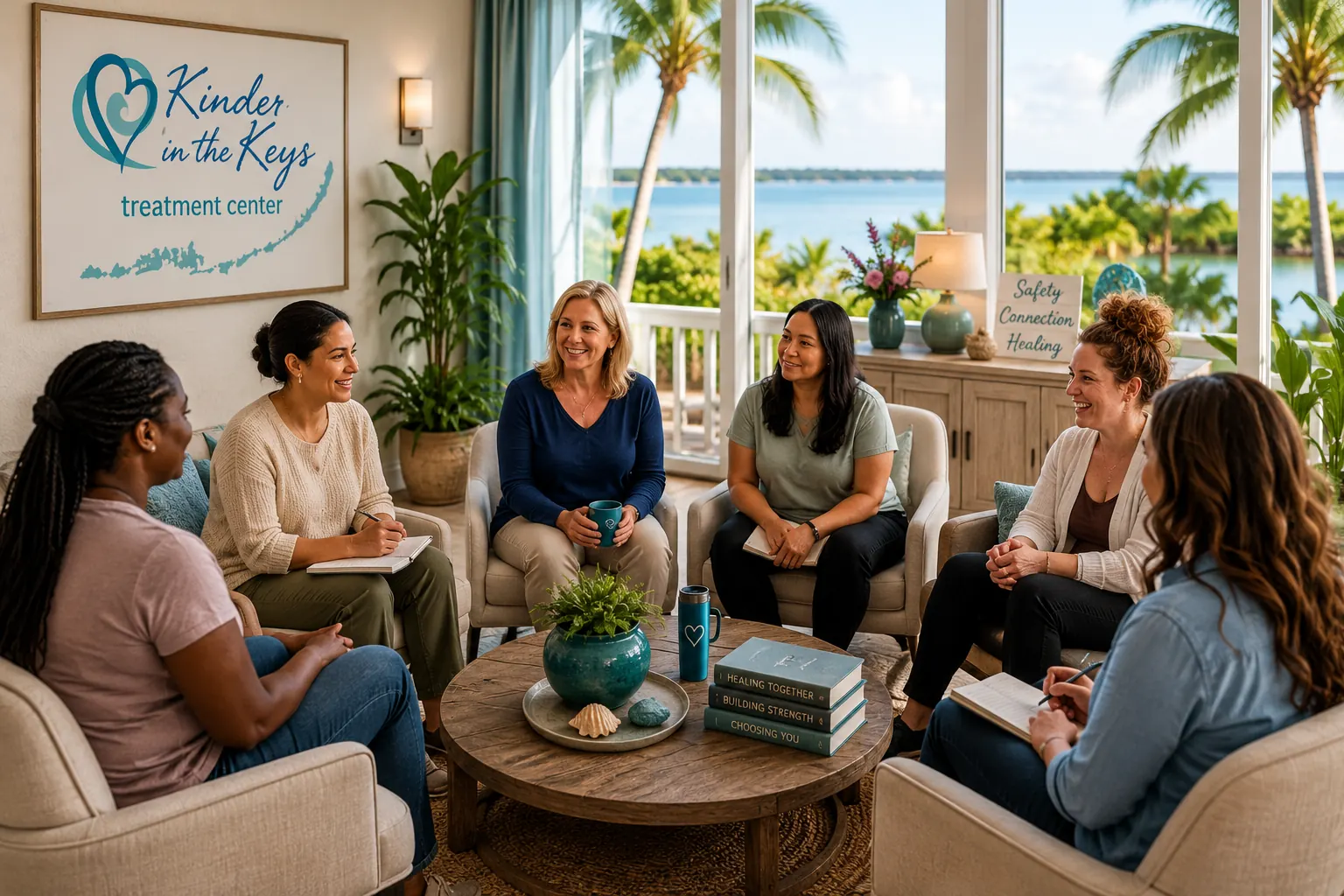
One of the less obvious benefits of women-only trauma treatment is the opportunity to address relationships between women.
Women entering residential care do not necessarily arrive trusting other women.
Some have experienced bullying, rejection, competition, abandonment, criticism, or betrayal. Others have learned to keep their emotional lives private.
Statements such as these are not unusual:
“I don’t trust women.”
“Women always judge me.”
“I don’t want anyone to see me vulnerable.”
A healthy therapeutic community provides opportunities to challenge those expectations through actual relationships.
Women can practice setting boundaries without ending a relationship. They can experience disagreement without abandonment. They can ask for support without owing someone something in return.
They can also discover that vulnerability and strength are not opposites.
This type of interpersonal learning can become an important part of recovery.
Peer Connection Can Reduce the Isolation of Mental Illness
Trauma, depression, anxiety, and abusive relationships can all become profoundly isolating.
Women often arrive at treatment believing that something is fundamentally wrong with them or that nobody else could understand what they have experienced.
Living and participating in treatment alongside other women can challenge that isolation.
Research examining gender-specific trauma groups found greater increases in perceived social support among patients participating in women-only groups.
Peer connection does not replace professional treatment.
Instead, it can complement it.
A therapist may help a woman understand intellectually that her trauma responses make sense. Sitting beside another woman who recognizes those same experiences can help that understanding become personal.
The realization becomes:
I am not the only one.
And from there:
Maybe I can heal too.
Residential Treatment Creates Time and Space for Deeper Work
Evidence-based psychotherapy remains central to effective PTSD treatment, regardless of whether care occurs in an outpatient or more structured setting.
Outpatient therapy can be highly effective, but there are circumstances in which a weekly therapy appointment may not provide enough structure or support.
A woman may spend an hour addressing trauma in therapy and then immediately return to the environment, relationship, responsibilities, or stressors associated with her symptoms.
Residential mental health treatment creates something different: sustained therapeutic time.
Instead of fitting treatment into everyday life, treatment temporarily becomes the priority.
A structured residential program can integrate individual therapy, therapeutic groups, psychoeducation, mindfulness, movement, nutrition, sleep, recreation, social connection, and opportunities to practice new coping strategies throughout the day.
This allows mental, physical, emotional, and relational recovery to occur together rather than as isolated pieces of treatment.
Women’s Mental Health Treatment Should Address the Whole Person
Mental health conditions rarely exist in isolation from the rest of a person’s life.
A woman experiencing PTSD may also struggle with depression. Someone recovering from an abusive relationship may experience anxiety, insomnia, low self-worth, difficulty trusting others, or persistent hypervigilance.
This is why treatment needs to look beyond a diagnostic label.
At Kinder in the Keys, we believe recovery involves addressing the interconnected dimensions of health.
The past matters.
Thought patterns matter.
Relationships matter.
The body matters.
Sleep matters.
Nutrition matters.
Movement matters.
And the environment in which healing occurs matters.

Rather than treating one symptom in isolation, residential treatment provides an opportunity to understand how these different parts of a woman’s life interact.
The Role of Nature in Mental Health Recovery
Kinder in the Keys is located in Key Largo in the Florida Keys, where treatment occurs in an environment intentionally separated from the pace and pressures of everyday life.
Nature itself is not a treatment for PTSD, depression, or anxiety, and it should never be presented as a replacement for evidence-based mental health care.
But the environment surrounding treatment can support recovery.
Time outdoors, physical activity, exposure to natural light, mindfulness, regular sleep schedules, and opportunities to slow down can become part of a broader lifestyle supporting mental health.
For someone who has lived for years in a state of constant urgency, learning to experience moments of calm can be significant.
Sometimes healing begins with recognizing something a person has almost forgotten:
This is what peace feels like.
Who May Benefit From Women-Only Residential Mental Health Treatment?
A women-only residential program may be worth considering when symptoms significantly interfere with everyday functioning or when outpatient treatment has not provided enough support.
It may be particularly helpful for women experiencing PTSD or complex trauma symptoms, depression, significant anxiety, consequences of narcissistic or coercive relationships, difficulty functioning because of emotional distress, or a need for greater therapeutic structure.
The appropriate level of care should always be based on an individualized clinical assessment.
Residential treatment is not necessary for everyone, and women-only treatment is not automatically better than mixed-gender treatment.
The question is whether the environment allows that particular woman to participate meaningfully in treatment.
Choosing a Women’s Residential Mental Health Treatment Center
When comparing programs, look beyond photographs and amenities.
Ask how trauma is treated.
Ask about the credentials of the clinical team.
Ask how frequently individual therapy occurs.
Ask which evidence-based approaches are used.
Ask how treatment plans are individualized.
Ask how psychiatric and medical needs are addressed.
Ask what happens after residential treatment ends.
And if gender-specific treatment is important to you, ask whether the program is genuinely designed around women’s mental health needs or simply happens to have women in the program.
A treatment environment should provide more than temporary escape from symptoms.
It should help women develop skills they can carry back into their lives.
Women-Only Treatment at Kinder in the Keys
Kinder in the Keys provides women-only residential mental health treatment in Key Largo, Florida, with specialized care for women experiencing trauma and PTSD, depression, anxiety, narcissistic abuse and related mental health concerns.
Our program is intentionally focused on mental health treatment rather than substance use treatment or detoxification.
Women receive care in an environment designed to support psychological safety, meaningful therapeutic work, healthy relationships, and whole-person recovery.
The goal is not simply to remove symptoms.
It is to help each woman understand what happened to her, recognize the patterns that continue to affect her life, develop healthier ways of responding, reconnect with her body and relationships, and experience what life can feel like when she is no longer organized around survival.
Healing Doesn’t Mean Forgetting What Happened
Trauma recovery does not require pretending the past did not happen.
It means reaching a point where the past no longer determines every response in the present.
For some women, the first important step is entering an environment where they finally feel safe enough to stop protecting themselves long enough to begin the work.
Women-only residential treatment can provide that environment.
And sometimes, when a woman experiences safety, connection, peace, or strength differently for the first time, she begins to recognize that another way of living is possible.
Medically Reviewed By
Dr. Laura Tanzini, DrPH, LMFT
Doctor of Public Health | Specialty in Lifestyle Medicine
Licensed Marriage and Family Therapist (Florida & California)
Founder & CEO, Kinder in the Keys
This article has been clinically reviewed for accuracy and consistency with current behavioral health and trauma-informed care principles. Content is intended to provide general educational information and should not replace individualized evaluation, diagnosis, or treatment by a qualified healthcare professional.
Medical Disclaimer
The information provided in this article is for educational and informational purposes only and is not intended as medical advice, diagnosis, or treatment. Mental health needs vary by individual. If you are experiencing symptoms of a mental health condition, consult a qualified healthcare professional who can evaluate your individual circumstances.