
Depression during pregnancy is more common than many women realize. Also called prenatal or antenatal depression, it can affect mood, sleep, energy, concentration, relationships, self-care, and the ability to function during pregnancy. It is more than having an occasional difficult day or feeling overwhelmed by the physical and emotional changes of pregnancy.
Depression during pregnancy deserves appropriate evaluation and treatment. Research has found associations between untreated prenatal depression and several maternal and pregnancy-related complications, but having depression does not mean that something bad will happen to you or your baby. Effective treatment is available, and decisions about care should consider both maternal mental health and the health of the developing baby.
At a women’s depression treatment center like Kinder in the Keys, pregnant women may be considered for residential mental health treatment when they are earlier in pregnancy, medically cleared, and clinically appropriate for our level of care. Because Kinder is approximately one hour from Miami and access to higher-level obstetric care is an important safety consideration, admission later in pregnancy—particularly during the third trimester—is generally not appropriate. Each potential admission is evaluated individually with the health and safety of both mother and baby in mind.
In this guide, we’ll explain what prenatal depression can look like, how it differs from postpartum “baby blues,” what research tells us about possible effects on pregnancy and infant outcomes, and the treatment options that may be considered during pregnancy.
Understanding Pregnancy Depression as a Medical Condition
Depression during pregnancy, also called prenatal or antenatal depression, is a mood disorder that can affect emotions, energy, sleep, appetite, concentration, relationships, self-care, and daily functioning.
Pregnancy involves substantial hormonal, physical, psychological, and social changes. Hormonal changes may contribute to vulnerability to depression, but prenatal depression should not be reduced to “hormones.” A personal or family history of depression, previous episodes of depression, trauma, anxiety, stressful life circumstances, limited social support, relationship difficulties, pregnancy complications, and other factors may also contribute.
Depression can begin for the first time during pregnancy, or pregnancy may coincide with the recurrence or worsening of a pre-existing mood disorder.
Current guidance from the American College of Obstetricians and Gynecologists (ACOG) recommends screening for depression and anxiety with a standardized, validated instrument at the initial prenatal visit, later in pregnancy, and during postpartum visits. Screening should also occur within a system that allows appropriate assessment, treatment, monitoring, and follow-up when symptoms are identified.
Screening matters because symptoms such as fatigue, changes in sleep, appetite changes, and difficulty concentrating can overlap with ordinary experiences of pregnancy. A woman may therefore assume that significant depressive symptoms are simply something she is expected to tolerate.
They are not.
Persistent depression during pregnancy deserves the same thoughtful clinical attention as depression occurring at any other stage of life.
Women with a history of major depressive disorder or previous depressive episodes may have an increased risk of experiencing depression during pregnancy or after delivery.
Depression During Pregnancy: Symptoms to Watch For
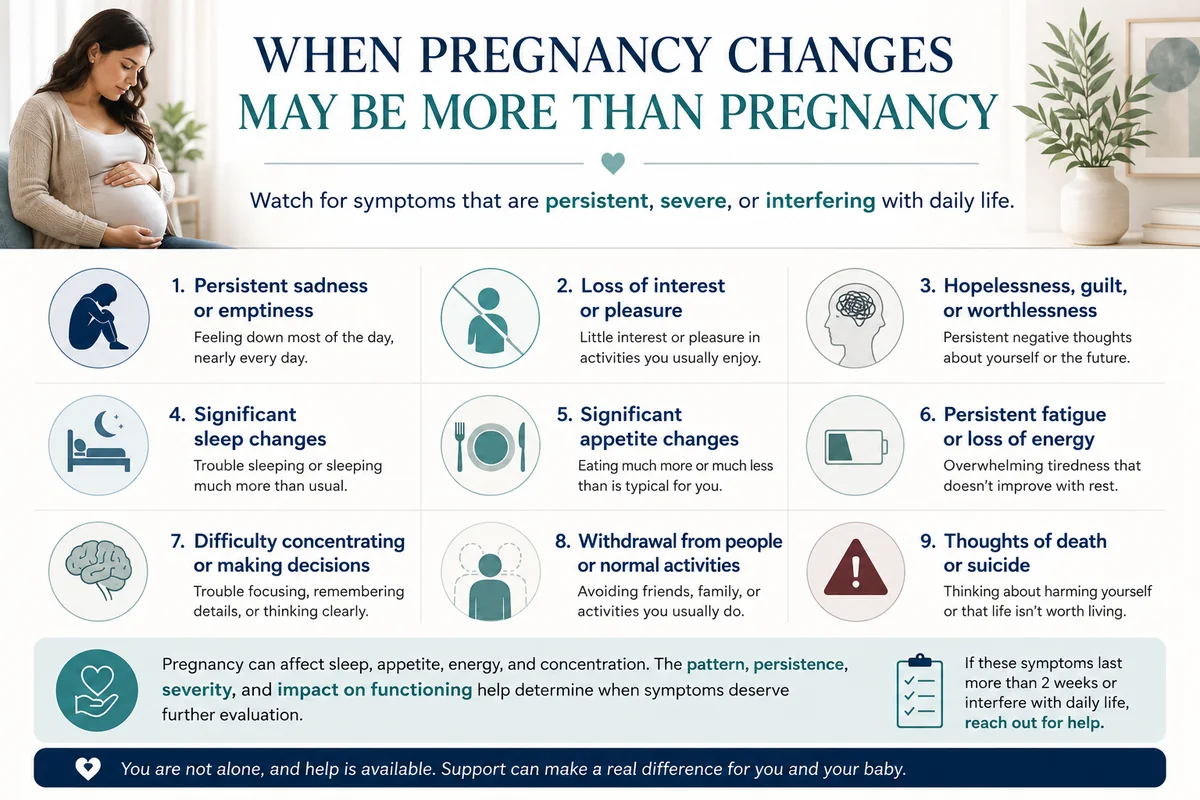
Some symptoms of depression during pregnancy can overlap with experiences that are common during pregnancy, including fatigue, changes in sleep, changes in appetite, and difficulty concentrating. That overlap is one reason prenatal depression can be missed.
The difference is not simply whether you feel tired, worried, or emotional. Clinicians consider the pattern, persistence, severity, and effect on daily functioning.
According to the American College of Obstetricians and Gynecologists (ACOG), signs of depression during pregnancy may include:
Depressed mood most of the day, nearly every day
Loss of interest or pleasure in activities you normally enjoy
Feelings of guilt, hopelessness, or worthlessness
Sleeping much more than usual or having significant difficulty sleeping
Significant appetite changes
Persistent fatigue or loss of energy
Difficulty concentrating, paying attention, or making decisions
Noticeable restlessness or slowing of movement
Thoughts about death or suicide
ACOG advises talking with your obstetric healthcare provider when these symptoms persist for at least two weeks.
You do not need to wait until symptoms become unbearable before mentioning them at a prenatal appointment.
If you are struggling to explain what you have been experiencing, writing down your symptoms beforehand can make the conversation easier. Our depression checklist can also help you organize what you have noticed and identify symptoms you may want to discuss with your healthcare provider.
A self-assessment is not a diagnosis. During pregnancy, clinicians may use validated screening instruments such as the Edinburgh Postnatal Depression Scale (EPDS) or Patient Health Questionnaire-9 (PHQ-9) as part of a broader clinical assessment. ACOG includes both among commonly used perinatal depression screening instruments.
If a screening result suggests depression, the next step should be appropriate clinical assessment—not trying to diagnose yourself from a score.
If you are experiencing thoughts of suicide, self-harm, or harming someone else, seek immediate professional help rather than waiting for your next routine prenatal appointment.
How Depression During Pregnancy Differs From the Baby Blues
Depression during pregnancy and the postpartum “baby blues” are not the same thing.
The baby blues occur after childbirth, not during pregnancy. They can include tearfulness, irritability, feeling overwhelmed, anxiety, and changes in mood. These symptoms are generally mild and typically improve within the first couple of weeks after delivery.
Prenatal depression, by contrast, begins during pregnancy and involves symptoms that are more persistent, severe, or disruptive to daily functioning.
A woman experiencing depression during pregnancy may have ongoing sadness, loss of interest or pleasure, hopelessness, significant changes in sleep or appetite, difficulty concentrating, feelings of worthlessness or guilt, or thoughts of death or suicide.
Prenatal depression also deserves attention because symptoms can continue after delivery. Experiencing depression or anxiety during pregnancy is one factor associated with an increased risk of postpartum depression.
The distinction is important: ordinary emotional changes surrounding pregnancy and childbirth do not automatically indicate a depressive disorder, but persistent or significantly impairing symptoms should not simply be dismissed as hormones or something a woman is expected to endure.
If depressive symptoms last for two weeks or longer, significantly interfere with functioning, or include thoughts of suicide or self-harm, contact a healthcare professional promptly.
Risk Factors for Depression During Pregnancy
Depression during pregnancy can affect women with very different backgrounds and life circumstances. There is no single cause, and having one or more risk factors does not mean that a woman will develop prenatal depression.
Factors associated with greater risk can include:
A personal history of depression, anxiety, or another mental health condition
Depression or anxiety during a previous pregnancy
A family history of depression or other mood disorders
Previous pregnancy loss or other difficult reproductive experiences
Significant life stress
Limited social support
Relationship conflict
Intimate partner violence or abuse
Financial or housing stress
Pregnancy complications or significant medical concerns
An unintended or unwanted pregnancy
A history of trauma
Pregnancy itself can also bring major changes in identity, relationships, physical health, independence, finances, and expectations about the future. For some women, those changes interact with existing vulnerabilities or unresolved experiences.
A history of trauma deserves particular attention. Pregnancy, medical examinations, changes in the body, loss of control, or fears surrounding childbirth may activate trauma-related responses in some women. However, having a trauma history does not mean that pregnancy will automatically cause depression or PTSD.
When trauma symptoms and depression occur together, each condition should be assessed rather than assuming that one diagnosis explains the other.
Understanding risk factors can help healthcare professionals identify women who may benefit from closer monitoring or earlier intervention, but risk factors are not a diagnosis. What matters clinically is the woman’s current symptoms, functioning, safety, history, and individual circumstances
How Depression During Pregnancy May Affect Mother and Baby
One of the most frightening questions a pregnant woman may have is:
“Can my depression hurt my baby?”
The answer deserves more nuance than a simple yes or no.
Research has found associations between depression during pregnancy and some adverse pregnancy and infant outcomes. However, an association does not mean that depression directly causes a particular complication or that a woman experiencing prenatal depression will have an unhealthy pregnancy or baby.
Many factors can influence pregnancy outcomes, including physical health, prenatal care, medications, nutrition, substance use, socioeconomic conditions, stress, other mental health conditions, pregnancy complications, and the severity of the depression itself.
Possible Pregnancy and Infant Outcomes
Studies have associated prenatal depression with an increased risk of outcomes such as:
Preterm birth
Lower birth weight
Difficulties with maternal self-care and prenatal care
Continued depression after delivery
Challenges with maternal functioning and bonding after birth
These are increased risks observed across populations, not predictions about what will happen to an individual woman or baby.
That distinction matters.
A pregnant woman who is already depressed should not leave an article believing that she has harmed her developing baby simply because she developed a mental health condition.
Untreated Depression Can Affect the Mother’s Health Too
The mother’s health matters independently of fetal outcomes.
Significant depression can make it more difficult to eat regularly, sleep adequately, attend prenatal appointments, take medications as prescribed, maintain relationships, work, or perform ordinary self-care.
For some women, depression may also occur alongside alcohol or substance use, severe anxiety, trauma symptoms, or suicidal thoughts.
These concerns are important reasons to identify and treat depression during pregnancy rather than assuming a woman should simply endure symptoms until after delivery.
Nutrition and Physical Health During Pregnancy
Adequate nutrition is important during pregnancy, but food should not be presented as a treatment for clinical depression.
Depression can affect appetite, motivation, energy, and the ability to prepare meals, which may make maintaining regular nutrition more difficult.
Our guide to depression and diet explains how nutrition can support mental and physical health as one component of comprehensive depression care.
Depression During Pregnancy and Postpartum Mental Health
Prenatal depression can also continue after childbirth, and experiencing depression during pregnancy is associated with an increased risk of postpartum depression.
That is another reason treatment during pregnancy matters.
The goal is not only to reduce symptoms today. It is also to support the mother’s functioning, safety, relationships, prenatal care, and transition into the postpartum period.
Treatment decisions should be individualized and made collaboratively with the woman’s obstetric and mental health professionals
Getting Help for Depression During Pregnancy
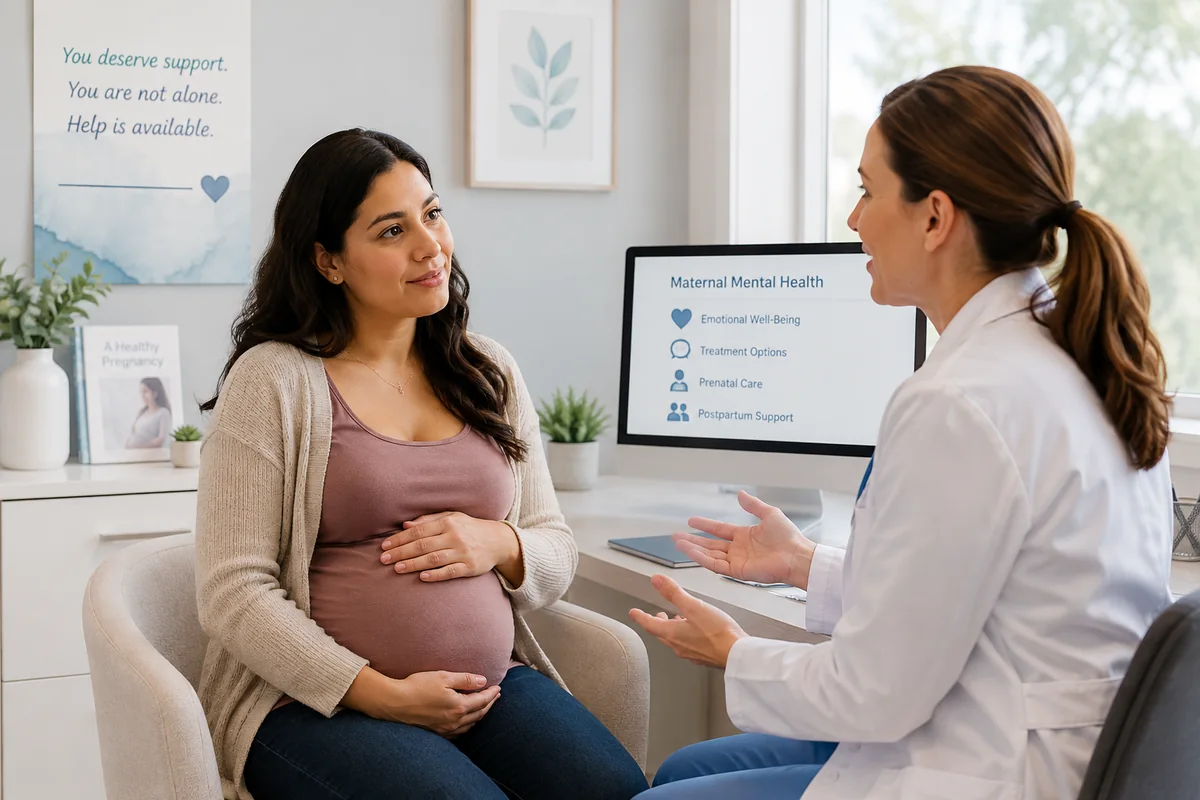
If you are experiencing depression during pregnancy, a good first step is to tell a healthcare professional involved in your prenatal care.
Your OB-GYN, midwife, primary care provider, or mental health professional can help evaluate what you are experiencing and determine what level of support may be appropriate.
You do not need to wait until your depression becomes severe before asking for help.
If talking about your symptoms feels difficult, consider writing down what you have been experiencing before your appointment. You might include changes in:
Mood
Interest or enjoyment
Sleep
Appetite
Energy
Concentration
Anxiety
Daily functioning
Relationships
Thoughts about yourself or your pregnancy
You can also bring the results of an educational self-assessment, such as our depression checklist, to help organize the conversation.
A checklist should never replace an evaluation, but it can make it easier to describe symptoms that are difficult to put into words.
Coordinating Mental Health and Prenatal Care
Treatment during pregnancy may involve more than one healthcare professional.
Depending on the woman’s needs, care may include coordination among an obstetric provider, therapist, psychiatrist or other prescribing professional, primary care provider, and additional specialists when appropriate.
This coordination is particularly important when medication decisions, significant medical conditions, pregnancy complications, or a higher level of mental health care are being considered.
The goal is not to treat the pregnancy and the depression as unrelated problems.
Maternal mental health is part of maternal healthcare.
Getting appropriate help for depression during pregnancy supports the woman during pregnancy while also helping her prepare for childbirth and the postpartum period
Treatment Options for Depression During Pregnancy
Treatment for depression during pregnancy should be individualized based on symptom severity, safety, previous treatment history, medical conditions, pregnancy-related considerations, patient preferences, and other mental health conditions that may be present.
Treatment may include psychotherapy, medication, lifestyle interventions, or a combination of approaches.
The important question is not whether treatment has any risk. Both treatment decisions and untreated depressiondeserve thoughtful consideration during pregnancy.
Psychotherapy
Psychotherapy is an important treatment option for depression during pregnancy.
Evidence-based approaches may include cognitive behavioral therapy (CBT) and interpersonal psychotherapy (IPT). The most appropriate approach depends on the woman’s symptoms, history, preferences, and clinical needs.
For a broader explanation of depression treatment approaches, our guide to forms of treatment for depression explains how different interventions may fit into an individualized treatment plan.
Antidepressant Medication During Pregnancy
Decisions about antidepressant medication during pregnancy should be made individually with qualified healthcare professionals.
Some women become frightened when they learn that a medication may carry potential pregnancy-related risks and consider stopping it immediately.
Do not stop a prescribed antidepressant abruptly without discussing it with the healthcare professional managing your medication.
Stopping medication can lead to withdrawal symptoms or recurrence or worsening of depression in some patients. At the same time, medication choices during pregnancy should consider the available evidence about the particular medication, gestational stage, dose, previous response to treatment, severity of the mother’s illness, and potential consequences of leaving significant depression untreated.
The American College of Obstetricians and Gynecologists emphasizes weighing the risks and benefits of psychiatric medication during pregnancy rather than automatically discontinuing effective treatment because a woman becomes pregnant.
A pregnant woman should discuss questions about medication with her obstetric provider and prescribing professional so that decisions can be made collaboratively.
What About Severe or Treatment-Resistant Depression?
Severe depression during pregnancy may require more intensive treatment.
In certain serious or treatment-resistant situations, electroconvulsive therapy (ECT) may be considered during pregnancy. ECT is a medical procedure performed under anesthesia and requires appropriate obstetric, psychiatric, anesthesia, and medical oversight.
It is not a routine treatment for prenatal depression, but it can be an important option when depression is severe, other treatments have not been sufficient, or rapid clinical improvement is necessary.
Treatment decisions in these circumstances should be made by specialists familiar with both maternal mental health and pregnancy.
Lifestyle Factors Can Support Treatment
Sleep, nutrition, physical activity, social support, and daily routines can influence overall physical and mental health during pregnancy.
These factors should be treated as supports for recovery, not substitutes for clinical treatment when a woman has a depressive disorder.
Gentle or moderate physical activity may be appropriate for many pregnant women, but activity recommendations should reflect the woman’s pregnancy, physical health, and guidance from her obstetric provider.
Adequate nutrition and regular meals can also be particularly important when depression has affected appetite, energy, or motivation.
Sleep deserves attention as well because pregnancy itself can disrupt sleep, while depression can further complicate sleep quality and daily functioning.
Our guide to the relationship between insomnia and depression explains why sleep and mood can influence one another.
Lifestyle interventions can strengthen a comprehensive treatment plan, but a woman with significant prenatal depression should never be made to feel that she failed because exercise, nutrition, meditation, or better sleep did not make her depression disappear.
Mental Health Conditions That Can Occur Alongside Prenatal Depression
Depression during pregnancy does not always occur by itself.
Some women experience significant anxiety alongside depression. Others may have a pre-existing anxiety disorder, PTSD, panic symptoms, or another mental health condition that continues or becomes more difficult to manage during pregnancy.
Symptoms can also overlap.
Difficulty sleeping, poor concentration, irritability, fatigue, physical tension, excessive worry, and changes in appetite may occur across several mental health conditions as well as during pregnancy itself. That is one reason a comprehensive clinical evaluation is more useful than trying to determine a diagnosis from one symptom.
For women with a trauma history, pregnancy can sometimes bring additional challenges. Changes in the body, medical examinations, concerns about childbirth, or feelings related to control and vulnerability may activate trauma-related symptoms.
However, pregnancy does not automatically cause PTSD symptoms to return, and trauma should not be assumed to explain every emotional difficulty during pregnancy.
When depression, anxiety, PTSD, or another mental health condition occurs during pregnancy, treatment should address the whole clinical picture rather than treating each symptom in isolation.
If symptoms are becoming more severe, interfering substantially with daily functioning, or making it difficult to participate in prenatal care, speak with your obstetric provider and a qualified mental health professional rather than waiting for symptoms to resolve on their own
Frequently Asked Questions About Depression During Pregnancy
Can depression during pregnancy affect my baby?
Research has found associations between depression during pregnancy and certain pregnancy and infant outcomes, including an increased risk of preterm birth and lower birth weight.
That does not mean depression will cause a complication or that having prenatal depression means you have harmed your baby. Pregnancy outcomes are influenced by many factors, and individual risk cannot be determined from population-level associations alone.
Treating maternal depression is important for the mother’s health, functioning, safety, prenatal care, and overall well-being during pregnancy.
Is it normal to feel sad during pregnancy?
Occasional sadness, worry, irritability, or feeling overwhelmed can occur during pregnancy.
Prenatal depression involves symptoms that are more persistent, severe, or disruptive. If sadness, loss of interest or pleasure, hopelessness, significant anxiety, or other depressive symptoms persist for two weeks or longer or interfere with daily functioning, talk with your healthcare provider.
You do not need to wait until symptoms become severe before asking for help.
Can I take antidepressant medication while pregnant?
Some antidepressants may be considered during pregnancy when the potential benefits of treatment outweigh potential risks.
There is no single answer that applies to every woman or every medication. Decisions depend on factors such as the specific medication, dose, stage of pregnancy, severity of depression, previous treatment response, medical history, and the risks associated with untreated illness.
Do not start, stop, or change a prescribed psychiatric medication during pregnancy without discussing it with your prescribing professional and obstetric healthcare provider.
Can pregnancy cause depression even if I have never been depressed before?
Yes. A woman can experience her first depressive episode during pregnancy.
Pregnancy involves significant biological, psychological, relationship, and lifestyle changes, and depression can develop even in someone without a previous diagnosis.
A previous history of depression increases risk, but it is not required for prenatal depression to occur.
Does having depression during pregnancy mean I will develop postpartum depression?
No.
Experiencing depression during pregnancy is associated with an increased risk of postpartum depression, but it does not mean postpartum depression is inevitable.
Recognizing and treating symptoms during pregnancy also gives the woman and her healthcare team an opportunity to plan for continued support after delivery.
When should I seek emergency help?
Thoughts of suicide or self-harm require immediate attention.
If you believe you may act on suicidal thoughts, have already harmed yourself, are unable to keep yourself safe, or are experiencing another medical or psychiatric emergency, seek emergency medical care immediately.
Pregnancy does not make a psychiatric emergency less urgent.
Getting the Right Level of Care for Depression During Pregnancy
Depression during pregnancy is treatable, and asking for help is not an indication that you are failing at pregnancy or motherhood.
For many women, outpatient psychotherapy, medication management when appropriate, and coordinated prenatal care provide the level of support they need.
For others, depression becomes severe enough that ordinary daily functioning is significantly impaired or outpatient treatment is no longer providing sufficient support.
A higher level of mental health care may be considered when symptoms are severe, safety is a concern, significant co-occurring mental health conditions complicate treatment, or a woman needs more structure and clinical support than outpatient treatment can provide.
Residential Treatment During Pregnancy at Kinder in the Keys
Kinder in the Keys provides residential mental health treatment for adult women in Key Largo, Florida.
Pregnant women may be considered for admission when they are earlier in pregnancy, medically cleared for residential treatment, and clinically appropriate for our level of care.
Because Kinder is approximately one hour from Miami and immediate access to higher-level obstetric services is an important safety consideration, admission later in pregnancy—particularly during the third trimester—is generally not appropriate for our setting.
Pregnancy admissions are evaluated individually.
The decision must consider:
Gestational stage
Maternal medical status
Obstetric needs and risks
Psychiatric symptoms and level-of-care needs
Medical clearance
Access to appropriate prenatal and emergency obstetric care
The safety of both mother and baby
Kinder’s residential program should never replace necessary obstetric care. When a pregnant woman is admitted, mental health treatment must remain coordinated with appropriate prenatal medical care.
For women who are clinically appropriate for residential treatment, our women’s depression treatment center provides a structured environment for addressing significant depression and co-occurring mental health concerns.
The goal is not simply to reduce one symptom.
It is to help the woman regain enough emotional stability and functioning to participate in her mental health care, physical healthcare, relationships, daily life, and preparation for the postpartum period.
Medically Reviewed By
Dr. Laura Tanzini, DrPH, LMFT
Doctor of Public Health | Specialty in Lifestyle Medicine
Licensed Marriage and Family Therapist (Florida & California)
Founder & CEO, Kinder in the Keys
Doctoral Research: Dr. Tanzini’s doctoral research at Loma Linda University examined childhood and adult traumatic events, cumulative trauma exposure, gender, forgiveness, life satisfaction, and long-term well-being.
This article has been clinically reviewed for accuracy and consistency with current behavioral health and perinatal mental health principles. Content is intended to provide general educational information and should not replace individualized evaluation, diagnosis, prenatal care, or mental health treatment by qualified healthcare professionals.
Medical Disclaimer: The information provided in this article is for educational and informational purposes only and is not intended as medical, obstetric, psychiatric, or medication advice. Pregnancy and mental health needs vary by individual. If you are experiencing symptoms of depression during pregnancy, contact your obstetric healthcare provider or a qualified mental health professional. Seek immediate medical care for suicidal thoughts, inability to remain safe, or another medical or psychiatric emergency.