
Feeling exhausted, disconnected, hopeless, or unable to find enjoyment in things that once mattered can sometimes be a sign of depression. This depression checklist can help you identify symptoms that may deserve closer attention.
Depression can affect far more than mood. It may change sleep, appetite, concentration, energy, motivation, relationships, physical functioning, and the ability to experience pleasure. Symptoms can also look different from one woman to another.
The free depression self-check below is designed to help you reflect on symptoms you may be experiencing. It is an educational self-check, not a diagnosis, and it does not replace an evaluation by a qualified mental health professional.
If symptoms are persistent, worsening, or interfering with your ability to function, professional evaluation can help determine what is happening and what level of treatment may be appropriate.
For women experiencing significant depression, learn more about Depression Treatment for Women at Kinder in the Keys.
Free Depression Self-Check for Women
Think about how you have been feeling and functioning over the past two weeks. Check any symptoms that have occurred frequently, feel different from your usual functioning, or have begun interfering with your daily life.
This checklist is not the Beck Depression Inventory (BDI-II) or another proprietary psychological test. It is an educational symptom checklist developed for this article to help women recognize common signs associated with depression.
Checking several symptoms does not by itself mean that you have a depressive disorder. Diagnosis requires appropriate clinical evaluation.
Emotional Symptoms
☐ I have frequently felt sad, empty, down, or emotionally numb.
☐ I have felt more hopeless or pessimistic about my life or future.
☐ I have been more irritable, frustrated, or emotionally reactive than usual.
☐ I have experienced excessive guilt, shame, or feelings of worthlessness.
Loss of Interest and Motivation
☐ Activities, relationships, or interests I normally enjoy have felt less meaningful or pleasurable.
☐ I have had difficulty motivating myself to begin or complete ordinary tasks.
☐ I have been withdrawing from friends, family, social activities, or other parts of my life.
Energy and Sleep
☐ My energy has been noticeably lower than usual.
☐ I feel exhausted even when I have had an opportunity to rest.
☐ I have been sleeping significantly more or less than is normal for me.
☐ My sleep has become disrupted, restless, or unrefreshing.
Thinking and Concentration
☐ I have had more difficulty concentrating, remembering things, or staying focused.
☐ Making ordinary decisions has felt unusually difficult or overwhelming.
☐ My thinking sometimes feels slowed down, foggy, or harder than usual.
Appetite and Physical Changes
☐ My appetite or eating patterns have changed noticeably.
☐ My weight has changed unintentionally along with changes in mood or appetite.
☐ I have noticed physical slowing, restlessness, or difficulty sitting still that accompanies changes in my mood.
Daily Functioning
☐ Depression symptoms are affecting my work, school, relationships, parenting, self-care, or other responsibilities.
☐ I am avoiding activities or responsibilities because functioning feels emotionally or physically exhausting.
☐ I feel as though I am going through the motions rather than fully participating in my life.
What Does Your Depression Checklist Mean?
A depression checklist can help organize what you have been noticing, but the symptoms still need to be understood in the context of your overall health and functioning.
This checklist intentionally does not produce a numerical depression score.
Depression cannot be accurately understood from a number alone. Clinicians consider the type of symptoms a person is experiencing, how long they have been present, their severity, how much they interfere with functioning, medical and medication factors, substance use, trauma history, other mental health symptoms, and the individual’s overall clinical picture.
Having one or two symptoms does not necessarily mean that you have a depressive disorder.
However, multiple symptoms that persist for two weeks or longer—particularly when they represent a significant change in your usual functioning—deserve attention.
A qualified mental health professional can determine whether symptoms are consistent with major depressive disorder, another depressive condition, grief, trauma, anxiety, a medical condition, medication effects, or another cause.
A Special Note About Thoughts of Death or Suicide
Depression can sometimes involve thoughts about death, not wanting to be alive, self-harm, or suicide. Learn the warning signs of suicide from the National Institute of Mental Health.
Those symptoms should never be reduced to a score on an online quiz.
If you are experiencing thoughts of suicide, self-harm, or believe you may be in immediate danger, seek immediate emergency or crisis assistance. Suicide risk is complex and is not determined by any single symptom or circumstance
Depression Can Look Different in Women
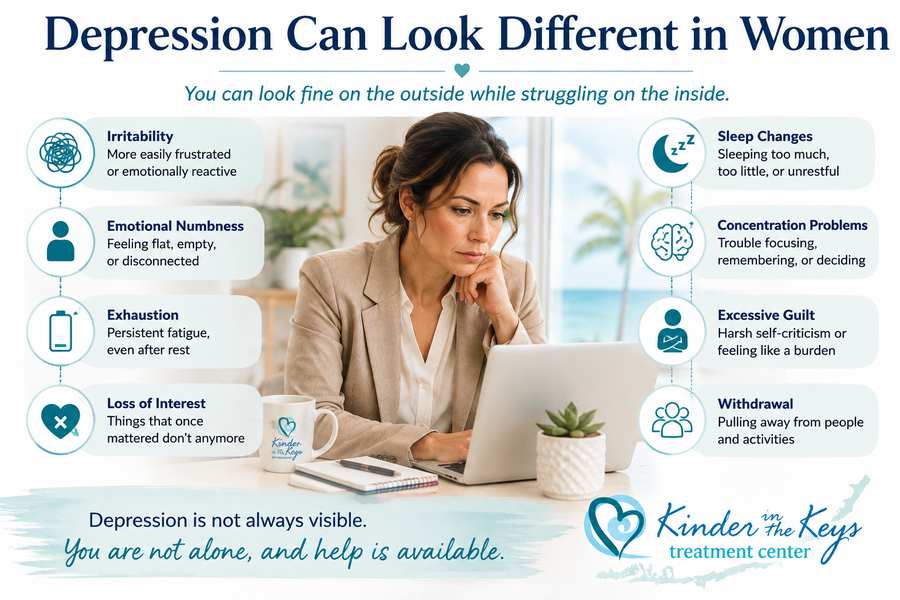
For women, a depression checklist may identify symptoms that are easy to overlook when someone continues working, caregiving, or managing daily responsibilities. Depression does not always look like obvious sadness.
Some women continue working, caring for others, managing households, and appearing highly functional while internally experiencing exhaustion, emotional numbness, irritability, guilt, loss of pleasure, sleep disruption, difficulty concentrating, or a growing sense that they cannot continue functioning this way.
Hormonal transitions, caregiving demands, relationship experiences, trauma histories, chronic stress, physical health, and co-occurring anxiety or PTSD may also influence the clinical picture.
That is one reason an individualized assessment matters.
When a Depression Self-Check Becomes a Reason to Seek Help
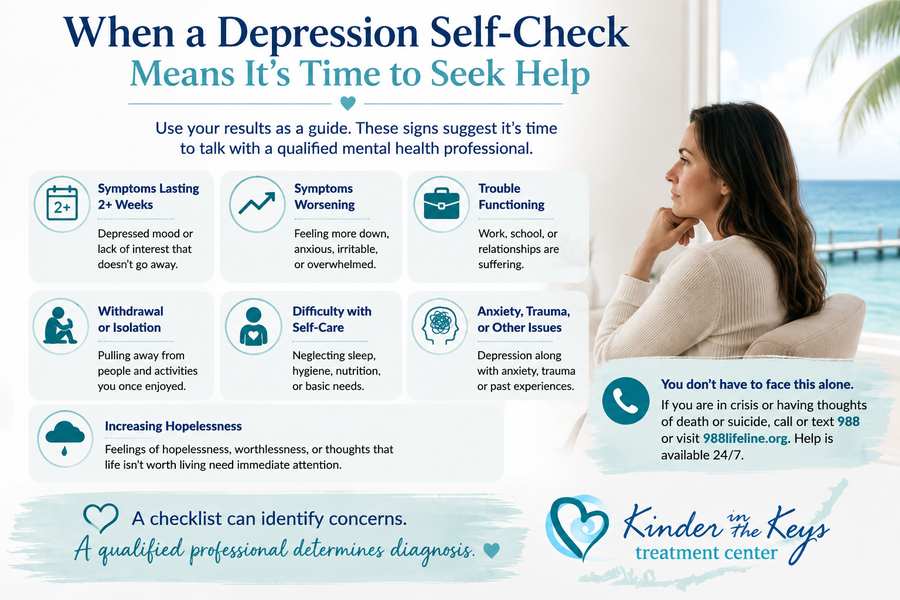
Consider speaking with a mental health professional when symptoms:
- Persist for approximately two weeks or longer
- Continue getting worse
- Interfere with work or daily responsibilities
- Affect important relationships
- Cause significant withdrawal or isolation
- Make basic self-care increasingly difficult
- Occur alongside severe anxiety, trauma symptoms, or other mental health concerns
- Create feelings of hopelessness or an inability to imagine things improving
You do not need to wait until every area of your life has fallen apart before seeking treatment.
When Depression Symptoms Point to Something Deeper
Depression symptoms do not always occur in isolation. Understanding what is contributing to those symptoms can influence which treatment approach is appropriate.
Major Depressive Disorder
Major depressive disorder can involve persistent depressed mood, loss of interest or pleasure, changes in sleep or appetite, low energy, difficulty concentrating, feelings of worthlessness or excessive guilt, and significant changes in functioning.
Symptoms should be evaluated in the context of the woman’s overall clinical picture rather than interpreted from a checklist alone.
MAJOR DEPRESSIVE DISORDER VS PERSISTENT DEPRESSIVE DISORDER
Depression and Anxiety
Depression and anxiety frequently occur together.
A woman may experience low mood and loss of motivation while also struggling with chronic worry, physical tension, panic symptoms, racing thoughts, or fear.
When conditions overlap, treatment should address the whole clinical picture rather than treating each symptom as though it exists independently.
WHY ANXIETY, DEPRESSION, AND PTSD OFTEN OCCUR TOGETHER
Depression and Trauma
Trauma can also influence depressive symptoms.
Some women experience depression alongside PTSD, unresolved traumatic experiences, emotional numbing, avoidance, shame, hypervigilance, or difficulty feeling safe.
Recognizing the relationship between depression and trauma can be important when determining the most appropriate treatment approach.
Depression Treatment for Women
If your depression checklist reflects persistent changes in mood, motivation, sleep, concentration, or functioning, consider discussing those changes with a qualified mental health professional. Depression exists on a spectrum, and the appropriate level of treatment depends on the individual.
Many women can be successfully treated through outpatient psychotherapy, medication when clinically indicated, or a combination of approaches.
For women whose symptoms have become severe, persistent, functionally impairing, complicated by trauma or other mental health conditions, or insufficiently responsive to outpatient treatment, a more intensive level of care may be appropriate.
Kinder in the Keys provides residential mental health treatment for adult women in the Florida Keys. Treatment is individualized around the woman’s symptoms, history, functioning, clinical needs, and treatment goals.
Learn more about Depression Treatment for Women at Kinder in the Keys.
Depression and Trauma
Trauma can also influence depressive symptoms.
Some women experience depression alongside PTSD, unresolved traumatic experiences, emotional numbing, avoidance, shame, hypervigilance, or difficulty feeling safe.
Recognizing the relationship between depression and trauma can be important when determining the most appropriate treatment approach.
Depression Treatment for Women
Depression exists on a spectrum, and the appropriate level of treatment depends on the individual.
Many women can be successfully treated through outpatient psychotherapy, medication when clinically indicated, or a combination of approaches.
For women whose symptoms have become severe, persistent, functionally impairing, complicated by trauma or other mental health conditions, or insufficiently responsive to outpatient treatment, a more intensive level of care may be appropriate.
Kinder in the Keys provides residential mental health treatment for adult women in the Florida Keys. Treatment is individualized around the woman’s symptoms, history, functioning, clinical needs, and treatment goals.
Learn more about Depression Treatment for Women at Kinder in the Keys.
Medically Reviewed By
Dr. Laura Tanzini, DrPH, LMFT
Doctor of Public Health | Specialty in Lifestyle Medicine
Licensed Marriage and Family Therapist (Florida & California)
Founder & CEO, Kinder in the Keys
This article has been clinically reviewed for accuracy and consistency with current behavioral health and mental health treatment principles. Dr. Tanzini has extensive clinical experience in trauma, PTSD, anxiety, depression, and women’s mental health.
Doctoral Research: Dr. Tanzini’s doctoral research at Loma Linda University examined childhood and adult traumatic events, cumulative trauma exposure, gender, forgiveness, life satisfaction, and long-term well-being.
Medical Disclaimer
This depression checklist is provided for educational and informational purposes only. It is not a diagnostic instrument and is not a substitute for individualized evaluation, diagnosis, or treatment by a qualified healthcare professional.