
Why are females more depressed than males? It is a common question, and the answer is more complicated than hormones or biology alone. Women experience depression more often than men, but researchers have not identified one single reason for the difference.
Instead, depression develops through an interaction of biological, psychological, social, and environmental factors. For women, reproductive transitions, exposure to certain forms of trauma, chronic stress, caregiving responsibilities, relationships, physical health, genetics, and life experiences can all influence vulnerability to depression.
Understanding those factors matters because depression is not simply sadness or a difficult period in life. When symptoms become persistent or begin interfering with relationships, work, physical health, or daily functioning, professional treatment may be necessary.
At Kinder in the Keys, our women’s depression treatment center provides residential care for women whose depression requires more structure and support than traditional outpatient treatment can provide.
Are Women Really More Likely to Experience Depression Than Men?
Yes. Population research consistently finds higher rates of depression among women than men.
The World Health Organization reports that depression is approximately 1.5 times more common among women worldwide. However, the difference should not be interpreted to mean that simply being a woman causes depression.
Depression is a complex mental health condition. Genetics, physical health, stressful or traumatic experiences, relationships, environment, psychological factors, and biological processes can all contribute. The World Health Organization similarly describes depression as developing through a complex interaction of social, psychological, and biological factors.
Depression can also take different forms, including major depressive disorder and persistent depressive disorder, which can differ in duration and symptom patterns.
There is another important consideration when comparing women and men: diagnosed depression does not necessarily capture every person experiencing the condition. Men may be less likely to recognize depressive symptoms, discuss emotional distress, or seek mental health treatment. As a result, some depression among men may remain undiagnosed.
The gender difference is real, but the explanation is not as simple as women being biologically destined to become depressed.
Why Are Females More Depressed Than Males?
When people ask why are females more depressed than males, they are usually looking for one clear explanation.
There isn’t one.
Several factors may contribute to women’s higher rates of depression, and those factors can interact differently in every woman. Five particularly important areas include reproductive and hormonal transitions, trauma exposure, chronic stress and caregiving, differences in how depression is recognized or reported, and changes in vulnerability across the lifespan.
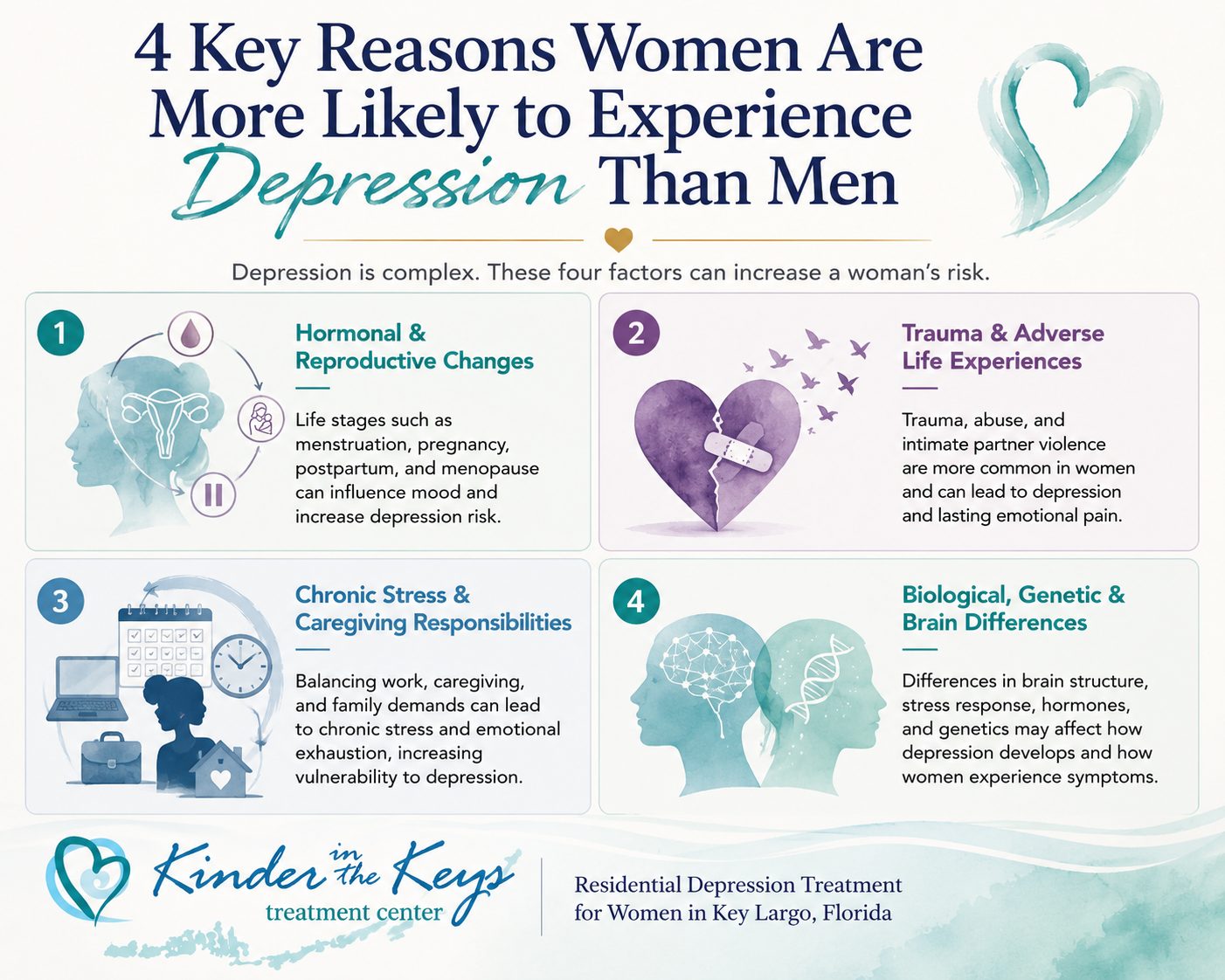
1. Hormonal and Reproductive Changes Can Affect Depression Risk
Hormones do not automatically cause depression. Most women experience significant reproductive hormonal changes without developing a depressive disorder.
However, certain reproductive transitions are associated with increased vulnerability to mood symptoms in some women.
These include:
-
The menstrual cycle and premenstrual dysphoric disorder (PMDD)
-
Pregnancy
-
The postpartum period
-
Perimenopause and the transition to menopause
The National Institute of Mental Health identifies PMDD, perinatal depression, and perimenopausal depression as forms of depression associated with particular stages of a woman’s reproductive life.
PMDD, for example, is substantially more severe than ordinary premenstrual symptoms and can include significant depression, irritability, anxiety, and changes in functioning.
Pregnancy and childbirth also involve major physical, hormonal, psychological, and lifestyle changes. Some women develop perinatal depression during pregnancy or after delivery. This is different from the temporary emotional changes commonly referred to as the “baby blues.”
Depression can also begin during pregnancy, making it important to recognize depression during pregnancy rather than assuming significant mood changes are simply a normal part of pregnancy.
Perimenopause represents another period during which some women experience new or worsening mood symptoms.
Researchers continue to study why reproductive changes affect some women much more strongly than others. The relationship between hormones and depression is complex and should not be reduced to the idea that a particular hormone level automatically causes depression.
2. Trauma Can Contribute to Depression in Women
Trauma is another important part of the picture.
Experiences such as childhood abuse, sexual violence, intimate partner violence, emotional abuse, serious loss, and other traumatic events can have lasting effects on emotional and physical health.
The CDC has documented links between intimate partner violence and serious mental health consequences, including depression and PTSD.
Trauma does not inevitably cause depression, and not every woman with depression has experienced trauma. However, adverse and traumatic experiences can increase vulnerability to depression and other mental health conditions.
This is one reason a thorough clinical assessment matters.
A woman may enter treatment believing that depression itself is the entire problem when unresolved trauma, chronic fear, shame, relationship patterns, or other experiences are contributing to her symptoms.
Depression treatment should therefore address the individual woman’s history rather than treating every depressive disorder as though it developed for the same reason.
Women struggling with both conditions may benefit from understanding the connection between trauma and depression and how the two can affect one another.
Women experiencing both conditions may benefit from understanding the connection between PTSD and depression and how symptoms can overlap or affect one another.
3. Chronic Stress and Caregiving Responsibilities Matter
Depression does not occur separately from the circumstances of a woman’s life.
Many women simultaneously manage careers, relationships, children, household responsibilities, financial concerns, aging parents, and the needs of other family members.
Caregiving can be meaningful and deeply rewarding. It can also become exhausting when a woman has little opportunity to attend to her own physical or emotional needs.
Chronic stress can affect sleep, energy, concentration, relationships, physical health, and coping. When stress is combined with other vulnerabilities—including genetics, previous depression, trauma, loss, medical problems, or limited support—the risk of significant depressive symptoms may increase.
Some women become so accustomed to functioning under stress that depression is difficult to recognize.
They may continue working, parenting, attending appointments, and meeting responsibilities while experiencing exhaustion, loss of pleasure, hopelessness, emotional numbness, or persistent sadness privately.
This is sometimes described informally as high-functioning depression, although that term is not itself a formal psychiatric diagnosis.
4. Women and Men May Experience or Report Depression Differently
Comparing depression rates between women and men requires another layer of caution.
Women are diagnosed with depression more frequently, but diagnosis depends partly on recognizing symptoms and seeking care.
Some men experiencing depression may be less likely to identify what they are experiencing as depression or to seek professional help. Depression can also include symptoms such as irritability, anger, withdrawal, substance misuse, sleep disturbance, or risk-taking behavior, which may not immediately be recognized as signs of a depressive disorder.
Women can experience these symptoms as well.
This is why depression should not be reduced to stereotypes such as “women become sad while men become angry.” Individual presentations vary considerably.
A qualified clinician looks at the complete pattern of symptoms, their duration and severity, and how significantly they interfere with daily functioning.
5. Depression Risk Can Change Throughout a Woman’s Life
A woman’s vulnerability to depression is not necessarily constant throughout her lifetime.
Different stages bring different biological, psychological, and social circumstances.
Adolescence
Rates of depression increase significantly during adolescence. Puberty occurs alongside major changes in identity, relationships, social expectations, body image, independence, and emotional development.
Early recognition and appropriate treatment are especially important when significant depressive symptoms emerge during adolescence.
Young and Middle Adulthood
Adulthood can bring career pressures, intimate relationships, marriage, parenting, fertility concerns, divorce, financial responsibilities, caregiving, grief, and other major life events.
For women with previous depression or other vulnerabilities, periods of intense stress may contribute to recurrence or worsening symptoms.
Pregnancy and the Postpartum Period
Depression can occur during pregnancy as well as after childbirth.
Perinatal depression deserves professional attention because symptoms can affect a woman’s ability to function and care for herself during an already demanding period of physical and emotional change.
Perimenopause and Menopause
The menopause transition can involve changes in sleep, physical symptoms, reproductive hormones, relationships, health concerns, and life circumstances.
Some women experience significant mood symptoms during this transition, including women without an extensive previous history of depression.
Again, hormones are only one part of the picture. A careful evaluation should consider the woman’s physical health, psychiatric history, medications, sleep, stress, relationships, and other contributing factors.
How Do You Know When It Is Depression?
Everyone experiences sadness, disappointment, grief, stress, or periods of feeling emotionally depleted.
Depression is different.
A depressive disorder may involve persistent symptoms such as:
-
Sadness, emptiness, or hopelessness
-
Loss of interest or pleasure in activities
-
Significant changes in sleep
-
Changes in appetite or weight
-
Fatigue or loss of energy
-
Difficulty concentrating or making decisions
-
Feelings of worthlessness or excessive guilt
-
Irritability
-
Social withdrawal
-
Difficulty functioning at work, home, or in relationships
-
Recurrent thoughts about death or suicide
Symptoms should always be evaluated within the context of the individual woman.
If you are uncertain whether what you are experiencing may be depression, learning how to tell if you are depressed can be a useful starting point, but an online article or screening tool cannot replace a professional evaluation.
When Depression Becomes More Than You Can Manage Alone
Not every woman with depression needs residential treatment.
Many women improve with outpatient psychotherapy, medication management when appropriate, lifestyle interventions, or a combination of treatments.
However, outpatient care may not provide enough support when depression becomes severe, persistent, recurrent, or significantly interferes with a woman’s ability to function.
A higher level of care may be considered when:
-
Outpatient treatment has not provided sufficient improvement
-
Symptoms continue to worsen
-
Depression significantly interferes with daily functioning
-
A woman is becoming increasingly isolated or unable to maintain healthy routines
-
Co-occurring trauma, anxiety, or other mental health concerns complicate treatment
-
The home environment makes it difficult to stabilize or focus on treatment
-
More consistent therapeutic structure and support are needed
The appropriate level of care should be determined individually through clinical assessment.
How Depression Treatment for Women Can Help
Effective depression treatment does more than tell a woman to think positively or simply manage her symptoms.
Treatment begins by understanding what is contributing to the depression.
That may involve exploring thought and behavioral patterns, relationships, trauma history, losses, chronic stress, physical health, sleep, nutrition, coping strategies, medications, and other factors relevant to the individual.
Evidence-based treatment may include psychotherapy, behavioral interventions, medication when clinically appropriate, and attention to lifestyle factors that support mental and physical health.
Understanding the different forms of treatment for depression can also help women and their families recognize why treatment recommendations vary depending on symptoms, severity, history, and level-of-care needs.
There is no single treatment plan that is appropriate for every woman.
That individualized approach becomes especially important when depression occurs alongside trauma, anxiety, complicated relationships, chronic stress, or longstanding behavioral patterns.
When Residential Depression Treatment May Be Appropriate
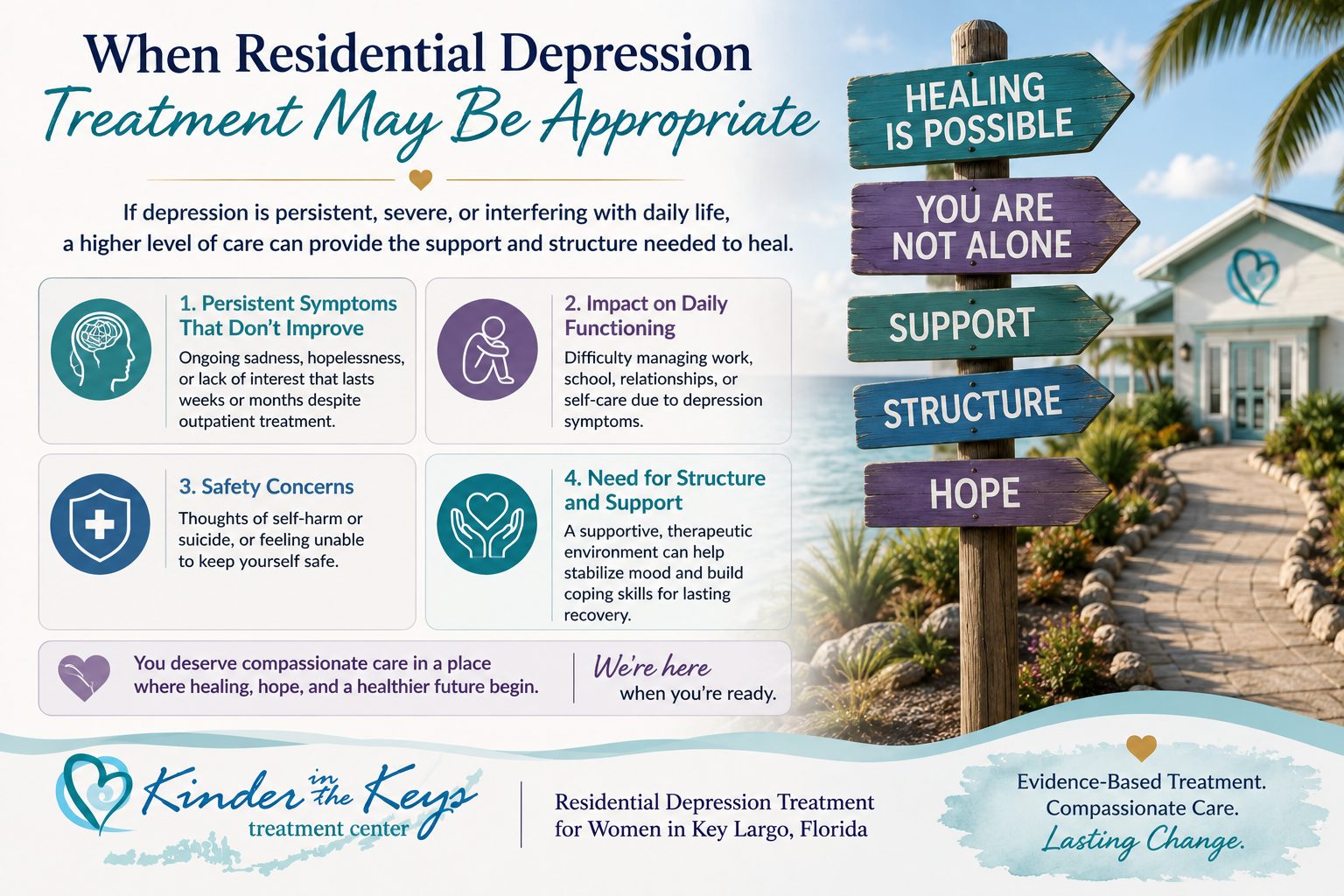
Residential treatment provides something outpatient therapy cannot: the opportunity to temporarily step away from the environment in which a woman has been struggling and focus intensively on treatment.
This level of care can provide greater structure, therapeutic support, consistent routines, and more opportunities to identify and work through the factors maintaining depression.
Residential care is not necessary simply because someone has a depression diagnosis. It is intended for women whose symptoms and circumstances indicate that a more intensive level of treatment is appropriate.
For some women, that additional structure creates the space necessary to move beyond repeatedly managing crises and begin addressing the patterns underneath them.
Depression Treatment for Women at Kinder in the Keys
Kinder in the Keys is a residential mental health treatment center for adult women in Key Largo, Florida.
Our depression treatment program is designed to look beyond the diagnosis alone.
Treatment considers the whole woman: her symptoms, history, relationships, physical well-being, traumatic experiences when present, coping patterns, and the circumstances that may be contributing to her depression.
Because Kinder is a small women’s program, treatment can remain individualized rather than relying on a one-size-fits-all approach.
Women participate in individual therapy, group treatment, and other clinically appropriate therapeutic services within a structured residential environment. When family involvement is appropriate and desired, family therapy may also be incorporated into treatment.
Our goal is not to promise that depression will disappear or that every woman will respond to treatment in the same way. The goal is to provide the clinical structure, support, and individualized treatment necessary to understand what is driving the depression and help each woman develop healthier ways of functioning beyond treatment.
Frequently Asked Questions
Why are females more depressed than males?
Women experience depression more frequently than men, but researchers have not identified one single cause. Biological and reproductive factors, trauma exposure, chronic stress, social circumstances, genetics, psychological factors, and differences in recognition and help-seeking may all contribute to the observed difference.
Are hormones the main reason women experience more depression?
No. Hormonal and reproductive transitions can affect mood vulnerability in some women, particularly around PMDD, pregnancy and postpartum, and perimenopause. However, depression develops through a complex interaction of biological, psychological, environmental, and social factors.
Is depression genetic in women?
Genetics can contribute to vulnerability to depression, but family history does not determine that a woman will develop the condition. Environmental factors, stressful or traumatic experiences, physical health, relationships, and psychological factors can interact with genetic vulnerability.
Can trauma cause depression?
Traumatic experiences are associated with increased risk for depression, but trauma does not inevitably result in a depressive disorder. Some women with depression have significant trauma histories while others do not. Individual assessment is necessary to understand the factors contributing to a woman’s symptoms.
At what age are women most vulnerable to depression?
Depression can occur at any age. Certain stages—including adolescence, pregnancy and postpartum, and the perimenopausal transition—can involve changes that increase vulnerability for some women. Individual risk depends on many factors beyond age alone.
Do women and men experience depression differently?
There can be differences in how symptoms are recognized, reported, and treated, but there is substantial variation among individuals. Neither women’s nor men’s depression should be reduced to gender stereotypes. Clinical evaluation should focus on the individual’s symptoms and functioning.
Getting the Right Level of Help for Depression
Knowing why women experience depression more often than men can help us understand the condition, but statistics do not tell us what is causing depression in one particular woman.
That requires looking at the person rather than only the diagnosis.
If depression is interfering with your ability to function, maintain relationships, care for yourself, or participate in everyday life, it may be time to consider whether your current level of support is enough.
Kinder in the Keys provides residential depression treatment for adult women in Key Largo, Florida. Our admissions team can help you understand the program, discuss whether residential treatment may be appropriate, and review insurance benefits and other treatment considerations.
You can also verify your insurance benefits to learn more about potential coverage for treatment.
Medically Reviewed By
Dr. Laura Tanzini, DrPH, LMFT
Doctor of Public Health | Specialty in Lifestyle Medicine
Licensed Marriage and Family Therapist (Florida & California)
Founder & CEO, Kinder in the Keys
This article has been clinically reviewed for accuracy and consistency with current behavioral health and trauma-informed treatment principles. Dr. Tanzini has extensive clinical experience in trauma, PTSD, anxiety, depression, and women’s mental health, including assessment and treatment of trauma-related conditions.
Medical Disclaimer
This article is for educational and informational purposes only and is not intended to diagnose, treat, cure, or prevent any mental health condition. Information provided here should not replace individualized evaluation, diagnosis, or treatment from a qualified healthcare or mental health professional.