
Depression is not a single experience with one fixed set of symptoms. It shows up in many forms and patterns, each with its own course, triggers, and treatment needs. Knowing which type you or a loved one may be facing can make the path to recovery feel clearer and far less overwhelming. At Kinder in the Keys, we help women identify what they are actually dealing with during depression so that care can be tailored rather than generic. This guide walks through the most common types of depression and what sets each one apart.
What Are the Different Kinds of Depression?
While the different kinds of depression often share a core of low mood and/or lost interest, they differ in how long they last, what sets them off, and how intense they become. Recognizing the symptoms of depression is the starting point, but matching those symptoms to a specific form is what helps a provider choose the right treatment.
Here is a quick overview of seven commonly discussed depressive disorders, presentations, and patterns. Some are formal diagnoses, while others describe specifiers or commonly used clinical presentations.
| Type | Hallmark Feature | Typical Pattern |
|---|---|---|
| Major Depressive Disorder | Intense, persistent low mood | Episodes lasting weeks or longer |
| Persistent Depressive Disorder | Chronic depression | Lasts two years or more |
| Seasonal Affective Disorder | Mood tied to the seasons | Worsens in fall and winter |
| Perinatal Depression | Depression in pregnancy or after birth | During or after pregnancy |
| Premenstrual Dysphoric Disorder | Severe mood shifts before menstruation | Cyclical, monthly |
| Atypical Depression | Mood lifts with positive events | Ongoing with reactive mood |
| Situational Depression | Triggered by a specific event | Tied to a stressor |
A Closer Look at 7 Types of Depression
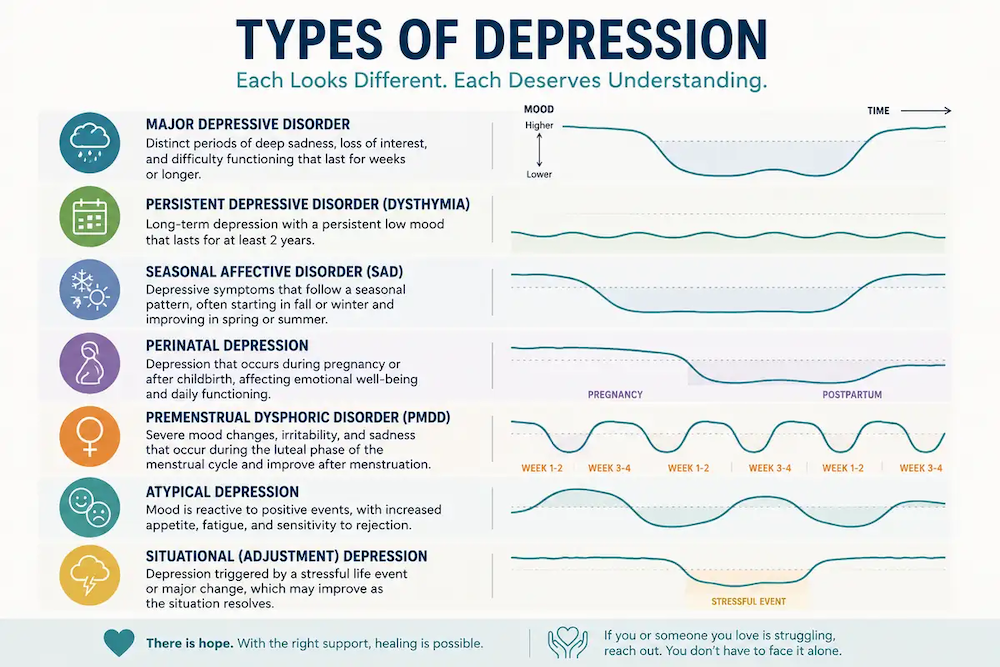
Understanding these 7 common depression-related patterns in more depth can help you recognize which pattern feels most familiar.
Major Depressive Disorder
Major depressive disorder, often called clinical depression, involves intense symptoms that last at least two weeks and interfere with daily life. People may feel deeply hopeless, lose interest in nearly everything, and struggle with sleep and appetite. The differences between this and longer-lasting forms are covered in our look at major versus persistent depressive disorder.
Persistent Depressive Disorder
Persistent depressive disorder (PDD), a diagnosis that incorporates what was historically called dysthymia, involves a depressed mood that is present for most of the day, more days than not, for at least two years in adults. Symptoms may be less intense than those experienced during some major depressive episodes, but their chronic nature can significantly affect relationships, work, energy, self-esteem, and overall quality of life.
Seasonal Affective Disorder
Seasonal affective disorder (SAD) is commonly used to describe major depressive disorder with a seasonal pattern. Symptoms typically emerge during a particular season and improve when that season changes, with fall and winter being the most common pattern. Less commonly, depressive episodes may occur during spring or summer. Changes in daylight, circadian rhythms, and other biological factors may contribute to seasonal patterns of depression.
Perinatal and Postpartum Depression
Perinatal depression refers to depression occurring during pregnancy or after childbirth. Postpartum depression describes depressive symptoms that develop following delivery and is more severe and persistent than the temporary emotional changes commonly called the “baby blues.” Symptoms can affect mood, sleep, energy, functioning, relationships, and a mother’s ability to care for herself and connect with her baby.
Premenstrual Dysphoric Disorder
Premenstrual dysphoric disorder (PMDD) is a clinically recognized condition involving significant mood and physical symptoms that occur during the luteal phase of the menstrual cycle and improve shortly after menstruation begins. Symptoms can include depressed mood, marked irritability, anxiety, mood swings, difficulty concentrating, fatigue, and physical symptoms severe enough to interfere with daily functioning or relationships.
Atypical Depression
Atypical depression refers to a depressive presentation in which mood can temporarily improve in response to positive events. Other features may include increased appetite or weight gain, excessive sleep, a heavy or weighted feeling in the arms or legs, and a longstanding pattern of sensitivity to interpersonal rejection. Despite the name, atypical features are not necessarily uncommon.
Situational Depression
Situational depression is an informal term often used for adjustment disorder with depressed mood, which develops in response to a specific stressor such as loss, divorce, or a major life change. It usually eases as a person adjusts, though it can deepen if the stress continues unaddressed.
Common Symptoms Across Forms of Depression
While the forms of depression differ, several symptoms overlap. Watching for these can help you decide whether to seek an evaluation:
- Ongoing sadness, emptiness, or numbness
- Loss of interest in activities once enjoyed
- Changes in sleep, whether too much or too little
- Shifts in appetite or weight
- Trouble concentrating or making decisions
- Frequent crying, which raises the question of whether crying every day signals depression
Compassionate Depression Treatment for Women
Discover personalized care, evidence-based therapies, and a supportive path toward healing and long-term emotional wellness.
What Causes Different Depressive Disorder Types?
The various depressive disorder types rarely have a single cause. Instead, they tend to arise from a mix of influences that build on one another:
- Biological factors, including genetics, brain function, hormonal influences, circadian rhythms, and other physiological processes
- Family history, since heredity plays a role, is explored in our article “is depression genetic?“
- Life stressors and depression triggers, such as trauma, grief, or chronic strain
- Hormonal changes tied to pregnancy, the menstrual cycle, or menopause
- Medical conditions, substance use, and ongoing sleep disruption
For women in particular, hormonal and relational factors often interact, which is one reason several forms of depression appear more frequently in women than in men.
Getting Help for Clinical Depression Types

No matter which of the clinical depression types you are facing, effective help exists. Treatment should be individualized based on the depressive disorder, symptom pattern, severity, medical history, co-occurring conditions, and the person’s individual needs. Different presentations of depression may require different combinations of psychotherapy, medication, lifestyle interventions, medical evaluation, and other forms of support. Some people notice their symptoms follow a daily rhythm, a pattern explained in why depression can be worse in the morning, while others hide their struggle so well that it resembles smiling depression.
Reaching out for a professional evaluation is the surest way to learn what you are dealing with and to begin a plan that fits your life. Depression in all its forms is treatable, and clarity about the type is often the first real step toward relief.
Types of Depression: Frequently Asked Questions
How many types of depression are there?
There is no single fixed number. Clinicians and educational resources group depression in different ways, but common depression-related patterns include major, persistent, seasonal, perinatal, premenstrual dysphoric, atypical, and situational depression. Some classifications group or split these differently, yet each one describes a distinct depressive pattern.
What is the most common type of depression?
Major depressive disorder is one of the most commonly diagnosed forms. It involves intense, lasting low mood and loss of interest that interfere with daily life for at least two weeks. Many people experience more than one episode over the course of a lifetime.
Can someone have more than one type of depression?
Yes. It is possible to experience overlapping forms, such as persistent depressive disorder with periodic major episodes, sometimes called double depression. A thorough professional evaluation helps untangle which patterns are present so that treatment can address all of them.