
If you find yourself in tears most days, sometimes without an obvious reason, you may be wondering what it means. Crying is a healthy and natural release, but when it happens daily, it can leave you feeling confused, drained, or worried about your mental health.
At Kinder in the Keys, we hear this question often from women who sense that something deeper may be going on that may signal depression or a need for depression treatment.
This guide explores what frequent crying can signal, when it points to depression, and how to find relief.
Is Crying Every Day a Sign of Depression?
The honest answer to whether crying every day is a sign of depression is that it can be, but not always. Crying every day is one of several possible symptoms of depression, yet on its own, it does not confirm a diagnosis.
What matters is the bigger picture, including how long it has lasted, what tends to set it off, and whether other changes are present.
Frequent tears become more concerning when they pair with low mood, loss of interest, fatigue, or hopelessness. When crying is the only change and your mood otherwise feels stable, it may stem from stress, hormones, grief, anxiety, or simple emotional overload rather than a depressive disorder.
Compassionate Depression Treatment for Women
Discover personalized care, evidence-based therapies, and a supportive path toward healing and long-term emotional wellness.
Call (786) 839-3600
When Is Crying Normal Versus a Warning Sign?
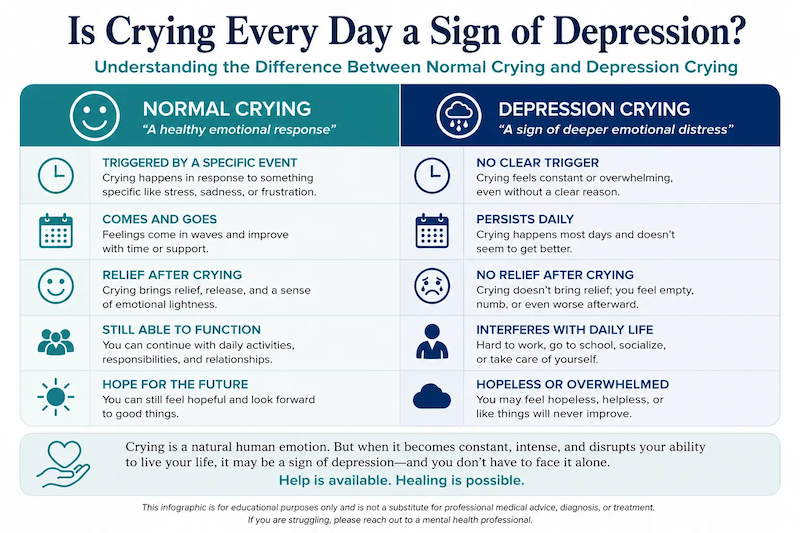
Everyone cries, and tears are not a problem in themselves. The difference lies in frequency, intensity, and impact.
The table below offers a general way to tell the two apart, though only a professional can make a true assessment. Our guide on how to tell if you are depressed can also help you recognize other symptoms that may be present.
| Healthy Crying | Crying Worth Watching |
|---|---|
| Tied to a clear cause | Happens for no apparent reason |
| Brings relief afterward | Leaves you feeling worse or numb |
| Passes fairly quickly | Lingers or returns throughout the day |
| Does not disrupt daily life | Interferes with work or relationships |
| Mood recovers between episodes | Low mood persists in the background |
Why Do I Cry Every Day? Common Reasons
If you are asking, “Why do I cry every day?” there are many possible explanations, and depression is only one of them.
Crying for no reason can be especially unsettling, but there is usually an underlying cause, even when it is not obvious. Some of those causes may overlap with the common causes of depression.
Frequent reasons include:
Depression or persistent low mood
Anxiety and chronic stress
Hormonal changes during the menstrual cycle, pregnancy, or menopause
Grief, loss, or unresolved trauma
Burnout and emotional exhaustion
Specific depression triggers, such as conflict or major life change
Depression and Crying
The connection between depression and crying is well recognized. Some people with depression cry frequently, while others feel so numb that they cannot cry at all.
Depression does not look the same in everyone.
Because depression takes many different forms, the way it shows up can vary widely. For some women, symptoms may even exist behind an outwardly functional or positive appearance, sometimes referred to as smiling depression.
Crying Every Day and Anxiety
Daily crying can also occur alongside anxiety.
When someone remains anxious or overwhelmed for extended periods, emotions may become more difficult to manage, and tears may occur more easily. Crying may happen alongside symptoms such as racing thoughts, restlessness, physical tension, a racing heart, or a sense of being overwhelmed.
Understanding what anxiety disorders involve can help you consider whether anxiety may be contributing to frequent crying rather than depression alone.
Other Physical and Timing Factors
Sometimes physical factors can make emotions more difficult to manage.
Poor sleep, illness, hormonal changes, exhaustion, and other physical stressors may affect mood and emotional resilience.
Even the time of day can influence depression symptoms for some people. Some women report feeling particularly low or tearful in the early morning.
Looking at when crying occurs, what happened beforehand, and whether there are other physical or emotional changes can provide useful information.
Understanding Crying Spells in Depression
Crying spells associated with depression may feel different from ordinary tears.
They can feel sudden, intense, and difficult to stop. Sometimes there is an obvious trigger. Other times, the intensity of the emotional response may seem much greater than the immediate situation would suggest.
Repeated crying spells are worth paying attention to, particularly when they occur alongside other changes in mood or functioning.
Depression itself can involve a combination of biological, psychological, environmental, and individual factors. We explore one aspect of this further in our article about whether depression is genetic.
Whatever is contributing to the crying, repeated episodes should not simply be dismissed when they represent a significant change in how you normally feel or function.
When to Seek Help
Occasional tearful days are part of being human.
Daily crying that lasts for weeks, particularly when it occurs alongside other signs of depression, deserves professional attention.
Consider reaching out for an evaluation if you notice:
Crying most days for two weeks or longer, especially with other mood or functioning changes
Persistent sadness, emptiness, or hopelessness
Loss of interest in things you used to enjoy
Changes in sleep, appetite, or energy
Difficulty concentrating or making decisions
Difficulty functioning at work, home, or in relationships
Any thoughts of harming yourself
That last point requires immediate attention.
If you have thoughts of harming yourself or are experiencing a mental health crisis, call or text 988 in the United States to reach the 988 Suicide & Crisis Lifeline, or seek immediate emergency assistance.
How to Cope With Daily Crying

While you work toward understanding what is causing the crying, there are things you can do to better understand and manage what you are experiencing.
Start by paying attention to patterns.
When does the crying happen?
What occurred immediately beforehand?
Does it happen more frequently when you are tired, overwhelmed, alone, anxious, or under significant stress?
Does crying provide relief, or do you continue feeling persistently low afterward?
It may also help to:
Talk with someone you trust about what you have been experiencing
Maintain a regular sleep schedule
Eat consistently and pay attention to nutrition
Build some structure into your day
Make time for physical activity when appropriate
Reduce unnecessary stress where possible
Keep track of changes in your mood and functioning
Schedule an evaluation with a qualified mental health professional if symptoms persist
For additional ideas, our guide on how to deal with depression offers practical starting points.
Frequent crying is worth paying attention to, particularly when it represents a change from your usual emotional pattern or begins interfering with daily life.
Identifying what is contributing to it is the first step toward addressing the underlying problem.
Is Crying Every Day a Sign of Depression? Frequently Asked Questions
Is it normal to cry every day?
Occasional daily crying during a particularly difficult period can happen.
However, crying every day for two weeks or longer—especially when accompanied by persistent low mood, loss of interest, changes in sleep or appetite, low energy, or difficulty functioning—may warrant a professional evaluation.
The crying itself does not establish a diagnosis. The duration, severity, accompanying symptoms, and effect on daily functioning all matter.
Why do I cry for no reason?
Crying that seems to come from nowhere may still have an underlying cause that is not immediately obvious.
Stress, grief, hormonal changes, exhaustion, anxiety, depression, relationship difficulties, or accumulated emotional strain may all contribute.
Tracking when the crying occurs and what else you are experiencing may help reveal patterns that are difficult to recognize in the moment.
Can anxiety cause daily crying?
Yes. Anxiety can contribute to frequent crying.
Persistent worry, physical tension, racing thoughts, poor sleep, and feeling chronically overwhelmed can make emotions more difficult to manage.
If frequent crying occurs alongside significant anxiety symptoms, treating the underlying anxiety may help reduce the emotional distress.
Does crying every day mean I have depression?
No.
Frequent crying can occur with depression, but crying every day by itself is not enough to diagnose a depressive disorder.
Depression is evaluated based on a broader pattern of symptoms, their duration and severity, and the degree to which they interfere with a person’s ability to function.
Can someone be depressed without crying?
Yes.
Some people with depression cry frequently. Others rarely cry or describe feeling emotionally numb.
The absence of crying does not mean depression is absent, just as frequent crying does not automatically mean depression is present.
When should I talk to a mental health professional?
Consider speaking with a qualified mental health professional when frequent crying persists, represents a significant change for you, occurs alongside other symptoms of depression or anxiety, or begins interfering with work, relationships, sleep, self-care, or everyday responsibilities.
You do not need to wait until symptoms become severe before asking for help.
Depression Treatment for Women at Kinder in the Keys
When frequent crying is part of a larger pattern of depression that significantly affects daily functioning, professional treatment can help identify what is contributing to the symptoms and determine the appropriate level of care.
Kinder in the Keys provides residential mental health treatment for adult women in Key Largo, Florida.
Our small treatment environment allows care to remain individualized while providing the structure and consistency of residential treatment. Women participate in individual therapy, daily therapeutic groups, and evidence-based approaches selected according to their clinical needs.
Treatment for depression may also address anxiety, trauma, relationship difficulties, sleep, lifestyle factors, and other concerns that can contribute to a woman’s overall mental health.
If you are experiencing persistent depression symptoms and outpatient treatment has not provided sufficient improvement, a professional assessment can help determine whether residential care may be appropriate.
Learn more about Depression Treatment for Women at Kinder in the Keys
Medically Reviewed By
Dr. Laura Tanzini, DrPH, LMFT
Doctor of Public Health | Specialty in Lifestyle Medicine
Licensed Marriage and Family Therapist (FL & CA)
Founder & CEO, Kinder in the Keys
Doctoral Research: Dr. Tanzini’s doctoral research at Loma Linda University examined childhood and adult traumatic events, cumulative trauma exposure, gender, forgiveness, life satisfaction, and long-term well-being.
This article has been clinically reviewed for accuracy and consistency with current behavioral health and trauma-treatment principles. Content is intended to provide general educational information and should not replace individualized evaluation, diagnosis, or treatment by a qualified healthcare professional.