
Why is depression worse in the morning? If you wake up already exhausted, heavy, and dreading the hours ahead, only to notice your mood lifting slightly as the day goes on, you are not imagining it. Some people living with depression find their lowest point arrives within the first hour or two of waking. This pattern is known as diurnal mood variation, and understanding it can make the experience feel less confusing. At Kinder in the Keys, we work with women experiencing depression who describe mornings as the hardest part of their day, and there are biological, sleep-related, and psychological factors that may contribute.
What Is Diurnal Mood Variation?
Diurnal mood variation describes the way depressive symptoms shift in intensity across a 24-hour cycle. For some people with depression, symptoms feel most severe in the early morning and gradually ease through the afternoon and evening. Some people experience the reverse, with mood worsening as night approaches, but the morning dip is the classic pattern most often associated with melancholic features.
This kind of fluctuation is often linked to melancholic features of depression, one of several types of depression that clinicians recognize. It is considered a meaningful symptom rather than a personal failing or a sign of laziness. Recognizing the pattern is frequently the first step toward feeling understood and toward getting the right support.
Why Is Depression Worse in the Morning?
There is no single explanation for morning depression. Instead, several overlapping systems in the body may be at their most vulnerable in the early hours, which is why the answer to why depression is worse in the morning involves both hormones and the brain’s internal timing.
The Cortisol Awakening Response
Cortisol, often called the stress hormone, follows a daily rhythm. In healthy systems, it rises sharply within the first 30 to 45 minutes after waking, helping you feel alert and ready to move. In some people with depression, cortisol rhythms may be dysregulated, and the morning surge may feel especially intense or be biologically altered. Differences in the morning stress response may contribute to feelings of dread, tension, low energy, or emotional flatness in some people with depression.
Circadian Rhythm Disruption
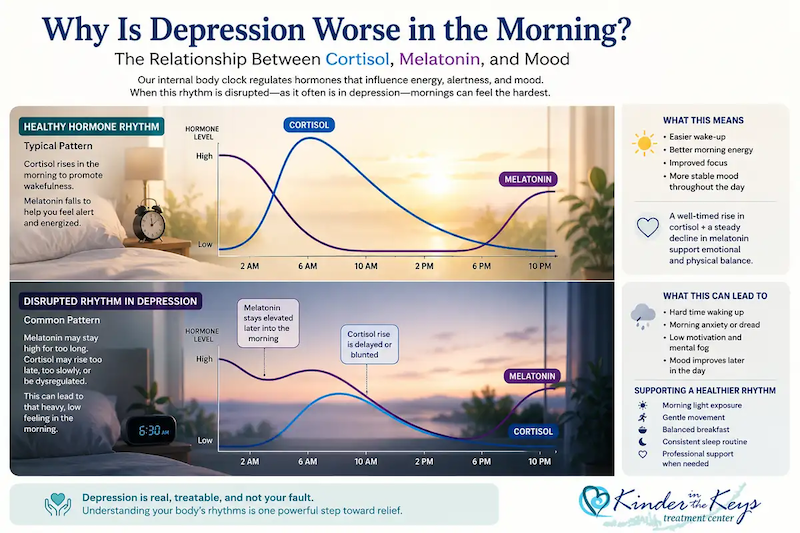
Your internal body clock governs sleep, hormone release, body temperature, and mood. When this clock falls out of sync, depression can deepen. Circadian rhythm disruption is closely associated with depression and may contribute to changes in sleep, energy, and mood. For people with this pattern, mood regulation may feel weakest early in the day.
Sleep Quality and Early Morning Waking
Poor or fragmented sleep makes mornings harder. Early morning awakening, where someone wakes hours before they intend to and cannot fall back asleep, is a hallmark of certain depressive patterns. The link between insomnia and depression runs in both directions, with each one feeding and worsening the other over time.
Compassionate Depression Treatment for Women
Discover personalized care, evidence-based therapies, and a supportive path toward healing and long-term emotional wellness.
Morning Mood Patterns at a Glance
For people with morning-worse diurnal mood variation, the pattern may look like this:
| Time of Day | Common Experience | Possible Driver |
|---|---|---|
| Waking | Heaviness, dread, low motivation | Cortisol surge, circadian misalignment |
| Mid-morning | Slow improvement, brain fog lifting | Rising activity, daylight exposure |
| Afternoon | Noticeably steadier mood | Stabilized hormone levels |
| Evening | Relative relief, more energy, individual circadian pattern, accumulated activity | Lower cortisol, routine established |
When Morning Depression Comes With Anxiety
For many people, the experience of waking up depressed is tangled with anxiety. Depression is worse in the morning anxiety often shows up as a racing mind, physical tension, or a sense of doom that arrives before any real problem has presented itself. This combination can make getting out of bed feel like the hardest task of the entire day.
Some common signs that morning anxiety is layered on top of depression include:
- A pounding heart or tight chest within minutes of waking
- Racing or catastrophic thoughts about the day ahead
- Difficulty completing simple routines like showering or eating
- A strong urge to stay in bed and avoid the day entirely
- Crying spells that feel automatic, which can be worth exploring, is crying every day a sign of depression
Other Factors Behind Waking Up Depressed
Biology sets the stage, but daily life and personal history shape how intense morning depression feels. Several factors can make the question of why I wake up so depressed harder to answer on your own:
- Genetics and family history, since depression often runs in families, is a topic explored in is depression genetic
- Specific stressors or depression triggers, such as job strain, grief, or relationship conflict
- Hormonal shifts tied to the menstrual cycle, pregnancy, or menopause
- Alcohol or excess caffeine that interferes with healthy sleep architecture
- The hidden form of struggle seen in smiling depression, where mornings feel heavy even when the public face looks completely fine
How to Ease Morning Depression

Small, consistent changes to your morning routine can ease the weight, even when they do not erase it entirely. Exposure to natural light soon after waking helps reset the circadian clock. Gentle movement, hydration, and a protein-rich breakfast can steady your energy. Building a predictable routine also reduces the number of decisions you face before your mood has had a chance to lift.
These steps can support treatment, but they are not a replacement for professional care when symptoms are persistent, severe, or include thoughts of self-harm. If the heaviness feels overwhelming, working through it gradually matters more than fixing everything at once. Our guides on how to get out of a depressive episode and improve sleep to manage anxiety offer practical starting points you can adapt to your own pace.
When to Seek Professional Support
Occasional rough mornings are part of being human. Persistent morning depression that interferes with work, relationships, or your ability to care for yourself deserves real attention. If low mood in the early hours has lasted for two weeks or more, professional support can help identify what is driving it and what treatment fits your situation. Understanding the full range of depression symptoms can also help you describe what you are experiencing to a provider.
Depression with diurnal mood variation can improve with the right treatment plan, which may include therapy, lifestyle adjustment, and, in some cases, medication. You do not have to keep dreading the sunrise, and you do not have to figure it out alone.
Why is Depression Worse in the Morning? Frequently Asked Questions
Is morning depression a real medical symptom?
Yes. Morning-worse depression can be part of diurnal mood variation, a recognized pattern in some depressive disorders, especially depression with melancholic features. It may be connected to circadian rhythms, sleep disruption, stress-hormone patterns, and other factors, and it tends to ease as the day goes on for many people who experience it.
Why do I wake up so depressed even after sleeping well?
Even with adequate sleep, the morning cortisol surge and a misaligned body clock can produce low mood on waking. Hormonal patterns, unresolved stress, and the simple weight of facing the day can all contribute, regardless of how many hours you actually slept. Also, getting enough hours of sleep does not always mean sleep quality or sleep timing is fully restorative.
How long does morning depression usually last each day?
For some people, the heaviest period is concentrated in the first few hours after waking, then gradually lifts through late morning or afternoon. The pattern varies by individual, and persistent symptoms lasting two weeks or longer warrant a professional evaluation.