
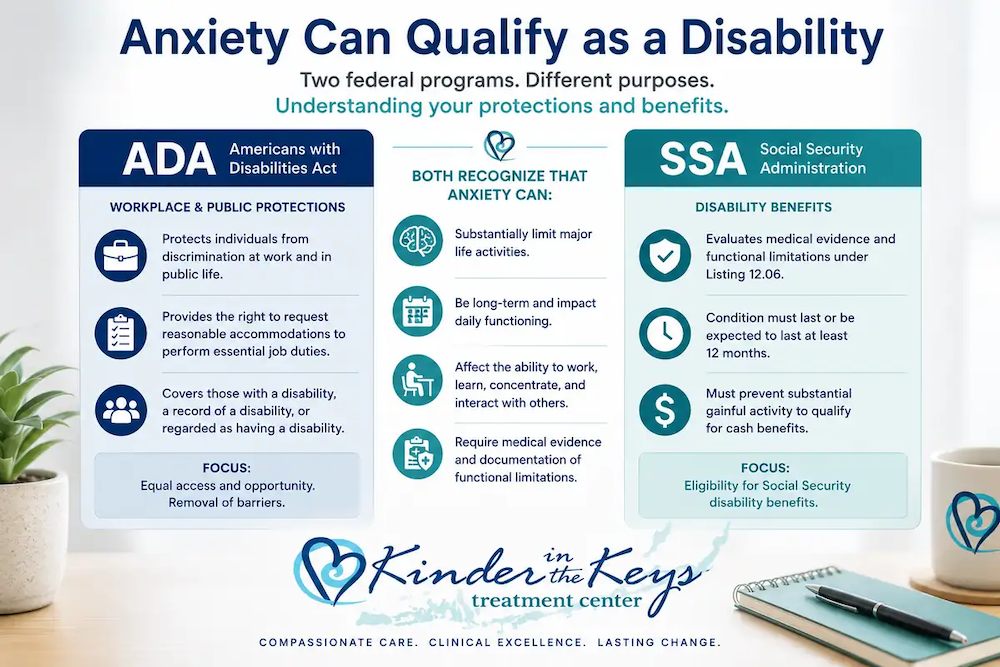
Anxiety can shape every corner of a person’s life, from how they sleep to how they perform at work to how they connect with family members. When symptoms become severe and lasting, many people begin asking the same question: Is anxiety a disability under federal law, and if so, what protections or disability benefits are available? The short answer is that severe, well-documented anxiety can qualify as a disability under both the Americans with Disabilities Act (ADA) and the Social Security Administration (SSA), though each program applies different standards.
For women working through severe symptoms, partnering with a clinical team at a dedicated women’s anxiety treatment center can help build the medical record needed to support a claim while also focusing on real recovery.
This article walks through how the law classifies anxiety, which types of anxiety disorders may qualify, what medical evidence is typically required, and how to document a claim. It is not legal advice. It is a clear overview meant to help you have informed conversations with your medical professional and, when appropriate, with an attorney.
Is Anxiety a Disability Under Federal Law?
Whether anxiety is considered a disability depends on severity, duration, and how much the condition limits a person’s ability to function. Mild or occasional anxiety, the kind most adults experience around stressful events, is not a disability. The legal standard requires a serious and persistent condition that substantially limits one or more major life activities or work-related abilities.
Anxiety is considered a disability when it significantly limits the ability to perform major life activities or maintain employment. Both the ADA and the SSA recognize this, but they evaluate claims differently. The ADA focuses on workplace and public-life protections, while the SSA decides eligibility for cash disability benefits based on whether a person can perform substantial gainful activity.
The determination of disability under both programs involves a combination of medical evidence and an assessment of how the condition affects daily life. That means a diagnosis alone is rarely enough. The record has to show how anxiety symptoms translate into real, measurable limits on daily functioning.
How the Americans with Disabilities Act Defines Anxiety
The Americans with Disabilities Act prohibits discrimination against people with disabilities in employment, public services, and many other settings. Under the law, a disability is defined as a physical or mental impairment that substantially limits one or more major life activities. Anxiety can meet that definition when symptoms are severe and ongoing, but it is worth remembering that not all anxiety qualifies. The condition must rise to the level of a substantial limitation, not just an occasional struggle.
The ADA recognizes anxiety as a disability if it substantially limits major life activities such as working, learning, concentrating, sleeping, or interacting with others. This is a broader and somewhat more flexible standard than the one used by the SSA for cash disability benefits.
When Anxiety Is Considered a Protected Condition
Not every diagnosis qualifies. The ADA does not protect occasional anxiety or short-lived stress reactions. The condition must rise to the level of a mental impairment that substantially limits daily life. A person whose generalized anxiety disorder makes it difficult to concentrate, attend meetings, or maintain pace at work for months or years is far more likely to be covered than someone with infrequent anxiety symptoms.
When anxiety is considered protected by the ADA, coverage extends to people with a “record of” the condition or those “regarded as” having it, which can matter in cases of discrimination based on perceived mental illness. Many people who deal with stigma at work qualify under this expanded definition even when their day-to-day function is relatively stable on medication.
What the Disabilities Act Protects in Daily Life
The disabilities act gives covered individuals the right to request reasonable accommodations at work and in public services. In the workplace, that may include flexible work schedules, a quieter workspace, modified job duties, written instructions instead of verbal ones, or remote work options. The goal is to remove barriers so the person can perform essential job duties despite their condition.
The ADA also protects against being fired, demoted, or denied a promotion because of a disclosed mental impairment. It does not, however, require employers to lower performance standards. It only requires reasonable adjustments that allow the employee to do the work.
Find the Best Residential Anxiety Treatment Centers
Explore treatment options, what to look for, and the next right step for lasting recovery.
Types of Anxiety Disorders Recognized by Federal Programs
The Social Security Administration evaluates anxiety and obsessive-compulsive disorders under Listing 12.06. Conditions considered under this listing can include generalized anxiety disorder, panic disorder, certain phobias, and obsessive-compulsive disorder when the required medical and functional criteria are met. The ADA covers a similarly broad range of anxiety-related mental disorders when symptoms are severe enough to substantially limit major life activities.
Although post-traumatic stress disorder is technically a trauma-related condition rather than an anxiety disorder under current diagnostic standards, many of the same legal frameworks apply. People often experience overlapping mental health conditions, and a single traumatic event can trigger both PTSD and a primary anxiety disorder. You can read more on the connections between anxiety, depression, and PTSD for more context on these overlapping mental disorders.
Generalized Anxiety Disorder and Panic Disorder
Generalized anxiety disorder is marked by excessive worry about everyday matters that lasts for months. Common symptoms include restlessness, muscle tension, sleep disturbances, irritability, and difficulty concentrating. People with generalized anxiety disorder often describe a near-constant sense of dread that does not match the actual circumstances.
Panic disorder involves recurrent panic attacks, sudden surges of intense fear or discomfort that can include a racing heart, shortness of breath, dizziness, and a feeling of unreality. After repeated panic attacks, many people develop persistent worry about future attacks, which can lead them to avoid places, activities, or social settings. That avoidance pattern often becomes the most disabling part of panic disorder.
For a deeper look at the symptoms and clinical features of these conditions, our overview of common anxiety disorders explains the signs in more detail and offers context on related mental health conditions.
Social Anxiety, OCD, and Related Mental Disorders
Social anxiety disorder, sometimes called social phobia, involves intense fear of being judged, embarrassed, or scrutinized in social situations. People with social anxiety may avoid meetings, public spaces, or even routine errands. Some interesting research on social anxiety shows how widespread the condition is and how much it can interfere with relationships and work.
Obsessive-compulsive disorder is characterized by intrusive thoughts (obsessions) and repetitive behaviors (compulsions) that the person feels driven to perform. The compulsions may temporarily reduce excessive anxiety, but often consume hours each day. Severe obsessive-compulsive disorder can prevent a person from completing tasks, leaving the house, or holding a job.
How the SSA Evaluates Anxiety for Disability Benefits
The Social Security Administration evaluates anxiety under a defined set of rules, and its evidentiary bar is higher than the ADA’s. Social security disability insurance and Supplemental Security Income (SSI) both look for proof that the medical condition severely limits a person’s ability to work.
The SSA considers anxiety a severe impairment if it has lasted or is expected to last for at least 12 months and significantly limits the individual’s ability to perform basic work tasks. This 12-month duration rule is one of the first hurdles in the disability benefits process, and it applies whether the SSA considers anxiety on its own or in combination with related mental disorders.
Listing 12.06 and Required Medical Evidence
The SSA’s Blue Book categorizes anxiety disorders under Listing 12.06, which requires medical proof of a diagnosed anxiety disorder along with evidence of significant limitations in mental functioning. The SSA evaluates anxiety under Listing 12.06, and the listing requires extreme or marked limitations in specified areas to qualify for disability benefits.
Acceptable medical evidence usually includes detailed clinical notes from a treating psychiatrist or therapist, results of standardized assessments, prescribed medication histories, and records of hospitalizations or crisis interventions. Non-medical evidence, such as statements from family members, coworkers, or a vocational counselor, can support the medical record but cannot replace it.
The Functional Criteria and Five-Step Process
Listing 12.06 lays out four functional criteria for mental functioning:
- Understanding, remembering, or applying information
- Interacting with others
- Concentrating, persisting, or maintaining pace
- Adapting or managing oneself
To meet the listing, severe anxiety must result in extreme limitation in one of these areas or marked limitation in two of them. An extreme limitation means the person cannot function independently in that area, while a marked limitation means serious interference. There is also a “serious and persistent” pathway for people with a medically documented history of the disorder over at least two years, ongoing medical treatment, mental health therapy, psychosocial support, or a structured rehabilitation program, and only minimal capacity to adapt to changes outside that supported setting.
The SSA uses a five-step evaluation process to decide whether anxiety qualifies as a disability. The steps look at whether the person is engaged in substantial gainful activity, whether the condition is severe, whether it meets or equals a Blue Book listing, the person’s residual functional capacity, and whether they can perform any other work in the national economy.
Symptoms That Make Anxiety a Disability
Symptoms that may qualify anxiety as a disability include restlessness, fatigue, difficulty concentrating, irritability, muscle tension, and sleep disturbances. Individuals with anxiety often experience excessive worry or fear that interferes with their daily lives, leading to avoidance of certain thoughts, objects, places, or people.
Physical symptoms commonly reported include muscle tension, headaches, gastrointestinal upset, racing heart, and chronic fatigue. These physical symptoms can be just as disabling as the emotional ones, especially when they persist for months. Sleep disturbances alone can magnify every other symptom, and our guide on improving sleep with anxiety offers practical strategies that can also help build a clearer treatment record.
To qualify for disability benefits, individuals with anxiety disorders must demonstrate that their symptoms severely limit mental abilities such as understanding, interacting with others, completing tasks, concentrating, and adapting to changes. The condition must significantly limit a person’s ability to function in a competitive work setting on a sustained basis.
Anxiety can produce significant physical and nervous-system symptoms, including muscle tension, gastrointestinal distress, changes in heart rate, fatigue, and sleep disruption. Understanding the relationship between psychological distress and physical responses can help explain why anxiety is experienced throughout the body.
How Anxiety Affects Daily Life and Job Duties
Anxiety can create substantial hurdles in personal, professional, and social areas. It often impacts performance, attendance, and relationships. Individuals with significant anxiety might struggle with typical daily activities such as grocery shopping or driving due to overwhelming fear. For some, the morning commute or a routine staff meeting becomes an event that requires hours of recovery afterward.
Daily functioning can decline in subtle ways before it falls apart visibly. Someone may stop returning calls, miss appointments, or avoid activities they once enjoyed. These shifts often show up in disability files as gaps in attendance, missed deadlines, or written warnings at work.
Anxiety frequently overlaps with attachment-related fears, and our piece on how to deal with abandonment issues explores the relational patterns that often fuel ongoing anxiety symptoms.
Impact on Work and Job Duties
In the workplace, anxiety can interfere with concentration, decision-making, and the ability to maintain pace through a full shift. People may have trouble completing tasks under deadline pressure, struggle to interact with others in meetings, or experience panic attacks that force them to leave early. Over time, repeated absences and reduced output can make essential job duties impossible to perform.
Reasonable accommodations under the ADA can sometimes bridge the gap. Flexible scheduling, written task lists, noise-reduction tools, or modified job duties may allow a person to continue working. When accommodations are not enough, social security disability becomes a path many people consider.
Impact on Daily Life and Relationships
Outside of work, severe anxiety can strain marriages, friendships, and parenting. Family members may notice withdrawal, irritability, or avoidance of family events. Relationships and household roles often shift, and the person with anxiety may feel guilty about the impact, which can deepen the cycle. Articles on supporting an anxious or depressed family member and on how relationship dynamics affect women’s mental health explore this in detail.
Documenting Anxiety: What Your Medical Professional Should Provide
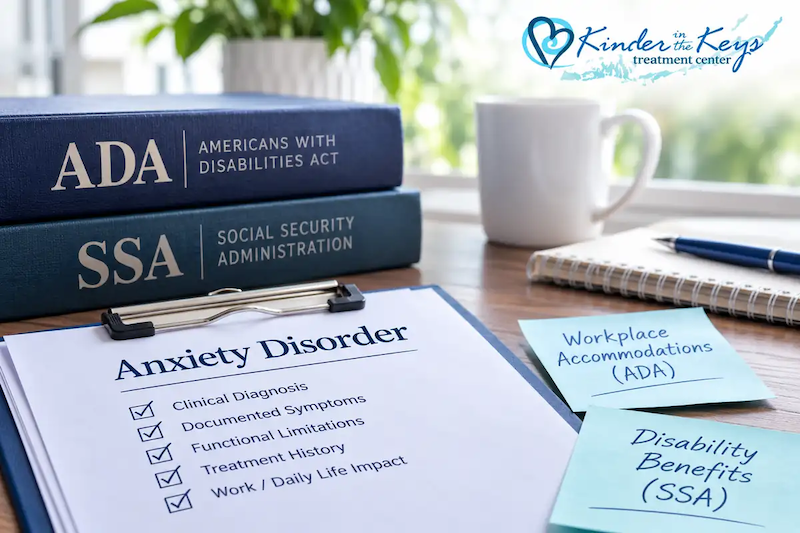
Strong medical documentation is the backbone of any disability claim. The Social Security Administration requires medical evidence to prove that an anxiety disorder significantly limits a person’s ability to work. That evidence usually comes from a licensed clinician who has treated the patient over time.
A useful set of medical records will include a clear diagnosis with the specific anxiety disorder named, dated treatment notes covering at least the past 12 to 24 months, descriptions of anxiety symptoms and their frequency, response to medications and therapy, and an opinion from the treating clinician about how the condition limits work-related functioning. Medical records that span the full course of the illness are far more persuasive than a single recent evaluation.
What Medical Professionals Should Include in Records
A complete chart for an anxiety disability claim usually includes:
- A primary diagnosis (for example, generalized anxiety disorder, panic disorder, or obsessive compulsive disorder) and any co-occurring conditions, such as bipolar disorder or depression
- A documented treatment history showing the course of the condition, including medication trials, psychotherapy, and other relevant supports. For claims relying on SSA’s serious-and-persistent criteria, the record must satisfy the applicable two-year history requirement.
- Specific examples of how anxiety has affected the person’s ability to function in work and daily life
- Standardized rating scales and clinical observations from each visit
- Notes on adherence to medical treatment and any reasons for gaps in care
For an anxiety disability claim under the “serious and persistent” pathway, the file should show a medically documented history of the disorder for at least two years and persistent symptoms despite ongoing care, mental health therapy, and structured psychosocial support. Some claimants have also benefited from documentation of stays in transitional housing or other supervised settings, which can illustrate that symptoms persist even with high levels of structure.
Non-Medical Evidence and Supporting Documentation
Statements from people who know the claimant can fill in details that clinical notes miss. Letters from family members or coworkers about missed events, panic attacks at work, or canceled plans help build a fuller picture of daily functioning. Personal journals, attendance records, and disciplinary letters from employers can also support the file.
While non-medical evidence cannot replace clinical records, it adds context that decision-makers find useful when evaluating how the condition affects daily life and the person’s ability to function independently.
Medical Treatment, Therapy, and Psychosocial Support
Active engagement with care is important for both clinical recovery and a strong disability case. The SSA generally expects to see ongoing care that aligns with accepted clinical practice for the diagnosed mental disorders. That typically includes some combination of psychotherapy, medication management, and psychosocial support.
Cognitive behavioral therapy is one of the most studied approaches for anxiety disorder treatment, including for panic disorder and social anxiety disorder. Exposure-based therapy can help people gradually re-engage with avoided situations. For people with severe symptoms or co-occurring conditions, residential or partial hospitalization programs may be appropriate, as discussed in our overview of residential anxiety treatment options.
Lifestyle factors also matter. Caffeine, sleep, and nutrition all influence anxiety symptoms. Resources on caffeine withdrawal and anxiety and nutrition for anxiety and depression explore these connections, and they can also become part of a documented treatment plan.
Therapy, psychosocial support, and structured programs serve another purpose in disability claims. They show that the medical condition is being actively managed and that, despite consistent care, symptoms remain disabling. That pattern is exactly what the SSA looks for in serious and persistent cases. For women whose history includes complex trauma alongside anxiety, a trauma-informed program for women can address both layers at once.
Reasonable Accommodations at Work
Reasonable accommodations are adjustments that help an employee with a disability perform essential job duties. Under the ADA, these may include flexible work schedules, modified break patterns, a private workspace, written rather than verbal instructions, the ability to attend therapy appointments during the workday, or working from home part of the time.
To request accommodations, an employee usually needs to disclose the medical condition to a designated HR contact and provide documentation from a qualified clinician describing the limitations and the recommended adjustments. The employer is not entitled to a full medical history, only the information needed to evaluate the request.
Reasonable accommodations are often the difference between staying employed and leaving the workforce. For people whose anxiety qualifies under the ADA but does not yet rise to SSA disability benefits standards, accommodations are the primary form of legal protection.
Comparing ADA Protections and SSA Disability Benefits
The ADA and the Social Security Administration apply different standards. The Social Security Administration has higher evidentiary requirements than the ADA for anxiety-related disability claims and requires a significant impact on substantial gainful activity for at least 12 months. The table below summarizes some of the key differences in SSA criteria versus ADA coverage.
| Feature | Americans with Disabilities Act (ADA) | Social Security Administration (SSA) |
|---|---|---|
| Purpose | Prohibits discrimination, requires reasonable accommodations | Provides cash disability benefits |
| Definition | Physical or mental impairment that substantially limits major life activities | Severe impairment expected to last 12+ months that prevents substantial gainful activity |
| Key listing or rule | Broad coverage of mental disorders | Listing 12.06 for anxiety disorders |
| Functional standard | Substantially limits major life activities | Extreme limitation in one or marked limitation in two functional areas |
| Documentation | Medical confirmation of diagnosis and limits | Detailed medical records, treatment history of about two years, ongoing care |
| Outcome | Job protections and accommodations | Monthly benefit payments, possible Medicare or Medicaid |
When Anxiety Qualifies as a Disability and When It Does Not
Not every anxious person has a disability. Occasional anxiety before a presentation, a job interview, or a medical appointment is part of normal life. Anxiety qualifies as a disability when symptoms are severe, lasting, and clearly tied to limits in mental functioning or work capacity.
For Social Security disability benefits, the condition generally must have lasted or be expected to last for at least 12 months and must prevent the person from engaging in substantial gainful activity. SSA then evaluates the medical evidence, functional limitations, and whether the impairment meets or equals a listing or otherwise prevents sustained work. Listing 12.06 also includes an alternative pathway for certain serious and persistent disorders with a documented history of at least two years and additional qualifying criteria.
A diagnosis on its own does not equal a disability. The legal frameworks center on functional impact, not labels. That is why a clear, consistent record of how the condition affects daily life and job duties is so important. People sometimes worry that asking whether their anxiety is considered disabling makes them seem dramatic. It does not. It is a fair question with a real legal answer.
Is Anxiety a Disability? Frequently Asked Questions
Is anxiety a disability if I can still work part-time?
Possibly, but it depends on the specifics. Under the ADA, you can still be considered to have a disability if anxiety substantially limits a major life activity, even while you continue working with accommodations. For SSA disability benefits, however, earnings above the substantial gainful activity threshold can disqualify a claim, and the SSA criteria require that the condition prevent sustained full-time work. A clinician and a disability attorney can help you understand how your specific work pattern affects each program.
What kind of medical evidence is most persuasive for an anxiety claim?
The strongest files include a long-term, medically documented history from a treating psychiatrist or therapist, with consistent diagnosis, detailed notes on anxiety symptoms, response to medical treatment, and an opinion on functional limits. Records of hospitalizations, formal psychological testing, and statements about how the condition affects job duties and daily life add weight. Two years of consistent medical records is a useful target whenever possible.
Does the ADA cover anxiety even without a formal disability rating?
Yes, in many cases. The ADA does not require a separate disability rating. It asks whether the person has a physical or mental impairment that substantially limits a major life activity. A diagnosis from a qualified medical professional, paired with documentation of how the condition affects work or daily life, is generally enough to start a request for reasonable accommodations.
Finding the Right Support for Your Recovery
A disability claim is one piece of a much larger picture. The goal is not just paperwork. It is a sustainable recovery and a life that feels manageable again. For many women, that means working with a clinical team that understands trauma, anxiety, and the realities of long-term treatment. Specialized residential care for women’s anxiety can help you stabilize, build skills, and ensure that your symptoms, treatment, and functional progress are appropriately documented as part of your clinical care.
If you are wondering whether your symptoms have crossed the line into something more serious, our guides on signs of a nervous breakdown in a woman and common myths about anxiety disorders can be a helpful starting point. Severe anxiety is treatable, and with the right care and documentation, you can protect both your wellbeing and your legal rights
Medically Reviewed By
Dr. Laura Tanzini, DrPH, LMFT
Doctor of Public Health | Specialty in Lifestyle Medicine
Licensed Marriage and Family Therapist (Florida & California)
Founder & CEO, Kinder in the Keys
Clinical Review: This article has been reviewed for clinical accuracy, clarity, and alignment with current behavioral health and trauma-informed treatment principles.
Medical & Legal Disclaimer
This content is for educational and informational purposes only and is not intended to diagnose, treat, cure, or prevent any mental health condition. It should not replace individualized evaluation, diagnosis, or treatment from a qualified healthcare or mental health professional. This article is also not legal advice and should not be relied upon to determine eligibility for disability benefits, workplace accommodations, or other legal rights. Disability determinations are individualized and subject to applicable laws, regulations, and agency requirements. For advice about your specific circumstances, consult an appropriately qualified healthcare professional and, when needed, a licensed attorney.