
Relationship dynamics affect women’s mental health in many ways because close relationships can influence emotional safety, stress, self-esteem, autonomy, social connection, and the way a woman learns to view herself.
Healthy relationships can provide support, companionship, stability, and a sense of belonging. Difficult or unhealthy relationship dynamics can have the opposite effect, particularly when a relationship involves chronic conflict, emotional abuse, coercive control, manipulation, isolation, or repeated violations of personal boundaries.
Over time, a woman living within these patterns may experience anxiety, depression, sleep disruption, difficulty concentrating, diminished self-esteem, problems trusting her own judgment, or trauma-related symptoms.
This does not mean every difficult relationship causes a mental health disorder. Relationships go through periods of conflict, and mental health conditions usually have multiple contributing factors. The concern is not an occasional disagreement or an imperfect partner. It is the pattern of interaction within the relationship and how that pattern affects a woman’s emotional health and ability to function independently.
Understanding relationship dynamics can help women distinguish normal relationship difficulties from patterns that progressively undermine emotional well-being, safety, or autonomy.
What Are Relationship Dynamics?
Relationship dynamics are the recurring patterns through which two people interact with one another.
They include how people communicate, manage conflict, express needs, establish boundaries, share decision-making, respond to disagreement, demonstrate affection, manage power, and maintain independence within the relationship.
Every relationship develops dynamics over time.
In healthy relationships, these patterns generally allow both people to exist as individuals. Each person can express opinions, maintain appropriate privacy, have friendships and interests, establish boundaries, and disagree without fearing punishment or retaliation.
Unhealthy dynamics may gradually organize the relationship around one person’s needs, moods, expectations, or control.
That difference can profoundly affect emotional well-being.
How Relationship Dynamics Affect Women’s Mental Health
The way relationship dynamics affect women’s mental health depends on many factors, including the nature of the relationship, its duration, the severity of unhealthy behaviors, previous experiences, available support, and the woman’s individual mental health history.
A chronically stressful relationship can create an environment in which the nervous system rarely has an opportunity to settle.
A woman may begin anticipating conflict before it occurs. She may monitor another person’s tone of voice, facial expressions, messages, or mood. She may rehearse conversations before having them or avoid certain subjects because she knows they will cause conflict.
Eventually, she may organize increasing portions of her behavior around preventing another person’s negative reaction.
This can contribute to anxiety, hypervigilance, emotional exhaustion, sleep disturbance, difficulty concentrating, diminished confidence, and social withdrawal.
The relationship may also affect how a woman thinks about herself.
Repeated criticism can become internalized. Manipulation can undermine self-trust. Isolation can reduce access to perspectives outside the relationship. Chronic invalidation can cause a woman to question whether her needs, emotions, or perceptions are reasonable.
Healthy vs. Unhealthy Relationship Dynamics
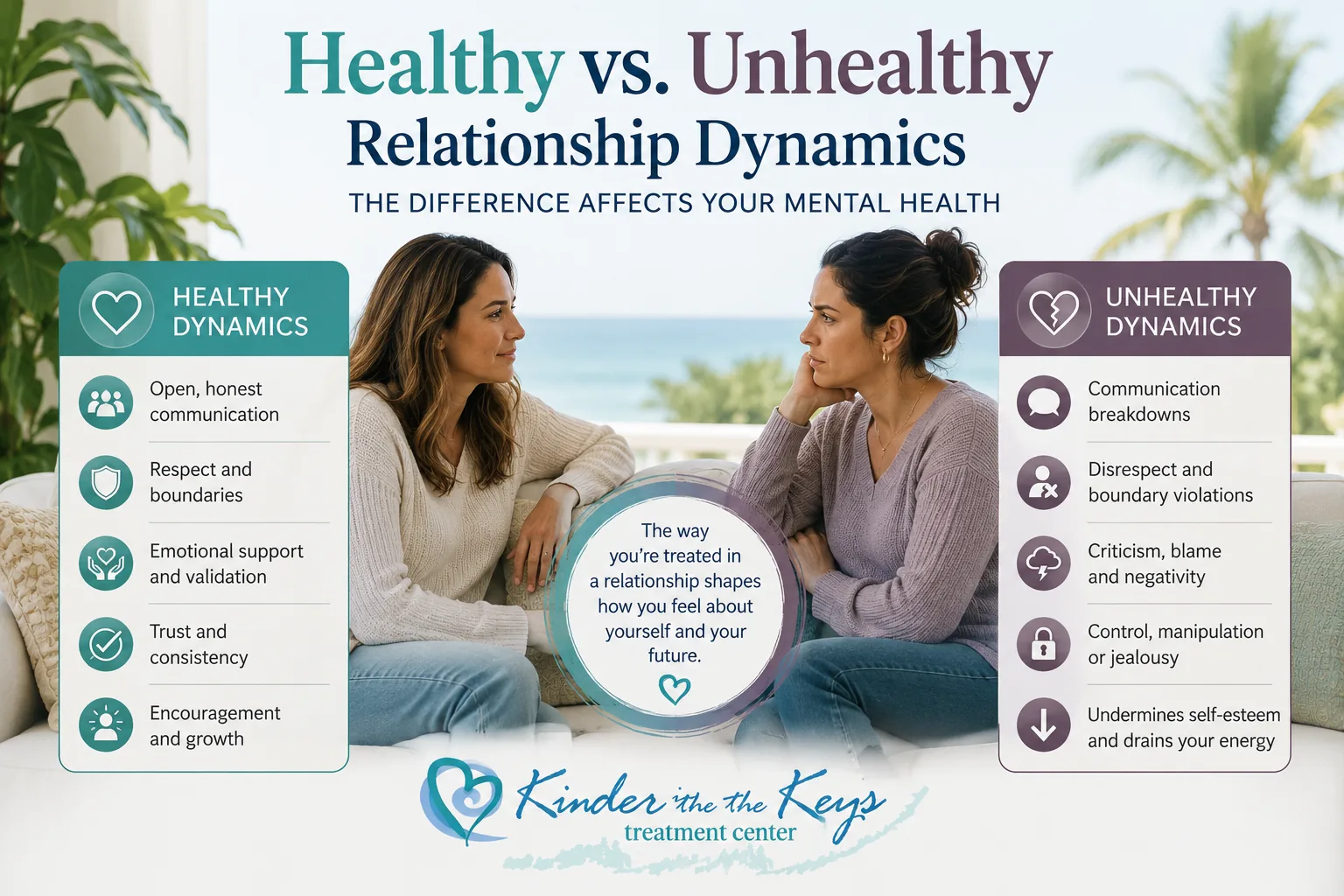
No relationship is conflict-free.
Healthy relationship dynamics are not defined by two people agreeing all the time. They are defined partly by what happens when they do not agree.
Healthy dynamics generally allow for:
Mutual respect
Honest communication
Appropriate privacy
Individual friendships and interests
Personal boundaries
Shared decision-making
Independent opinions
Accountability for mistakes
Emotional and physical safety
The ability to disagree without intimidation
Freedom to say no
Support for each person’s growth
Unhealthy dynamics may involve:
Persistent criticism or humiliation
Manipulation
Intimidation or threats
Excessive jealousy or monitoring
Isolation from friends or family
Financial control
Repeated boundary violations
Blame shifting
Gaslighting
Punishment for disagreement
Withholding affection or communication to gain control
Pressure to surrender independence
The presence of one unhealthy behavior does not automatically define an entire relationship. Patterns, frequency, severity, power, and impact matter.
Emotional Abuse and Psychological Well-Being
Emotional abuse is more than an insensitive comment or an argument handled badly.
It generally involves a repeated pattern of behavior that undermines another person’s emotional safety, autonomy, confidence, or sense of reality.
A woman experiencing emotional abuse may initially recognize individual incidents without recognizing the larger pattern.
She may think:
Maybe I am overreacting.
Maybe I misunderstood.
Maybe I should have said it differently.
Maybe if I don’t bring this up again, things will be okay.
Over time, those adaptations can become part of the relationship dynamic.
Instead of asking what she wants or needs, she may increasingly ask what will prevent conflict.
That shift matters.
A healthy relationship allows a woman to remain a participant in her own life rather than requiring her to continually adjust herself around another person’s reactions.
Coercive Control and Loss of Autonomy
Some unhealthy relationships involve coercive control, a pattern in which one person progressively restricts another person’s freedom, independence, or choices.
Control may involve:
Finances
Employment
Transportation
Clothing
Friendships
Family relationships
Social activities
Phone or electronic communication
Privacy
Healthcare
Everyday decisions
Individual behaviors may appear insignificant when viewed separately.
The larger pattern is what matters.
A healthy relationship allows both people to maintain autonomy. A controlling relationship progressively reduces it.
Understanding how relationship dynamics affect women’s mental health is particularly important when control becomes chronic because the psychological effects may continue even after the relationship has ended.
Gaslighting, Manipulation, and Loss of Self-Trust
One of the most damaging consequences of some unhealthy relationship dynamics is the gradual loss of confidence in one’s own perceptions.
Gaslighting refers to manipulative behavior that causes another person to question her memory, perceptions, or understanding of events.
Not every disagreement about what happened is gaslighting. Two people can genuinely remember an event differently.
The concern is a repeated pattern of manipulation in which reality itself becomes a battleground.
A woman may eventually feel that she needs another person to tell her what happened, whether her feelings are justified, or whether her decisions are reasonable.
This erosion of self-trust can make decision-making increasingly difficult.
Recovery often involves learning to consider her own observations and experiences again without automatically assuming that another person’s interpretation is more valid.
Codependency and Unbalanced Relationship Patterns
The term codependency is frequently used to describe relationships in which one person’s identity, emotional stability, or behavior becomes excessively organized around another person’s needs or problems.
It is not a formal mental health diagnosis.
It is also important not to label ordinary caregiving, attachment, compromise, or concern for another person as codependency.
The problem arises when a woman repeatedly abandons her own needs, boundaries, values, relationships, or well-being to manage another person’s emotions or behavior.
She may feel responsible for keeping another person calm, preventing consequences, solving recurring crises, or protecting that person from the results of their own choices.
Treatment can help women distinguish healthy support from patterns in which caring for another person has gradually required abandoning themselves.
Narcissistic Abuse and Relationship Dynamics
Narcissistic abuse is a commonly used term for patterns of emotional or psychological abuse associated with narcissistic behaviors or traits.
However, an abusive or controlling person does not need to have narcissistic personality disorder for the behavior to be harmful.
Trying to diagnose another person from a distance can also distract from more useful questions:
What is actually happening in this relationship?
Are my boundaries respected?
Can I disagree safely?
Am I becoming increasingly isolated?
Do I feel responsible for managing this person’s emotions?
Am I constantly questioning my own perceptions?
Have I gradually surrendered independence to keep the relationship stable?
Observable behavior and its impact on the woman experiencing it are often more clinically useful than assigning a diagnostic label to someone who has not been evaluated.
How Unhealthy Relationship Dynamics Can Affect Anxiety and Depression
Chronic relationship stress can contribute to symptoms associated with both anxiety and depression.
A woman may experience persistent worry, tension, panic symptoms, irritability, difficulty concentrating, or a sense that she must remain constantly alert.
Others may become emotionally exhausted, withdrawn, hopeless, or increasingly disconnected from activities and relationships they once enjoyed.
Sleep may deteriorate. Motivation may decline. Social isolation may increase.
These symptoms should not automatically be attributed to the relationship.
Anxiety and depression can have biological, psychological, social, environmental, and medical contributors. A comprehensive mental health evaluation considers the entire clinical picture.
However, when symptoms improve or worsen in relation to particular relationship patterns, that information can be important in understanding what may be contributing to emotional distress.
Relationship Trauma and PTSD
Some abusive relationships involve experiences that can contribute to post-traumatic stress disorder.
However, distress after an unhealthy or abusive relationship does not automatically mean a woman has PTSD.
PTSD is a specific mental health diagnosis with established diagnostic criteria, including qualifying trauma exposure and a defined pattern of symptoms.
Women can also experience significant trauma-related symptoms without meeting the full diagnostic criteria for PTSD.
These may include hypervigilance, avoidance, intrusive memories, sleep disruption, emotional reactivity, difficulty trusting others, or feeling unsafe in situations that resemble previous relationship experiences.
Because PTSD symptoms can overlap with anxiety, depression, adjustment disorders, and other mental health conditions, appropriate clinical assessment matters.
Why Women May Adapt Their Behavior to an Unhealthy Relationship
Behavior that seems difficult to understand from outside a relationship may make considerable sense within it.
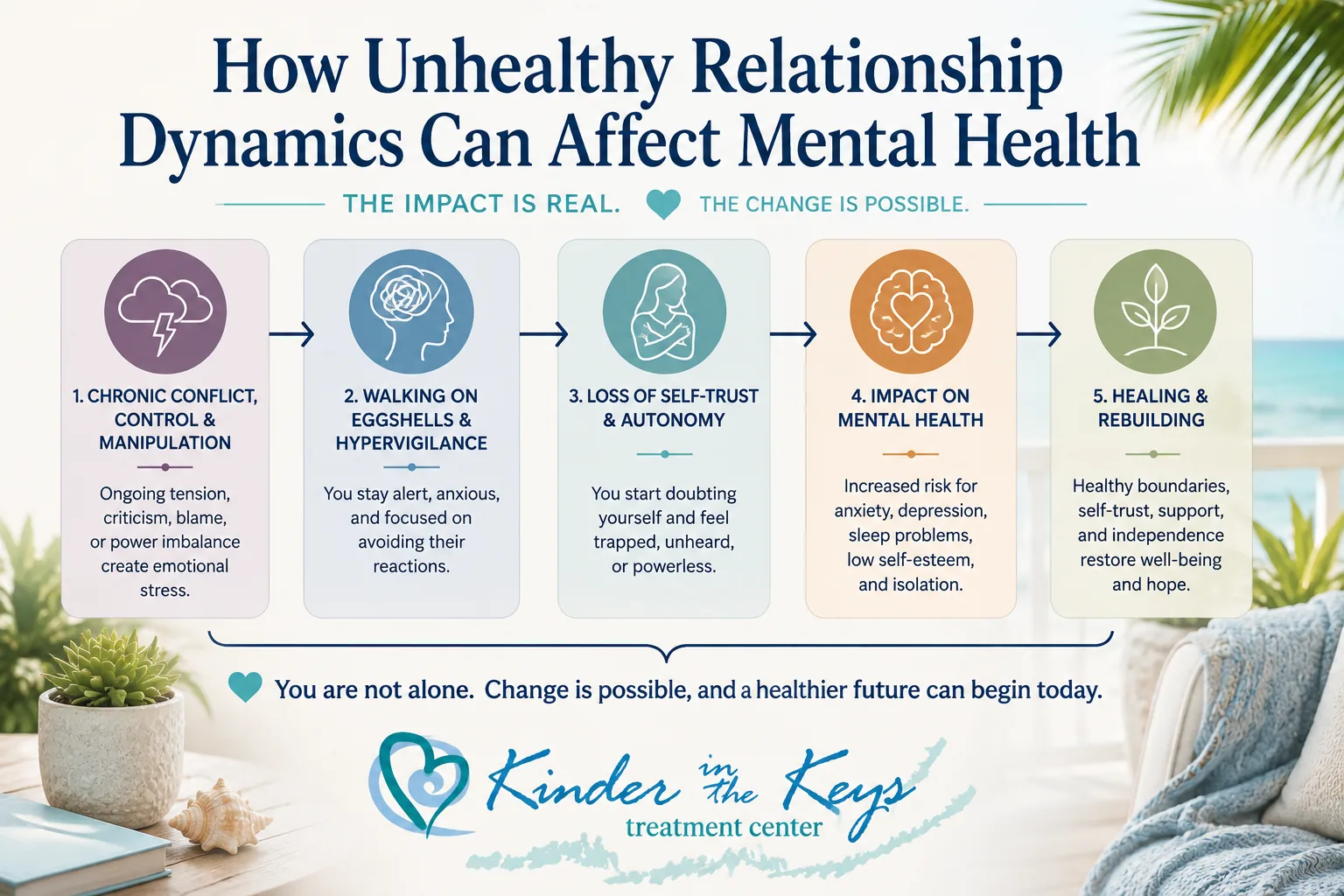
If disagreement repeatedly produces rage, punishment, withdrawal, humiliation, or threats, avoiding disagreement can become a way of reducing immediate conflict.
If expressing a need repeatedly results in criticism, a woman may stop expressing needs.
If maintaining friendships creates conflict, she may gradually reduce contact with other people.
If independent decisions are repeatedly challenged, she may begin asking permission even when permission should not be necessary.
These behaviors can develop as adaptations to the environment.
The difficulty is that patterns developed to function within an unhealthy relationship may continue afterward.
A woman may remain hesitant to express preferences, establish boundaries, trust decisions, tolerate disagreement, or believe that she has the right to prioritize her own needs.
Understanding these adaptations can be an important part of recovery.
Rebuilding Self-Trust and Autonomy
One of the central goals of recovery from unhealthy relationship dynamics can be rebuilding the ability to trust oneself.
That process may begin with surprisingly simple questions:
What do I think?
What do I feel?
What do I need?
What do I want?
What are my boundaries?
What behavior am I willing to accept?
For someone who has spent considerable time anticipating another person’s reactions, these questions may initially feel uncomfortable.
Rebuilding self-trust does not mean assuming every feeling or interpretation is automatically correct.
It means learning to consider your own experiences, needs, and perceptions without automatically treating someone else’s perspective as more important than your own.
Autonomy also develops through action.
Making independent decisions, reconnecting with supportive people, establishing boundaries, pursuing personal goals, and tolerating healthy disagreement can gradually reinforce the experience of being responsible for one’s own life again.
What Healthy Relationship Dynamics Look Like
Healthy relationships allow two people to exist.
Love does not require one person to disappear so the other can remain comfortable.
Both people should be able to maintain:
Personal interests
Friendships
Appropriate privacy
Individual goals
Boundaries
Independent opinions
A voice in shared decisions
The ability to disagree
Freedom from intimidation
Responsibility for their own behavior
Healthy relationships also include repair.
People make mistakes. They say things poorly. They misunderstand one another.
The ability to acknowledge harm, take responsibility, communicate, and make meaningful changes is different from repeatedly apologizing for the same behavior while the underlying pattern continues unchanged.
When Relationship Dynamics Become a Mental Health Concern
Relationship problems become clinically significant when their psychological effects persist, worsen, or substantially interfere with everyday functioning.
Warning signs may include:
Persistent anxiety or panic
Significant depressive symptoms
Severe sleep disruption
Social isolation
Difficulty functioning at work or school
Increasing inability to make decisions independently
Persistent hypervigilance
Trauma-related symptoms
Loss of interest in previously meaningful activities
Significant changes in eating or self-care
Feeling unable to establish or maintain boundaries
Increasing dependence on another person for emotional stability or decision-making
The presence of these symptoms does not determine a diagnosis or automatically mean residential treatment is necessary.
It does indicate that professional assessment may be appropriate.
When Professional Support May Help
Professional mental health treatment can help women understand how relationship dynamics affect women’s mental health without reducing every emotional problem to the relationship itself.
Treatment may address:
Anxiety
Depression
Trauma-related symptoms
Emotional regulation
Self-esteem
Boundaries
Relationship patterns
Assertive communication
Decision-making
Self-trust
Grief
Identity
Rebuilding supportive relationships
The appropriate level of care depends on symptom severity, safety, functioning, previous treatment, available support, and individual clinical needs.
Outpatient therapy may be appropriate for many women.
Residential mental health treatment may be considered when symptoms significantly interfere with everyday functioning, outpatient treatment has not provided sufficient improvement, or a more structured and immersive treatment environment is clinically appropriate.
How Kinder in the Keys Helps Women Recover From Harmful Relationship Dynamics
At Kinder in the Keys, our women-only residential mental health program focuses on the woman receiving treatment—her symptoms, experiences, functioning, needs, and goals.
We do not need to diagnose another person in her life to address the impact a relationship may have had on her mental health.
Treatment may include work related to trauma, PTSD, anxiety, depression, emotional regulation, boundaries, relationship patterns, self-esteem, and rebuilding confidence in personal judgment.
Our small residential environment allows clinicians to know the women they treat as individuals rather than simply as diagnoses.
The goal is not merely to identify what went wrong in a relationship.
The larger goal is helping a woman understand how her experiences have affected her, address current mental health symptoms, rebuild autonomy and self-trust, and develop healthier patterns she can carry forward.
Moving Forward After an Unhealthy Relationship
Understanding how relationship dynamics affect women’s mental health can help women make sense of changes they may have noticed in themselves.
Perhaps she became quieter.
Perhaps she stopped trusting her judgment.
Perhaps she became anxious about disagreement.
Perhaps her world gradually became smaller.
Perhaps she learned to prioritize another person’s emotional state over her own.
These patterns can change.
Recovery may involve understanding what happened, treating current mental health symptoms, reconnecting with supportive relationships, strengthening boundaries, rebuilding self-trust, and developing a life increasingly organized around personal values rather than another person’s reactions.
The goal is not simply to understand someone else’s behavior.
The goal is to understand yourself, regain your autonomy, and move forward with greater clarity.
Frequently Asked Questions
What are relationship dynamics?
Relationship dynamics are recurring patterns of interaction between people, including communication, conflict, boundaries, decision-making, emotional responses, power, independence, and expectations within the relationship.
Can unhealthy relationships cause anxiety or depression?
Chronic relationship stress may contribute to symptoms of anxiety or depression, but these conditions can have multiple causes. A qualified mental health professional can evaluate the complete clinical picture and determine appropriate treatment.
Does emotional abuse always cause PTSD?
No. Emotional abuse can cause significant psychological distress, but PTSD is a specific diagnosis requiring established diagnostic criteria, including qualifying trauma exposure. Women may also experience trauma-related symptoms without meeting full PTSD criteria.
Is codependency a mental health diagnosis?
No. Codependency is not a formal mental health diagnosis. The term is commonly used to describe patterns in which a person’s behavior or emotional well-being becomes excessively organized around another person’s needs, emotions, or problems.
Does someone have to be a narcissist for a relationship to be emotionally abusive?
No. Emotional abuse, manipulation, coercive control, and boundary violations can occur regardless of whether the other person has narcissistic personality disorder or any other psychiatric diagnosis.
Can therapy help after an unhealthy relationship?
Yes. Therapy may help address anxiety, depression, trauma-related symptoms, boundaries, self-esteem, relationship patterns, emotional regulation, and rebuilding self-trust. The appropriate type and level of treatment depends on the individual’s needs.
When might residential mental health treatment be appropriate?
Residential treatment may be appropriate when symptoms significantly interfere with daily functioning, outpatient treatment has not been sufficient, or a structured and immersive level of care is clinically indicated. An appropriate clinical assessment can help determine the necessary level of care.
Medically Reviewed By
Dr. Laura Tanzini, DrPH, LMFT
Doctor of Public Health | Specialty in Lifestyle Medicine
Licensed Marriage and Family Therapist (Florida & California)
Founder & CEO, Kinder in the Keys
Doctoral Research: Dr. Tanzini’s doctoral research at Loma Linda University examined childhood and adult traumatic events, cumulative trauma exposure, gender, forgiveness, life satisfaction, and long-term well-being.
This article has been clinically reviewed for accuracy and consistency with current behavioral health and trauma-informed care principles. Content is intended to provide general educational information and should not replace individualized evaluation, diagnosis, or treatment by a qualified healthcare professional.
Medical Disclaimer
The information provided in this article is for educational and informational purposes only and is not intended as medical advice, diagnosis, or treatment. Mental health needs vary by individual. If you are experiencing symptoms of a mental health condition, consult a qualified healthcare professional who can evaluate your individual circumstances.