
Can anxiety cause you to be cold? Yes. Anxiety can sometimes cause cold hands or feet, chills, trembling, clammy skin, or the sensation that you suddenly feel cold even when the room itself is comfortable.
These sensations can occur because anxiety activates the body’s stress response. Changes in circulation, sweating, breathing, and muscle activity can all contribute to feeling cold during periods of intense anxiety or panic.
When women ask can anxiety cause you to be cold, however, it is important to understand that feeling unusually cold is not specific to anxiety.
Cold intolerance, persistent chills, or chronically cold hands and feet can also occur with medical conditions and other physical causes. If cold sensations are new, persistent, severe, or occur with other concerning symptoms, they should not automatically be attributed to anxiety.
Understanding the difference can help you respond appropriately rather than assuming every physical sensation is psychological.
Why Can Anxiety Make You Feel Cold?
To understand can anxiety cause you to be cold, it helps to understand what happens in the body during a stress response.
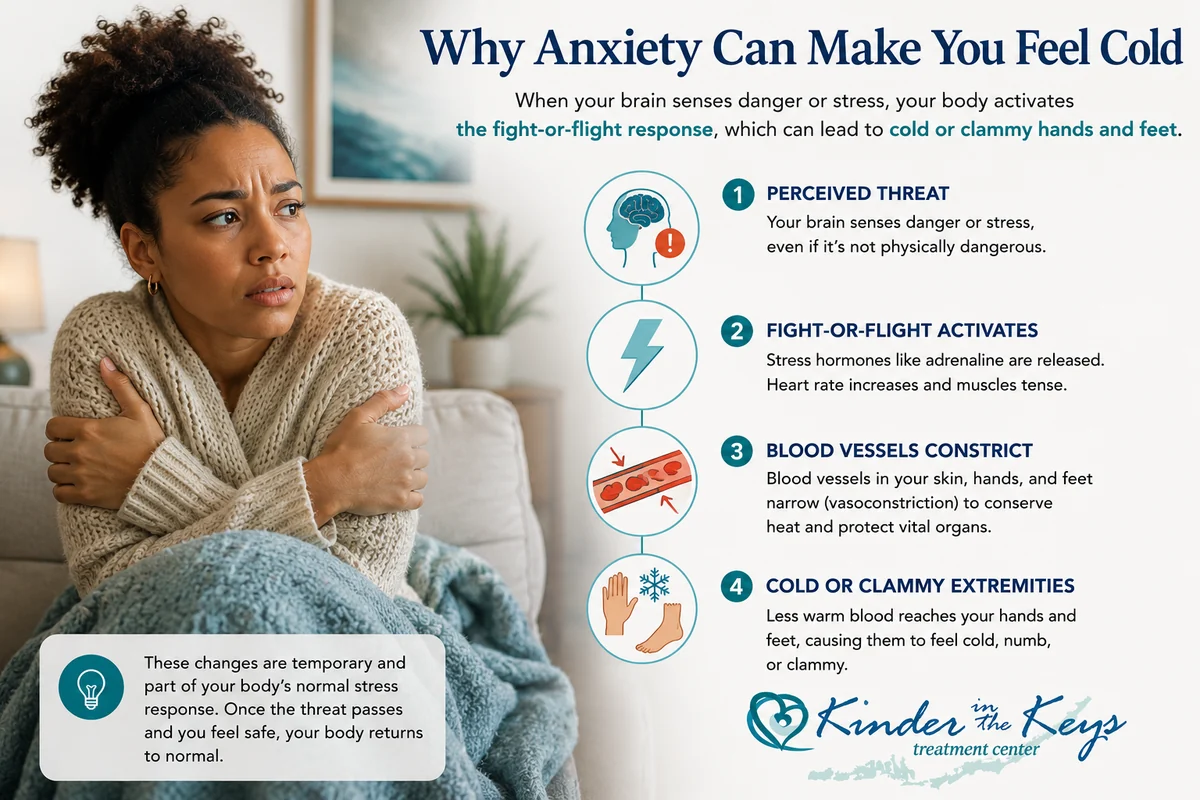
When your brain perceives danger or threat, your sympathetic nervous system activates what is commonly called the fight-or-flight response.
The threat does not have to be physically dangerous. A frightening thought, panic attack, stressful interaction, traumatic reminder, health worry, or overwhelming situation can activate many of the same physiological systems.
During this response, stress hormones such as adrenaline contribute to changes throughout the body.
Your heart may beat faster. Your breathing may change. You may sweat. Your muscles may tense. Blood vessels supplying the skin and extremities can also constrict.
This temporary reduction in blood flow near the skin can contribute to cold or clammy hands and feet during periods of stress or anxiety.
That does not necessarily mean your core body temperature has significantly dropped. It means the way your body is distributing blood flow and responding to perceived threat has temporarily changed.
So, can anxiety cause you to be cold even when the surrounding temperature has not changed? It can contribute to the sensation of feeling cold through these physical stress responses.
What Are Anxiety Chills?
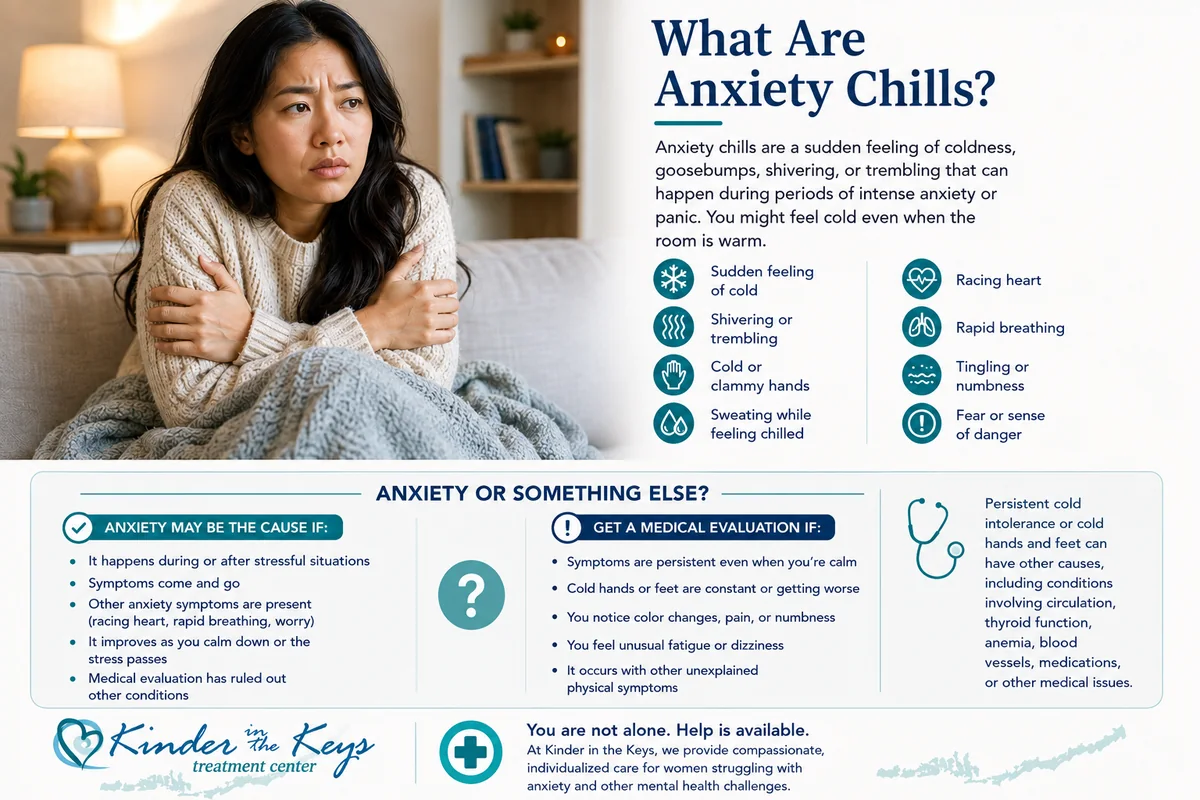
People sometimes use the term anxiety chills to describe a sudden feeling of coldness, goosebumps, trembling, or shivering that occurs during anxiety.
Chills are not exclusive to anxiety. They can occur because of cold temperatures, infections, fever, illness, and other medical conditions.
But chills or trembling can also occur during intense anxiety and panic attacks.
A woman experiencing anxiety chills might notice:
Sudden cold sensations
Goosebumps
Shivering or trembling
Cold or clammy hands
Cold feet
Sweating while simultaneously feeling chilled
Tingling or numbness
Feeling shaky
A racing heart
Rapid breathing
A sense of fear or impending danger
The combination can be frightening, particularly when it happens for the first time.
Becoming frightened by the physical sensation itself can then intensify the anxiety response.
For some women, this creates a cycle: anxiety produces a physical sensation, the sensation is interpreted as dangerous, and that interpretation produces even more anxiety.
Why Do My Hands and Feet Get Cold When I Am Anxious?
Cold hands and feet are one of the easier anxiety-related sensations to explain physiologically.
During a stress response, blood vessels in the extremities may constrict as part of the body’s automatic response to perceived danger. Less warm blood reaching the surface of the hands and feet can make them feel colder.
This is one reason the answer to can anxiety cause you to be cold can sometimes be yes even when someone does not have an abnormal body temperature.
Stress and anxiety are not the only causes of cold extremities, however.
Persistent cold hands or feet can also occur with conditions affecting circulation, thyroid function, blood cells, nerves, or blood vessels.
The pattern matters.
Hands that become temporarily cold during a stressful meeting and warm again afterward are different from hands that remain unusually cold every day regardless of emotional state.
Understanding can anxiety cause you to be cold is especially helpful when cold hands or feet appear during stressful situations and resolve when the anxiety passes.
Can Panic Attacks Cause Chills and Shivering?
Yes.
Chills, trembling, sweating, rapid heartbeat, shortness of breath, dizziness, tingling, and numbness can occur during panic attacks.
A panic attack is a sudden episode of intense fear or discomfort accompanied by significant physical symptoms.
Because those symptoms can be dramatic, people experiencing a first panic attack sometimes fear that they are having a heart attack, losing control, or experiencing another medical emergency.
Panic attacks themselves can produce very real physical sensations.
But that does not mean every episode of chest discomfort, shortness of breath, faintness, shaking, or chills should automatically be labeled a panic attack.
New, severe, or concerning physical symptoms warrant appropriate medical evaluation.
For women who notice chills primarily during panic or intense stress, asking can anxiety cause you to be cold may help identify a possible pattern between emotional arousal and the physical sensation.
How Breathing Can Contribute to Cold or Tingling Sensations
Anxiety can change the way someone breathes.
During intense fear or panic, breathing may become faster or deeper than the body requires.
Hyperventilation can lower carbon dioxide levels in the blood and contribute to symptoms such as:
Lightheadedness
Tingling around the mouth
Tingling or numbness in the hands and feet
Muscle tightness
Dizziness
Feelings of unreality
Those sensations may be interpreted as coldness or may occur alongside cold hands, sweating, and trembling.
Once again, the sensation is real even though anxiety may be contributing to it.
Why Can Anxiety Make You Sweat and Feel Cold at the Same Time?
This seems contradictory, but it isn’t.
Anxiety can increase sweating as part of the stress response. As moisture evaporates from the skin, it can create a cooling sensation.
At the same time, changes in peripheral circulation may make the skin or extremities feel cold.
That means someone can genuinely feel sweaty, clammy, and chilled at the same time.
The combination is especially common during periods of intense autonomic arousal.
This is another reason the question can anxiety cause you to be cold does not have a purely psychological answer. Anxiety can produce genuine physical changes throughout the body.
Anxiety Shivers vs. Being Physically Cold
Shivering from environmental cold is part of the body’s attempt to generate heat.
Shaking or trembling during anxiety has a different trigger.
During anxiety, muscle tension, adrenaline, rapid breathing, and heightened nervous-system activation can contribute to trembling or shaking even when the environment is warm.
One useful question is:
What was happening immediately before the symptom began?
If trembling consistently appears during stressful situations and resolves as the anxiety subsides, that pattern may suggest anxiety is contributing.
If you are shivering because you have been outside in freezing temperatures, have a fever, or are becoming physically ill, anxiety is obviously not the only explanation to consider.
When asking can anxiety cause you to be cold, the pattern and timing of the symptoms can provide important clues about whether anxiety may be contributing.
Can Cold Weather Make Anxiety Feel Worse?
For some people, anxiety and cold weather can interact.
Cold itself produces physiological responses. Your blood vessels constrict. You may shiver. Your heart rate and breathing can change.
If you are already highly sensitive to bodily sensations, those normal cold-weather responses may feel similar to anxiety symptoms and become alarming.
Someone prone to panic may notice shaking or a racing heart and think:
“Something is wrong.”
That interpretation can increase anxiety, which then adds another layer of physical symptoms.
Cold weather does not automatically cause an anxiety disorder, however.
And seasonal depression is a separate issue.
If your primary problem is a recurring decline in mood, motivation, energy, or functioning during particular seasons, that pattern is different from briefly experiencing chills or cold extremities during anxiety.
The question can anxiety cause you to be cold is therefore different from asking whether cold weather itself causes anxiety.
Feeling Cold Does Not Automatically Mean You Have Anxiety
Although the answer to can anxiety cause you to be cold is sometimes yes, anxiety is only one possible explanationfor feeling cold.
Persistent cold intolerance or cold hands and feet can have other causes, including conditions involving circulation, thyroid function, anemia, blood vessels, medications, or other medical issues.
For example, Raynaud’s phenomenon can cause blood vessels in the fingers and toes to constrict excessively, sometimes producing noticeable color changes along with coldness or numbness.
Hypothyroidism can also cause someone to feel unusually cold.
Anemia can contribute to cold hands and feet along with symptoms such as fatigue, dizziness, or headaches.
That is why persistent symptoms deserve evaluation rather than self-diagnosis.
The presence of an anxiety disorder also does not mean every future physical symptom should automatically be blamed on anxiety.
When Should You See a Healthcare Professional About Feeling Cold?
Consider speaking with a healthcare professional if cold sensations:
Occur frequently without an obvious trigger
Persist even when you are warm and calm
Are getting progressively worse
Are accompanied by unusual fatigue
Occur with significant dizziness or fainting
Involve persistent numbness or pain
Cause noticeable color changes in the fingers or toes
Are accompanied by sores or wounds on the hands or feet
Began after starting or changing medication
Are accompanied by other unexplained physical symptoms
Seek urgent medical attention for severe or potentially life-threatening symptoms rather than assuming anxiety is responsible.
Mental health and physical health should not be treated as competing explanations.
Sometimes anxiety causes physical symptoms.
Sometimes a medical condition causes symptoms that feel like anxiety.
And sometimes both are present.
How Can You Calm Anxiety Chills?
If you are wondering can anxiety cause you to be cold and recognize that these sensations consistently occur during periods of stress, several strategies may help calm the physical anxiety response.
If you have already been medically evaluated when appropriate and recognize that your cold sensations occur with anxiety, the goal is not necessarily to force the sensation to disappear immediately.
The goal is to help the nervous system recognize that there is no immediate danger.
Slow Your Breathing
If you are breathing rapidly, slowing your breathing can help reduce hyperventilation-related symptoms.
Avoid taking repeated enormous breaths, which can sometimes worsen overbreathing.
Instead, allow your breathing to become slower and more comfortable.
Warm Your Body Normally
If you feel cold, it is perfectly reasonable to use a blanket, warm clothing, warm socks, or move to a comfortable environment.
You do not have to prove to yourself that the sensation is “just anxiety” by remaining uncomfortable.
Relax Tense Muscles
Anxiety can create significant muscle tension.
Progressively relaxing muscle groups may help reduce the trembling and physical tension that accompany stress.
Reduce the Fear of the Sensation
For some people, the physical symptom becomes a second source of anxiety.
You feel a chill.
Then you think:
“Why am I cold?”
Then:
“Something must be wrong.”
Your anxiety increases.
Your physical symptoms intensify.
Learning to recognize familiar anxiety sensations without catastrophically interpreting them can interrupt that cycle.
When Physical Anxiety Symptoms Begin Controlling Your Life
Occasional anxiety is part of being human.
An anxiety disorder is different.
Professional treatment may be appropriate when anxiety becomes persistent, difficult to control, causes substantial distress, interferes with relationships or work, leads to significant avoidance, disrupts sleep, or causes you to organize your life around preventing anxiety symptoms.
Physical symptoms can become particularly disruptive when someone begins avoiding activities because she is afraid of what her body might do.
She may stop driving because she fears a panic attack.
Avoid meetings because her hands shake.
Avoid exercise because an increased heart rate feels dangerous.
Avoid social situations because she worries that someone will notice her sweating or trembling.
At that point, the problem is no longer simply feeling cold.
Anxiety is beginning to restrict daily life.
For someone repeatedly asking can anxiety cause you to be cold because physical symptoms have become a source of fear themselves, treating the underlying anxiety may be more important than continually trying to eliminate each individual sensation.
How Are Anxiety Disorders Treated?
Treatment depends on the type of anxiety disorder, symptoms, severity, functional impairment, medical history, co-occurring conditions, and individual preferences.
Evidence-based treatment may include psychotherapy, medication, or a combination of approaches.
Cognitive behavioral therapy is commonly used for anxiety disorders.
Depending on the diagnosis, treatment may also involve carefully structured exposure-based approaches designed to reduce avoidance and change the person’s relationship with feared sensations or situations.
Treatment should be individualized.
A woman with panic disorder may need something different from a woman with generalized anxiety disorder or social anxiety disorder.
When a woman repeatedly asks can anxiety cause you to be cold, treatment should address the underlying anxiety rather than focusing only on the cold sensation.
When Is Residential Anxiety Treatment Appropriate?
Most people with anxiety do not require residential treatment.
Many anxiety disorders can be treated effectively in outpatient care.
A higher level of care may become appropriate when symptoms substantially interfere with daily functioning, outpatient treatment has not provided sufficient support, multiple mental health conditions complicate treatment, severe avoidance has significantly restricted daily life, or a woman needs greater structure to participate effectively in treatment.
At Kinder in the Keys, our women’s anxiety treatment center in Key Largo, Florida provides residential mental health treatment for adult women whose symptoms require more support than traditional outpatient care can provide.
[INTERNAL LINK 2 — PRIMARY PILLAR — Highlight exactly: women's anxiety treatment center → Women’s Anxiety Treatment Center pillar page]
Treatment focuses on understanding the entire clinical picture rather than treating one physical symptom in isolation.
Frequently Asked Questions About Anxiety and Feeling Cold
Can anxiety cause you to be cold?
Yes. Can anxiety cause you to be cold even in a warm environment? It can. Anxiety can contribute to cold hands and feet, chills, clammy skin, trembling, or feeling colder than usual. The stress response can change peripheral circulation, sweating, breathing, and muscle activity.
Persistent cold sensations should still be evaluated for possible medical causes.
What do anxiety chills feel like?
Anxiety chills may feel like sudden coldness, goosebumps, shivering, trembling, cold or clammy hands, or feeling chilled despite being in a comfortable environment.
They may occur alongside a racing heart, sweating, rapid breathing, tingling, or intense fear.
Why do my hands get cold when I am nervous?
Stress and anxiety can activate the sympathetic nervous system and cause blood vessels in the extremities to constrict temporarily.
This can reduce warm blood flow near the skin and make the hands feel cold or clammy.
Can panic attacks cause chills?
Yes.
Chills, trembling, sweating, tingling, rapid heartbeat, dizziness, and breathing changes can occur during panic attacks.
Can anxiety lower your body temperature?
Anxiety can change blood flow near the skin and make you feel cold, but feeling cold does not necessarily mean your core body temperature has significantly decreased.
If you have an abnormal measured body temperature, that deserves appropriate medical evaluation.
Can cold weather cause anxiety?
Cold weather does not automatically cause an anxiety disorder.
However, physical responses to cold—such as shivering, changes in heart rate, and vasoconstriction—can resemble anxiety symptoms.
For someone who is highly sensitive to bodily sensations, those changes may trigger additional anxiety.
When should I worry about cold hands and feet?
Talk with a healthcare professional if cold hands or feet are persistent, painful, worsening, associated with numbness or significant color changes, or occur with other unexplained symptoms.
Getting Help for Anxiety That Causes Physical Symptoms
So, can anxiety cause you to be cold? Yes, anxiety can sometimes contribute to chills, cold or clammy extremities, trembling, and other sensations of coldness.
But anxiety does not exist only in your thoughts.
It can affect breathing, heart rate, muscles, digestion, sweating, sleep, concentration, and the way your body feels.
At the same time, physical symptoms should never automatically be dismissed as anxiety.
Good care asks both questions:
Could anxiety be contributing to this?
and
Is there another medical explanation that needs to be evaluated?
If anxiety has become persistent enough that physical symptoms, panic, worry, or avoidance are interfering with your ability to function, professional treatment can help.
Kinder in the Keys provides residential mental health treatment for adult women in Key Largo, Florida.
The goal is not simply to make one uncomfortable sensation disappear.
It is to understand what is driving the anxiety and help you regain the parts of your life that anxiety has begun controlling.
Medically Reviewed By
Dr. Laura Tanzini, DrPH, LMFT
Doctor of Public Health | Specialty in Lifestyle Medicine
Licensed Marriage and Family Therapist (Florida & California)
Founder & CEO, Kinder in the Keys
Doctoral Research: Dr. Tanzini’s doctoral research at Loma Linda University examined childhood and adult traumatic events, cumulative trauma exposure, gender, forgiveness, life satisfaction, and long-term well-being.
This article has been clinically reviewed for accuracy and consistency with current behavioral health and trauma-informed care principles. Content is intended to provide general educational information and should not replace individualized evaluation, diagnosis, or treatment by a qualified healthcare professional.
Medical Disclaimer: The information provided in this article is for educational and informational purposes only and is not intended as medical advice, diagnosis, or treatment. Mental health needs vary by individual. If you are experiencing persistent cold sensations, symptoms of anxiety, or another health concern, consult a qualified healthcare professional who can evaluate your individual circumstances.