
Recognizing the signs of a nervous breakdown can help someone identify when stress or emotional distress has begun to interfere significantly with everyday functioning. A person may feel overwhelmed, exhausted, unable to concentrate, emotionally dysregulated, or increasingly unable to manage responsibilities that would ordinarily feel manageable.
“Nervous breakdown” is not a medical or psychiatric diagnosis. It is an informal term people commonly use to describe a period of severe psychological distress or difficulty functioning.
Symptoms described as a nervous breakdown may occur in connection with depression, anxiety disorders, panic attacks, trauma-related conditions, severe stress, grief, sleep disruption, burnout, or other mental or physical health concerns. Because the term does not identify the underlying condition, professional evaluation can be important when symptoms are persistent, severe, worsening, or substantially interfering with daily life.
Women may experience circumstances that affect mental health at different points in life, including pregnancy and postpartum changes, the menopausal transition, caregiving demands, trauma exposure, or intimate partner violence. However, nervous breakdowns are not specific to women, and symptoms should be evaluated according to the individual rather than gender stereotypes.
This guide explains the signs of a nervous breakdown, possible contributing factors, when symptoms may require professional attention, and what steps can help someone determine the appropriate level of support.
What Exactly Is a Nervous Breakdown?
A nervous breakdown generally refers to a period when psychological distress becomes difficult to manage and begins interfering with normal functioning.
Someone experiencing what they describe as a nervous breakdown might have difficulty working, attending school, maintaining relationships, completing ordinary responsibilities, sleeping normally, caring for themselves, or managing emotions.
There is no single set of diagnostic criteria for a nervous breakdown because it is not a clinical diagnosis.
Instead, a mental health professional evaluates the person’s actual symptoms and circumstances to determine whether an identifiable condition may be present. Depending on the individual, symptoms could be associated with depression, an anxiety disorder, a trauma-related disorder, an adjustment disorder, grief, severe stress, substance use, sleep problems, a medical condition, or another concern.
The phrase “nervous breakdown” can therefore describe very different experiences in different people.
The important question is not simply whether someone is “having a nervous breakdown,” but what is causing the distress, how severely it is affecting functioning, whether there are safety concerns, and what type of support or treatment is appropriate
What Are the Early Warning Signs of a Nervous Breakdown?
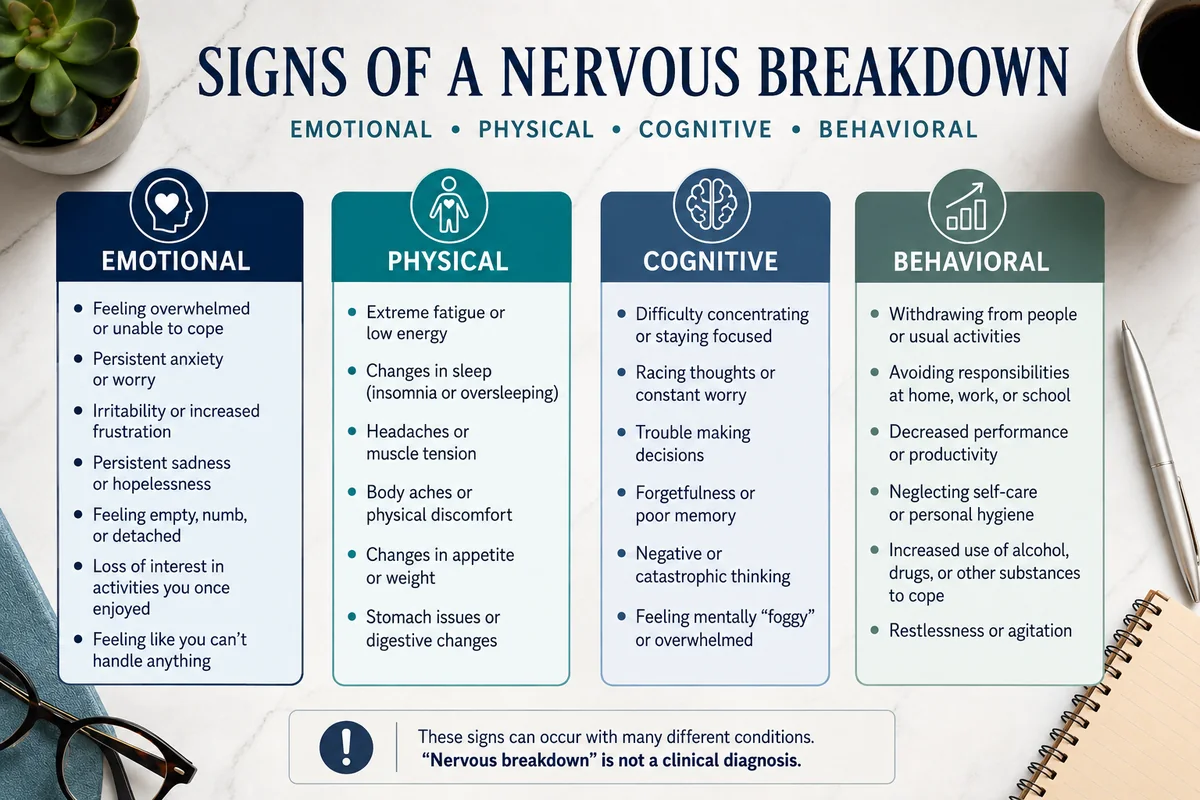
The signs of a nervous breakdown can involve emotional, physical, cognitive, and behavioral changes. Because a nervous breakdown is not a specific diagnosis, there is no official symptom checklist, and symptoms can vary considerably depending on the underlying cause.
What often distinguishes significant psychological distress from ordinary periods of stress is the severity of the symptoms and how much they interfere with everyday functioning.
Emotional Signs
Emotional changes may include:
-
Persistent feelings of being overwhelmed
-
Increased irritability or emotional reactivity
-
Frequent crying or feeling unusually emotional
-
Intense anxiety or panic symptoms
-
Feelings of hopelessness or helplessness
-
Emotional numbness or feeling disconnected
-
Difficulty managing emotions that previously felt manageable
-
Loss of interest or pleasure in usual activities
These symptoms can occur with several mental health conditions and should not automatically be attributed to a “nervous breakdown.”
Physical Signs
Significant psychological distress can also be accompanied by physical symptoms, including:
-
Persistent fatigue or exhaustion
-
Difficulty falling asleep or staying asleep
-
Sleeping substantially more than usual
-
Changes in appetite
-
Headaches
-
Muscle tension
-
Gastrointestinal discomfort
-
Feeling physically restless or unable to relax
-
Noticeable changes in energy
Physical symptoms should not automatically be assumed to have a psychological cause. New, severe, persistent, or unexplained physical symptoms may require medical evaluation.
Cognitive Signs
Stress and mental health symptoms can interfere with thinking and concentration.
Someone experiencing severe distress may notice:
-
Difficulty concentrating
-
Forgetfulness
-
Difficulty making decisions
-
Racing or repetitive thoughts
-
Feeling mentally overwhelmed
-
Difficulty organizing or completing tasks
-
Trouble following conversations or retaining information
When cognitive changes become significant enough to interfere with work, school, relationships, or basic responsibilities, professional evaluation may be appropriate.
Behavioral Signs
Changes in behavior can sometimes make severe distress more noticeable to other people.
Possible behavioral signs of a nervous breakdown may include:
-
Withdrawing from friends or family
-
Missing work, school, or important responsibilities
-
Neglecting ordinary household tasks
-
Difficulty maintaining personal hygiene or self-care
-
Spending significantly more time alone
-
Increasing alcohol or substance use
-
Abandoning routines or activities that were previously important
-
Becoming unable to complete ordinary daily responsibilities
A sudden or substantial decline in functioning deserves attention, particularly when several emotional, physical, cognitive, or behavioral changes occur together.
What Can Contribute to a Nervous Breakdown?
Because a nervous breakdown is not a clinical diagnosis, there is no single established cause.
People often use the term when multiple stressors or mental health symptoms have accumulated to the point that coping and everyday functioning become significantly more difficult.
Possible contributing factors may include:
Chronic Stress
Severe or prolonged stress of stress at work, school, home, or within relationships can gradually affect sleep, concentration, mood, energy, and the ability to cope with additional demands.
Major Life Changes
Significant transitions can create substantial emotional strain, even when the change is not entirely negative.
Examples may include:
-
Divorce or separation
-
Death of someone close
-
Job loss or major career changes
-
Moving
-
Financial hardship
-
Serious illness
-
Becoming a caregiver
-
Pregnancy or becoming a parent
-
Significant relationship changes
Mental Health Conditions
Sometimes what a person describes as a nervous breakdown is actually a period of worsening symptoms from an underlying mental health condition.
These may include:
-
Major depressive disorder
-
Anxiety disorders
-
Panic disorder
-
PTSD or other trauma-related conditions
-
Bipolar disorders
-
Adjustment disorders
-
Substance use disorders
Identifying the underlying condition matters because treatment should address the actual diagnosis and symptoms, not the informal label “nervous breakdown.”
Trauma and Loss
Traumatic experiences, interpersonal violence, significant loss, or reminders of previous trauma can contribute to severe psychological distress.
Trauma does not automatically cause a nervous breakdown, and people respond to traumatic experiences differently.
When trauma-related symptoms are present, appropriate assessment can help determine whether PTSD or another trauma-related condition should be addressed in treatment.
Sleep Disruption
Severe or persistent sleep disruption can make emotional regulation, concentration, decision-making, and coping more difficult.
Sleep problems can also occur as symptoms of depression, anxiety, PTSD, bipolar disorders, medical conditions, medication effects, or other concerns.
Substance Use
Alcohol or other substances may be used in an attempt to manage anxiety, insomnia, emotional pain, or overwhelming stress.
Substance use can also worsen psychiatric symptoms, interfere with sleep, affect judgment, and complicate treatment.
Multiple Stressors at the Same Time
Often there is not one dramatic event.
A person may be managing work stress, financial problems, caregiving responsibilities, relationship conflict, poor sleep, grief, and existing mental health symptoms simultaneously.
Eventually, ordinary responsibilities may begin to feel unmanageable.
That accumulation of stress and symptoms is often what people are describing when they say they have reached a “breaking point.”
Are There Factors That May Be Particularly Relevant for Women?
Some circumstances can be especially relevant when evaluating severe psychological distress in women.
Depending on the individual, these may include:
-
Pregnancy and the postpartum period
-
The menopausal transition
-
Intimate partner violence
-
Sexual trauma
-
Caregiving responsibilities
-
Reproductive health concerns
-
Relationship or family stressors
These factors should be considered when they are actually present rather than assuming that every woman’s distress is caused by hormones, caregiving, or social expectations.
Women and men can both experience severe stress, depression, anxiety, trauma, financial pressure, relationship problems, caregiving burden, and difficulty functioning.
The purpose of recognizing women-specific considerations is to improve assessment—not to create another stereotype about what a nervous breakdown is supposed to look like.
How to Respond to Early Signs of a Nervous Breakdown
If the signs of a nervous breakdown are beginning to interfere with daily functioning, the appropriate response depends on the severity of the symptoms, the underlying cause, and whether there are immediate safety concerns.
A nervous breakdown is not something that can be diagnosed or treated with one universal strategy.
Reduce Immediate Demands Where Possible
When someone is significantly overwhelmed, temporarily reducing nonessential demands may make it easier to address what is happening.
That might mean:
-
Taking time away from work when appropriate
-
Asking for help with childcare or caregiving
-
Postponing nonessential commitments
-
Simplifying household responsibilities
-
Reducing unnecessary social obligations
-
Asking trusted people for practical assistance
Reducing demands is not treatment for an underlying mental health condition. It can, however, create enough space for someone to seek appropriate evaluation and support.
Protect Basic Routines
Severe distress can disrupt sleep, meals, medication routines, hygiene, physical activity, and other basic aspects of daily functioning.
When possible, focus on maintaining simple routines such as:
-
Eating regularly
-
Staying hydrated
-
Maintaining a consistent sleep schedule
-
Taking prescribed medications as directed
-
Limiting alcohol or other substances used to cope
-
Attending scheduled medical or mental health appointments
These steps support general health but should not be presented as a cure for severe psychological distress.
Seek Professional Evaluation
Professional evaluation becomes increasingly important when symptoms are persistent, worsening, or significantly interfering with normal functioning.
A qualified healthcare or mental health professional can help determine whether the symptoms are related to:
-
Depression
-
An anxiety disorder
-
Panic attacks
-
PTSD or another trauma-related condition
-
Bipolar disorder
-
An adjustment disorder
-
Substance use
-
Severe stress or burnout
-
Sleep problems
-
A medical condition
-
Medication effects
-
Another mental health concern
Treatment should be based on the condition that is actually present rather than simply treating a “nervous breakdown.”
Depending on the diagnosis and individual needs, treatment may include psychotherapy, medication when clinically appropriate, lifestyle and supportive interventions, or a higher level of mental health care.
Our guide to forms of treatment for depression explains how different levels and types of mental health treatment may be considered when depression is part of the clinical picture.
Ask for Practical Support
When someone is severely overwhelmed, even ordinary responsibilities can become difficult.
A trusted friend or family member may be able to help with practical tasks such as:
-
Making or attending an appointment
-
Preparing meals
-
Helping with transportation
-
Caring for children or pets
-
Handling an urgent household task
-
Sitting with the person while she or he makes a difficult phone call
Support does not mean taking responsibility for diagnosing or treating someone’s mental health condition.
Sometimes the most useful role is simply helping the person access appropriate professional care.
Know When the Situation Is Urgent
Some symptoms require more immediate attention.
Seek urgent or emergency evaluation when someone:
-
Is unable to remain safe
-
Has suicidal thoughts with intent or a plan
-
Is experiencing hallucinations, severe paranoia, or significant loss of contact with reality
-
Is extremely confused or disoriented
-
Is behaving in a way that creates immediate danger
-
Cannot care for basic needs because of severe psychiatric symptoms
-
May be experiencing a serious medical condition
A residential treatment center is not a substitute for emergency or acute inpatient psychiatric care when hospital-level stabilization is necessary.
Do Nervous Breakdown Signs Differ Between Women and Men?
There is no separate clinical definition of a nervous breakdown for women versus men.
Women and men can both experience anxiety, depression, panic symptoms, sleep disruption, irritability, withdrawal, difficulty concentrating, physical symptoms, substance use, and significant impairment in functioning.
Population-level research does identify some differences in rates of particular mental health conditions, patterns of help-seeking, substance use, trauma exposure, and suicide.
Those differences should not be turned into rules such as:
“Women cry while men become angry.”
An individual woman’s symptoms should be evaluated according to her actual clinical presentation, just as an individual man’s symptoms should be evaluated according to his.
Gender can be relevant to mental health care without determining what someone’s distress is supposed to look like.
When to Seek Professional Help
Because “nervous breakdown” is not a clinical diagnosis, there is no specific point at which someone officially meets criteria for having one.
What matters is the severity of the symptoms, how long they have persisted, how significantly they interfere with functioning, and whether there are safety concerns.
Consider speaking with a qualified healthcare or mental health professional when the signs of a nervous breakdown include:
-
Persistent or worsening anxiety, depression, or emotional distress
-
Recurrent panic attacks
-
Significant sleep disruption
-
Increasing withdrawal from other people
-
Difficulty concentrating or making decisions
-
Inability to maintain work, school, relationships, or ordinary responsibilities
-
Increasing reliance on alcohol or other substances to cope
-
Difficulty maintaining basic self-care
-
Symptoms that continue despite attempts to reduce stress
-
A substantial change from the person’s usual level of functioning
Professional evaluation can help identify what is actually causing the symptoms and determine what type of treatment or support may be appropriate.
What Type of Treatment Can Help?
There is no specific treatment called “nervous breakdown treatment.”
Treatment depends on the underlying condition.
For example, someone whose symptoms are primarily related to major depressive disorder may need a different treatment plan than someone experiencing panic disorder, PTSD, bipolar disorder, severe grief, substance-related symptoms, or a medical condition.
Depending on the clinical picture, treatment may include:
-
Psychotherapy
-
Psychiatric evaluation
-
Medication when clinically appropriate
-
Treatment for trauma-related symptoms
-
Sleep interventions
-
Substance use treatment when appropriate
-
Supportive lifestyle interventions
-
Outpatient mental health care
-
Partial hospitalization
-
Residential mental health treatment
-
Acute inpatient psychiatric care when necessary
The appropriate level of care should be based on an individualized assessment rather than the informal label “nervous breakdown.”
When Might Residential Treatment Be Appropriate?
Most people experiencing severe stress or emotional distress do not automatically need residential treatment.
Outpatient care may be appropriate when someone can remain safe, continue functioning with support, and participate consistently in scheduled treatment.
A more structured level of care may be considered when symptoms have become severe enough to substantially interfere with functioning, outpatient treatment has not provided sufficient support, co-occurring conditions complicate treatment, or the person needs greater therapeutic structure.
At Kinder in the Keys, our women’s residential mental health treatment program serves adult women who are clinically and medically appropriate for residential care.
Kinder is not an acute inpatient psychiatric hospital.
If someone requires emergency psychiatric stabilization, cannot remain safe, or needs hospital-level medical or psychiatric monitoring, acute care may be more appropriate.
Frequently Asked Questions About Nervous Breakdowns
What are the first signs of a nervous breakdown?
The early signs of a nervous breakdown vary because the term does not describe one specific medical condition.
Possible signs include increasing anxiety, irritability, sleep disruption, fatigue, difficulty concentrating, withdrawal, feeling overwhelmed, changes in appetite, difficulty managing emotions, and declining ability to complete normal responsibilities.
A noticeable change in everyday functioning is particularly important to pay attention to.
Is a nervous breakdown a mental illness?
No.
“Nervous breakdown” is not a formal psychiatric diagnosis.
People commonly use the phrase to describe a period of severe psychological distress or inability to function normally.
A professional evaluation may identify an underlying condition such as depression, an anxiety disorder, PTSD, panic disorder, an adjustment disorder, bipolar disorder, substance-related symptoms, or another mental or physical health concern.
Can stress cause a nervous breakdown?
Severe or prolonged stress can contribute to significant psychological distress and difficulty functioning.
However, stress is not the only possible explanation.
Symptoms may also be related to an underlying mental health condition, trauma, grief, sleep disruption, substance use, a medical condition, medications, or several factors occurring together.
What does a nervous breakdown feel like?
People describe the experience differently.
Someone may feel emotionally overwhelmed, exhausted, unable to think clearly, intensely anxious, detached, hopeless, unable to manage ordinary responsibilities, or as though she or he has reached a breaking point.
Because those experiences can occur with several different conditions, the description alone cannot determine a diagnosis.
How long does a nervous breakdown last?
There is no established clinical duration because a nervous breakdown is not a diagnosis.
How long severe distress lasts depends on the underlying cause, symptom severity, treatment, support, medical and psychiatric factors, and the individual’s circumstances.
We have a separate guide explaining how long mental breakdowns can last and what can affect recovery.
Are the signs of a nervous breakdown different in women?
Women and men can experience many of the same symptoms, including anxiety, depression, irritability, sleep disruption, withdrawal, difficulty concentrating, physical symptoms, and inability to function normally.
Certain circumstances—such as pregnancy, the postpartum period, perimenopause, intimate partner violence, sexual trauma, or caregiving responsibilities—may be relevant for some women.
Those factors should be evaluated individually rather than assuming that women experience a separate type of nervous breakdown.
What should I do if someone I know is having a nervous breakdown?
Stay calm, listen without judgment, and focus first on safety.
If the person is not in immediate danger, helping her or him contact a healthcare or mental health professional may be appropriate.
Practical assistance—such as helping make an appointment, providing transportation, or reducing immediate responsibilities—may also be useful.
We have a separate guide on what to do when someone is having a mental breakdown.
If the person cannot remain safe, may act on suicidal thoughts, is severely confused, has lost contact with reality, or is experiencing another psychiatric or medical emergency, seek immediate emergency evaluation.
Understanding the Signs Is Only the Beginning
Recognizing the signs of a nervous breakdown can help identify when ordinary stress has become something more serious.
But the phrase itself does not tell us what is wrong.
Two people may both say they are having a nervous breakdown while one is experiencing major depression, another is having severe panic attacks, and another is struggling with trauma, grief, sleep deprivation, substance use, or several problems at the same time.
That is why the goal should not simply be to stop the “breakdown.”
The goal is to understand what is causing the distress and what level of care the person actually needs.
When symptoms are persistent, worsening, significantly interfering with daily life, or raising concerns about safety, professional evaluation can provide the information needed to determine the appropriate next step.
Medically Reviewed By
Dr. Laura Tanzini, DrPH, LMFT
Doctor of Public Health | Specialty in Lifestyle Medicine
Licensed Marriage and Family Therapist (Florida & California)
Founder & CEO, Kinder in the Keys
Doctoral Research: Dr. Tanzini’s doctoral research at Loma Linda University examined childhood and adult traumatic events, cumulative trauma exposure, gender, forgiveness, life satisfaction, and long-term well-being.
This article has been clinically reviewed for accuracy and consistency with current behavioral health principles. Content is intended to provide general educational information and should not replace individualized evaluation, diagnosis, or treatment by a qualified healthcare professional.
Medical Disclaimer: The information provided in this article is for educational and informational purposes only and is not intended as medical advice, diagnosis, or treatment. “Nervous breakdown” is not a formal psychiatric diagnosis, and symptoms may have many possible causes. Consult a qualified healthcare or mental health professional for individualized evaluation and treatment. Seek immediate emergency medical care if you are unable to remain safe or believe you may act on suicidal thoughts.