
PTSD and depression are different mental health conditions, but they frequently occur together.
A woman living with post-traumatic stress disorder may struggle with intrusive memories, avoidance, hypervigilance, sleep disruption, guilt, emotional numbness, or feeling disconnected from other people. Depression can bring persistent sadness, loss of interest, hopelessness, fatigue, difficulty concentrating, sleep changes, and feelings of worthlessness.
Some of those experiences overlap.
Others are distinctly related to PTSD or depression.
That overlap can make it difficult for a woman to understand what she is experiencing—and it is one reason a careful clinical assessment matters.
The relationship is also more complicated than saying that trauma simply “causes depression.” A woman’s mental health may reflect the interaction of traumatic experiences, PTSD symptoms, previous episodes of depression or anxiety, sleep disruption, relationships, ongoing stressors, physical health, substance use, and other individual factors.
Understanding the connection between PTSD and depression means looking at the whole clinical picture rather than forcing symptoms into one simple explanation.
How Often Do PTSD and Depression Occur Together?
Depression is one of the conditions that commonly co-occurs with PTSD.
The National Institute of Mental Health notes that people with PTSD frequently experience additional mental health conditions, including depression, anxiety disorders, and substance use problems.
However, having PTSD does not automatically mean someone has depression.
Likewise, experiencing depression after trauma does not necessarily mean someone has PTSD.
Each condition has its own diagnostic criteria, and some symptoms can occur in both.
That distinction becomes important when deciding what needs to be treated.
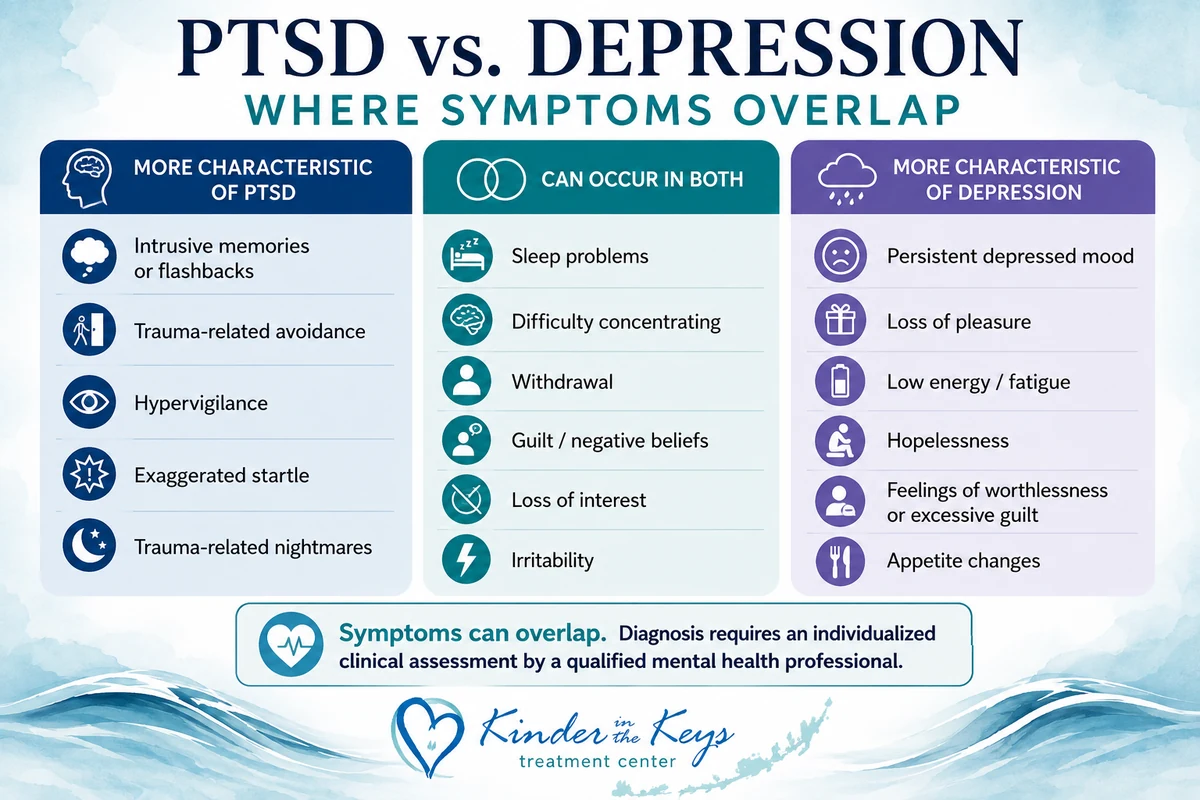
PTSD and Depression Are Different Conditions
PTSD develops in relation to exposure to a traumatic event and includes symptoms involving several domains.
These can include:
Intrusive memories, nightmares, or flashbacks
Avoidance of trauma-related thoughts, feelings, people, places, or situations
Negative changes in thoughts and mood
Hypervigilance or feeling constantly alert for danger
Exaggerated startle responses
Irritability
Difficulty concentrating
Sleep disturbance
Depression does not require exposure to a traumatic event.
Major depressive disorder can involve:
Persistent depressed mood
Markedly diminished interest or pleasure
Changes in sleep
Changes in appetite or weight
Fatigue or loss of energy
Difficulty thinking or concentrating
Feelings of worthlessness or excessive guilt
Psychomotor changes
Recurrent thoughts of death or suicide
A woman can meet criteria for PTSD, depression, both conditions, or neither despite experiencing some overlapping symptoms.
That is why symptoms alone should not be used to self-diagnose either disorder.
Where PTSD and Depression Overlap
Several experiences can occur with both PTSD and depression.
Loss of Interest and Withdrawal
A woman with depression may stop participating in activities because she no longer experiences pleasure or motivation.
A woman with PTSD may withdraw because activities, people, or places remind her of traumatic experiences or because she feels emotionally detached from others.
From the outside, both women may appear to be doing the same thing.
Clinically, however, why the withdrawal is occurring matters.
Sleep Problems
Both conditions can disrupt sleep.
PTSD may involve nightmares, hyperarousal, difficulty relaxing, or waking in response to perceived danger.
Depression may involve insomnia, early-morning awakening, fragmented sleep, or excessive sleeping.
When PTSD and depression occur together, sleep disruption may become an important part of the overall clinical picture.Persistent insomnia also has an important relationship with depression, which we discuss in our guide to depression and sleep.
Concentration and Cognitive Difficulties
Difficulty concentrating can occur with both PTSD and depression.
Someone with PTSD may have trouble focusing because part of her attention remains oriented toward possible threat or intrusive trauma-related material.
Someone with depression may experience slowed thinking, poor concentration, diminished motivation, or difficulty making decisions.
Again, the symptom may look similar while the processes contributing to it differ.
Guilt and Negative Beliefs
Both disorders can involve painful beliefs about oneself.
After trauma, a woman may think:
“I should have stopped it.”
“I should have known.”
“It was my fault.”
“I cannot trust anyone.”
Depression can also involve excessive guilt, worthlessness, hopelessness, and negative expectations about the future.
When the conditions overlap, these patterns can reinforce one another.
Can PTSD Cause Depression?
The most accurate answer is that PTSD and depression are strongly associated, but the relationship is not adequately explained by a simple cause-and-effect statement.
PTSD may increase vulnerability to subsequent depressive symptoms or depressive disorders in some people.
Consider what persistent PTSD can do to daily life.
A woman may begin avoiding people and places.
She may stop sleeping well.
Relationships may become strained.
She may feel unsafe even when immediate danger is gone.
Activities that once mattered may disappear from her life.
She may begin believing that she will never feel normal again.
Over time, those experiences can contribute to worsening mood, isolation, hopelessness, and loss of pleasure.
But that is only one possible pathway.
Some women experienced depression before the traumatic event.
Others have previous trauma histories, anxiety, medical conditions, ongoing interpersonal stress, substance use, genetic vulnerability, or other factors affecting mental health.
Therefore, good treatment begins by asking what happened and how the symptoms developed over time, rather than assuming one diagnosis automatically caused the other.
Why Trauma History Matters
Trauma is not always a single event.
A woman entering treatment at 40 or 50 may have experienced childhood abuse, sexual trauma, intimate partner violence, traumatic loss, medical trauma, accidents, violence, or other frightening experiences across different periods of her life.
My doctoral research examined childhood and adult traumatic experiences, cumulative trauma exposure, gender, forgiveness, life satisfaction, and long-term well-being.
One of the important lessons from trauma research is that simply counting symptoms today does not necessarily explain the path that led to them.
Two women may experience apparently similar traumatic events and have very different outcomes.
One may develop PTSD.
One may develop depression.
One may develop both.
Another may experience substantial distress without meeting criteria for either disorder.
Understanding the woman’s complete history can therefore be as important as identifying her current symptoms.
PTSD, Depression, and Women
Women develop PTSD at higher rates than men, but that does not mean there is one universal “female” response to trauma.
Women are disproportionately exposed to certain forms of interpersonal trauma, including sexual violence and childhood sexual abuse, that are associated with substantial PTSD risk.
But gender alone does not explain an individual’s response.
Previous trauma, characteristics of the traumatic event, social support, ongoing danger, relationships, physical health, psychological history, and other individual factors can influence recovery.
The clinical question should never be:
“How is a woman supposed to respond to trauma?”
It should be:
“How did this particular woman respond, and what is maintaining her symptoms now?”
PTSD and Depression Can Affect the Body as Well as the Mind
Mental health conditions can have physical manifestations.
Women experiencing PTSD or depression may also report sleep problems, fatigue, muscle tension, changes in appetite, gastrointestinal symptoms, headaches, rapid heartbeat, or other physical complaints.
These symptoms are not specific to PTSD or depression and can have many medical causes.
A comprehensive evaluation therefore should not automatically attribute every physical symptom to mental health.
The body still deserves appropriate medical evaluation.
When PTSD and Depression Include Suicidal Thoughts
PTSD and depression can both be associated with suicidal thoughts and behavior, and risk requires individual assessment.
Hopelessness, severe depression, substance use, previous suicidal behavior, acute stressors, access to lethal means, social isolation, and other factors can influence an individual’s level of risk.
Someone experiencing suicidal thoughts should not be expected to determine her own level of danger from an online article.
Thoughts of suicide, an intention to die, a suicide plan, or concern that you may be unable to remain safe require prompt professional evaluation.
How Are PTSD and Depression Treated Together?
Treatment should be based on the diagnoses present, symptom severity, safety, functioning, previous treatment response, medical history, patient preferences, and other individual factors.
The presence of depression does not automatically mean PTSD treatment must be postponed.
Current clinical guidance supports evidence-based trauma-focused psychotherapy for PTSD even when other psychiatric conditions are present, when clinically appropriate.
Trauma-Focused Psychotherapy
Evidence-supported trauma-focused psychotherapies for PTSD include and current PTSD treatment guidelines identify trauma-focused psychotherapy as the most effective approach for PTSD:
Cognitive Processing Therapy (CPT)
Prolonged Exposure (PE)
Eye Movement Desensitization and Reprocessing (EMDR)
These therapies use different methods, but each directly addresses trauma-related symptoms rather than simply teaching someone to avoid distress.
Treatment selection should be individualized.
Treatment for Depression
When a woman also has a depressive disorder, treatment for depression may include psychotherapy, medication, behavioral interventions, or other evidence-based approaches depending on severity and individual circumstances
Treatment planning should distinguish symptoms likely related to PTSD from a separate depressive disorder while recognizing that improvement in one condition may influence symptoms of the other.
Medication
Medication may be appropriate for PTSD, depression, or both depending on the individual clinical picture.
Medication decisions should be made with a qualified prescribing professional who can consider diagnoses, symptoms, other medications, medical history, treatment response, side effects, and patient preferences.
Medication should not be described as merely something that makes psychotherapy possible. For some patients it represents an important component of treatment in its own right.
When Is Residential Treatment Appropriate?
Not every woman with PTSD and depression needs residential treatment.
Many women can be treated effectively in outpatient care.
A higher level of care may become appropriate when symptoms substantially interfere with daily functioning, outpatient treatment has not provided sufficient support, safety requires closer clinical monitoring, multiple conditions complicate treatment, or the home environment makes sustained treatment difficult.
Residential treatment provides something outpatient therapy cannot provide in the same way:
time and structure devoted to recovery.
For women who need a higher level of care, our residential PTSD treatment for women provides structured, trauma-focused treatment in a women-only environment.
At Kinder in the Keys, treatment is individualized because a diagnosis never tells us everything we need to know about the woman carrying it.
We consider trauma history, current symptoms, depression and anxiety, sleep, relationships, physical health, nutrition, movement, medication needs, daily functioning, and the environment to which the woman will eventually return.
The goal is not merely to reduce a score on a symptom checklist.
It is to help the woman function differently in her actual life.
Why Treating the Whole Clinical Picture Matters
PTSD and depression demonstrate why mental health treatment cannot always be organized around a single diagnosis.
Trauma may affect how someone sees herself.
Depression may affect whether she believes change is possible.
Poor sleep may reduce her ability to regulate emotion.
Avoidance may progressively shrink her life.
Relationship difficulties may remove sources of support.
Physical exhaustion may make treatment harder to engage in.
Each problem can interact with the others.
Effective treatment therefore requires understanding which factors are present in this woman, how they interact, and which interventions are appropriate for her.
Frequently Asked Questions About PTSD and Depression
Can PTSD cause depression?
PTSD and depression frequently co-occur, and PTSD may contribute to increased vulnerability to depression in some individuals. However, their relationship is complex, and it is usually more accurate to examine the person’s trauma history, symptom timeline, previous mental health history, and other contributing factors than to assume PTSD directly caused depression.
What is the difference between PTSD and depression?
PTSD develops following exposure to trauma and includes trauma-related intrusion, avoidance, negative changes in thoughts and mood, and changes in arousal and reactivity. Depression does not require trauma exposure and is characterized by a pattern of depressive symptoms such as persistent low mood or loss of interest along with other cognitive, physical, and emotional symptoms.
Can someone have PTSD and depression at the same time?
Yes. Depression is a common co-occurring condition among people with PTSD. Having both conditions makes careful assessment important because some symptoms overlap while others may require different treatment considerations.
Does depression have to be treated before PTSD?
Not necessarily. Current PTSD treatment guidance indicates that co-occurring psychiatric conditions generally should not prevent appropriate evidence-based PTSD psychotherapy. Treatment sequencing should be determined individually based on safety, symptom severity, functioning, diagnoses, and clinical needs.
What treatments are used for PTSD?
Evidence-supported trauma-focused treatments include Cognitive Processing Therapy, Prolonged Exposure, and EMDR. Other interventions may be appropriate depending on the person’s symptoms, co-occurring conditions, preferences, and treatment needs.
Getting Help for PTSD and Depression
Living with both PTSD and depression can affect far more than mood.
It can affect sleep, relationships, work, physical health, decision-making, confidence, and the ability to imagine a life that feels different from the present.
But having both diagnoses does not mean recovery is impossible.
At Kinder in the Keys in Key Largo, Florida, we provide residential mental health treatment for adult women experiencing PTSD, depression, anxiety, trauma-related conditions, and other mental health concerns.
Treatment begins by understanding the woman—not simply assigning her symptoms to a diagnostic label.
The past cannot be erased.
But treatment can help a woman reach a point where what happened in the past no longer determines how she experiences every part of the present.
Medically Reviewed By
Dr. Laura Tanzini, DrPH, LMFT
Doctor of Public Health | Specialty in Lifestyle Medicine
Licensed Marriage and Family Therapist (Florida & California)
Founder & CEO, Kinder in the Keys
Doctoral Research: Dr. Tanzini’s doctoral research at Loma Linda University examined childhood and adult traumatic events, cumulative trauma exposure, gender, forgiveness, life satisfaction, and long-term well-being.
This article has been clinically reviewed for accuracy and consistency with current behavioral health and trauma-informed care principles. Content is intended to provide general educational information and should not replace individualized evaluation, diagnosis, or treatment by a qualified healthcare professional.
Medical Disclaimer
The information provided in this article is for educational and informational purposes only and is not intended as medical advice, diagnosis, or treatment. Mental health needs vary by individual. If you are experiencing symptoms of PTSD, depression, or another mental health condition, consult a qualified healthcare professional who can evaluate your individual circumstances.