
Depression and Diet: What Should I Be Eating During Mental Health Treatment?
The relationship between depression and diet is more meaningful than simply being told to “eat healthy.”
Depression can change appetite, energy, motivation, sleep, concentration, and the ability to care for yourself. A woman who once cooked regularly may suddenly struggle to prepare a meal. Another may lose her appetite entirely. Someone else may find herself eating very differently because food has become one of the few things that temporarily feels comforting.
At the same time, the brain and body still require adequate energy, protein, fats, carbohydrates, vitamins, minerals, and hydration to function.
Research increasingly suggests that overall dietary patterns may be associated with mental health outcomes and that improving diet may provide additional support for some people receiving treatment for depression.
But the most important point should be stated clearly:
No single food is going to lift a major depressive episode.
Nutrition can support mental and physical health during treatment. It should not be presented as a replacement for psychotherapy, medication when appropriate, or other evidence-based mental health care.
What Does the Research Say About Depression and Diet?
Nutrition research has increasingly examined the relationship between dietary patterns and depression.
One of the best-known randomized controlled trials is the SMILES trial, which studied adults with major depression who also had relatively poor-quality diets.
Participants receiving structured dietary support based largely on a modified Mediterranean-style eating pattern experienced greater improvement in depressive symptoms than participants receiving a social-support intervention.
That finding is important, but it should not be exaggerated.
The study does not demonstrate that a Mediterranean diet cures depression or replaces established mental health treatment.
Instead, it supports a broader idea:
Nutrition may be a meaningful component of comprehensive depression care.
Other research has also found associations between higher-quality dietary patterns and better mental health outcomes, although nutrition research is complicated by the many other factors that influence both diet and depression.
Sleep, income, physical activity, medical conditions, medications, substance use, social connection, stress, and access to food can all affect the relationship.
What Should I Eat During Depression Treatment?
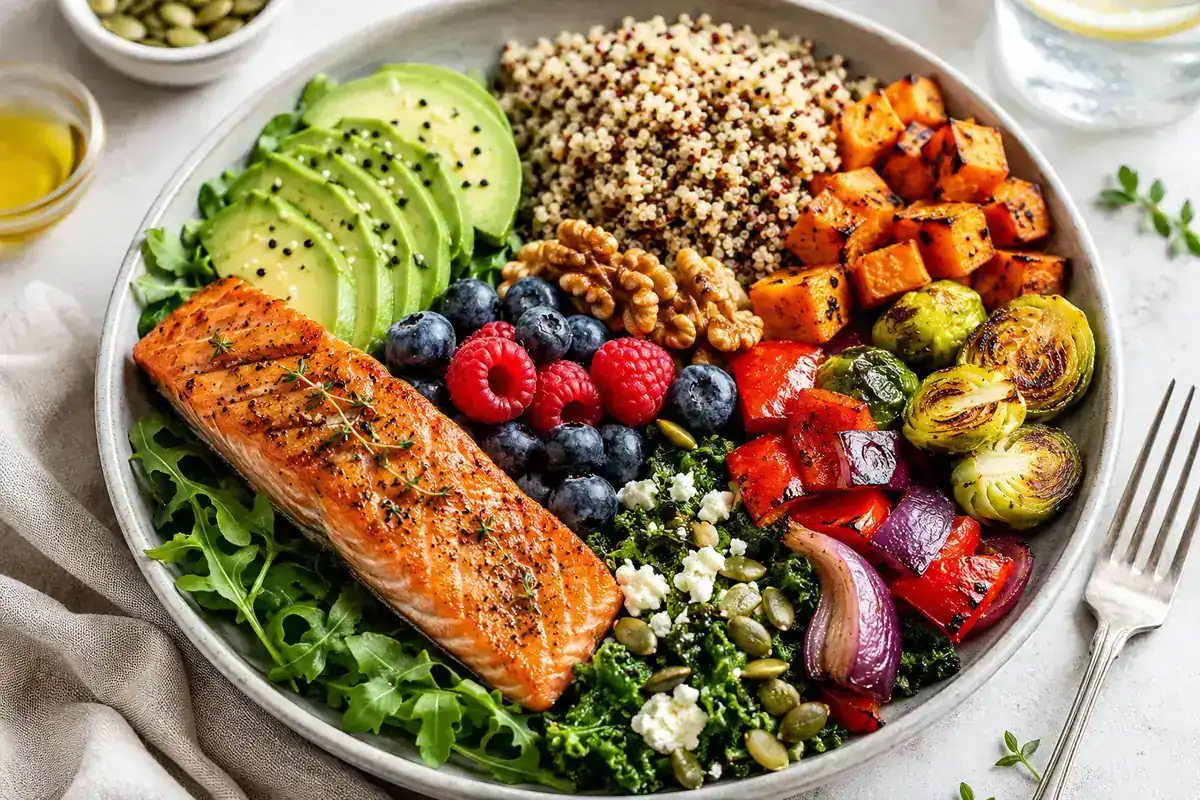
There is no single “depression diet.”
A useful approach is to concentrate less on individual superfoods and more on creating a nutritionally varied eating pattern that can actually be maintained.
Depending on individual medical and nutritional needs, that may include:
Vegetables
Fruit
Whole grains
Legumes
Nuts and seeds
Fish
Eggs
Poultry and other protein sources
Yogurt, kefir, or other fermented foods if tolerated
Olive oil and other unsaturated fats
Adequate fluids
The goal is not dietary perfection.
The goal is to provide the body with reasonably consistent nourishment while the woman is doing the much larger work of mental health treatment.
Mediterranean-Style Eating and Depression
The Mediterranean dietary pattern appears frequently in mental-health nutrition research.
It generally emphasizes:
Vegetables and fruit
Legumes
Whole grains
Nuts and seeds
Olive oil
Fish and seafood
Moderate amounts of dairy and other protein sources
Fewer highly processed foods
One advantage of thinking in terms of a dietary pattern rather than individual nutrients is that people eat meals, not isolated molecules.
A piece of salmon does not treat depression.
Neither does spinach.
Neither does olive oil.
But a consistent eating pattern that provides adequate nutrients, fiber, protein, healthy fats, and energy may support overall physical health while someone is receiving treatment.
Fish and Omega-3 Fatty Acids
Fatty fish such as salmon, sardines, trout, and mackerel provide omega-3 fatty acids.
Omega-3 fatty acids are components of cell membranes and have important biological functions throughout the body, including within the nervous system.
Researchers have studied omega-3 intake and supplementation extensively in relation to depression. Results vary depending on the population, formulation, dose, and study design.
That means we should not tell women that eating salmon will treat depression.
It does mean that fish can be a nutritious component of an overall eating pattern and provides nutrients important for general health.
For women who do not eat fish, nuts and seeds such as walnuts, flaxseed, and chia can contribute plant-based omega-3 fatty acids.
Vegetables and Fruit
Vegetables and fruit provide fiber, vitamins, minerals, and a wide range of plant compounds.
Rather than trying to identify the one vegetable supposedly best for depression, variety is more useful.
Leafy greens, broccoli, peppers, tomatoes, berries, citrus fruits, carrots, squash, and other produce contribute different nutrients.
For someone who is depressed, however, “eat more vegetables” can become another demand she feels she is failing to meet.
It does not have to be complicated.
Frozen vegetables count.
Precut vegetables count.
Canned vegetables can count.
A piece of fruit that requires no preparation counts.
Nutrition during depression treatment needs to be realistic enough to happen.
Whole Grains and Fiber-Rich Carbohydrates
Carbohydrates are not inherently unhealthy.
Whole grains such as oats, brown rice, quinoa, barley, and whole-grain breads can provide carbohydrates along with fiber and other nutrients.
Legumes, vegetables, and fruit also contribute carbohydrates and fiber.
Highly restrictive approaches that eliminate entire food groups are generally unnecessary for most women unless there is a specific medical reason.
This is especially important in mental health treatment because rigid food rules can become problematic for women who already have complicated relationships with eating, body image, or control.
Protein During Depression Treatment
Protein is important for maintaining muscle, tissue repair, immune function, and many other normal physiological processes.
Useful protein sources can include:
Eggs
Poultry
Fish
Dairy foods
Beans
Lentils
Nuts
Seeds
Other protein foods appropriate for the individual’s dietary needs
The practical issue during depression is often not identifying the perfect protein source.
It is eating consistently enough to meet basic nutritional needs.
A woman with severe depression may skip breakfast, sleep through lunch, and realize late in the evening that she has barely eaten.
Another may have little energy for cooking.
In those situations, simple foods may be far more useful than an elaborate nutritional plan.
Fermented Foods and the Gut-Brain Axis
The digestive system and central nervous system communicate through complex biological pathways sometimes described collectively as the gut-brain axis.
This has become an important area of research in psychiatry and nutritional science.
The intestinal microbiome may interact with immune signaling, metabolism, the nervous system, and other processes relevant to health.
Fermented foods such as yogurt and kefir may be included as part of a varied diet when tolerated, while vegetables, fruit, legumes, and whole grains provide fiber that supports the intestinal environment.
But the science should not be turned into:
“Fix your gut and you will fix your depression.”
We are nowhere near being able to make that claim.
The microbiome is one part of an extraordinarily complicated biological system, and depression itself has many potential contributing factors.
What About Highly Processed Foods?
Research frequently finds associations between diets high in ultra-processed foods and poorer health outcomes, including associations with depressive symptoms.
But those findings require context.
People experiencing depression may already have less energy to shop, prepare meals, or cook. Financial resources, work schedules, food availability, medications, sleep, and physical health can also influence what someone eats.
Therefore, an association between processed-food consumption and depression does not automatically tell us which one caused the other.
There is also no benefit in making a depressed woman feel guilty because she ate frozen pizza.
Instead, we can ask:
What realistic changes could improve the overall nutritional quality of what she eats?
Adding something nutritious can sometimes be easier than creating another list of foods she is forbidden to eat.
How to Eat Well When You’re Depressed
This may be the most important nutrition section in the entire article.
Telling a woman with depression to meal prep seven days of perfectly balanced food may be completely unrealistic.
Depression can make even small decisions feel exhausting.
So start where she actually is.
Keep Easy Food Available
Useful low-effort options might include:
Fruit
Yogurt
Nuts and seeds
Hard-boiled eggs
Cheese
Whole-grain crackers
Canned beans
Canned or packaged fish
Frozen vegetables
Precut vegetables
Simple soups
Prepared foods that provide reasonable nutritional value
Convenience is not a nutritional failure.
Sometimes convenience is what allows someone to eat at all.
Prepare Food When Your Energy Is Better
Depression does not always feel identical throughout the day.
If mornings tend to be easier, prepare something then.
If you have more energy on weekends, make extra portions.
Work with the pattern rather than expecting yourself to function at maximum capacity every day.
Don’t Aim for Perfect
One meal does not determine your mental health.
Neither does one difficult week.
A sustainable eating pattern over time matters far more than dietary perfection.
Pay Attention to Major Appetite or Weight Changes
Significant increases or decreases in appetite and weight can occur with depression.
They can also occur because of medications, medical conditions, eating disorders, and other factors.
Discuss substantial or unexplained changes with your healthcare provider rather than assuming they are simply part of being depressed.
When Food Becomes About Control
There is another reason we should be careful about prescribing rigid diets to women receiving mental health treatment.
For some women, attempts to “eat perfectly” can become increasingly restrictive.
Foods become categorized as clean or toxic.
Entire food groups disappear.
Eating in restaurants becomes frightening.
Social situations involving food are avoided.
A health goal can gradually become another source of anxiety and control.
Nutrition should support mental health—not create another psychiatric burden.
If eating patterns are becoming obsessive, restrictive, secretive, or increasingly tied to fear and guilt, an eating-disorder assessment may be appropriate.
Sleep, Nutrition, and Depression
Sleep and eating patterns can influence one another.
A woman who is sleeping poorly may experience changes in appetite, energy, food choices, and meal timing.
Likewise, irregular eating, significant undernutrition, heavy alcohol use, or large amounts of caffeine can complicate sleep for some people.
But we should not reduce depression to either sleep or diet.
We recently explored the bidirectional relationship between depression and sleep, including why persistent insomnia deserves attention during depression treatment.
Both sleep and nutrition belong in the larger clinical picture.
Food Is Only One Part of Lifestyle Treatment for Depression
Nutrition matters.
But if we are discussing lifestyle factors in depression treatment, physical activity deserves particular attention.
A large 2024 systematic review and network meta-analysis published in The BMJ examined 218 randomized trials involving more than 14,000 participants with depression.
Walking or jogging, yoga, strength training, and mixed aerobic exercise were associated with reductions in depressive symptoms. The researchers also found that effects tended to increase as the prescribed intensity of exercise increased.
The findings led the authors to conclude that exercise should be considered alongside established treatments such as psychotherapy and antidepressant medication as a core treatment for depression.
That does not mean someone taking antidepressant medication should stop taking it and start running instead.
It means exercise should not be dismissed as a minor wellness suggestion.
Physical activity can be a legitimate component of depression treatment.
It also needs to be individualized.
A woman who is severely depressed, physically deconditioned, medically ill, undernourished, or recovering from another health problem may not be ready for vigorous exercise.
The appropriate type and intensity of activity should reflect the individual woman’s health, ability, preferences, and treatment needs.
Nutrition, Movement, Sleep, and Mental Health Work Together
One reason lifestyle medicine is relevant to mental health is that human beings do not function as disconnected systems.
Sleep affects energy.
Energy affects movement.
Depression affects appetite.
Appetite affects nutritional intake.
Physical health can influence psychological health.
Relationships influence stress.
Stress can affect sleep.
None of these factors operates independently.
That does not mean every woman with depression needs the same diet, exercise program, sleep schedule, or treatment plan.
It means comprehensive mental health care should be willing to look beyond symptoms alone.
Supplements and Depression
Supplements deserve caution.
A woman with an identified nutritional deficiency may need supplementation.
For example, iron, vitamin B12, folate, vitamin D, or other deficiencies may require treatment depending on laboratory findings, medical history, symptoms, and clinical assessment.
That is different from telling everyone with depression to take the same collection of supplements.
More is not necessarily better.
Supplements can interact with medications, produce adverse effects, and sometimes provide doses far beyond what someone actually needs.
If there is concern about a nutritional deficiency, appropriate medical evaluation is more useful than guessing.
Nutrition Is Part of Treatment, Not a Replacement for Treatment
This distinction matters.
Clinical depression is not simply the result of eating badly.
A woman can eat an excellent diet and still develop major depressive disorder.
She can exercise regularly and still become depressed.
She can sleep eight hours and still require treatment.
Nutrition and other lifestyle interventions should therefore be integrated into care without turning them into moral judgments about why someone became ill.
For women who need treatment for depression, appropriate care may include psychotherapy, medication, lifestyle interventions, attention to physical health, or a combination of approaches depending on the individual clinical picture.
The goal is not to choose between medicine and lifestyle.
The goal is to use the interventions that make sense for the woman sitting in front of us.
What Nutrition Looks Like at Kinder in the Keys
At Kinder in the Keys, our approach to food is straightforward:
Healthy, nutritious food should support women while they are doing the work of mental health treatment.
We do not present food as a cure for depression.
We also do not believe nutrition should be ignored simply because someone is receiving psychiatric or psychological care.
Women in residential treatment need adequate nourishment to participate in therapy, movement, daily activities, and recovery.
Our approach emphasizes balanced, nutritious food rather than rigid dietary rules.
Mental health treatment is difficult enough without turning every meal into another test a woman believes she can fail.
Nutrition should support recovery—not become another source of fear, guilt, or perfectionism.
Frequently Asked Questions About Depression and Diet
Can changing my diet cure depression?
No.
There is no diet proven to cure major depressive disorder.
Research suggests that improving overall dietary quality may support mental health and may complement established depression treatment, but nutrition should not replace appropriate clinical care.
What is the best diet for depression?
There is no single best diet for every person with depression.
Mediterranean-style dietary patterns have received substantial research attention, but the most appropriate eating pattern depends on the person’s medical needs, preferences, tolerances, culture, access to food, and overall health.
What should I eat when depression makes cooking difficult?
Prioritize foods that are realistic.
Fruit, yogurt, eggs, nuts, whole-grain foods, canned beans, frozen vegetables, soups, prepared foods, and other simple options can help maintain nutrition when energy is limited.
A complicated meal is not inherently healthier than a simple one.
Should I take supplements for depression?
Not automatically.
If a nutritional deficiency is suspected, discuss testing and supplementation with a healthcare professional. Supplements should be based on individual need rather than assuming everyone with depression has the same deficiency.
Does exercise really help depression?
Yes, exercise has substantial evidence supporting its use in depression treatment.
Different forms of exercise—including walking or jogging, strength training, yoga, and aerobic activity—have demonstrated antidepressant effects in randomized trials.
The appropriate type and intensity should be individualized.
Is nutrition part of mental health treatment?
It can be.
Nutrition supports general physical and neurological functioning and can reasonably be considered as one component of comprehensive mental health care.
It should complement—not replace—appropriate psychological, psychiatric, and medical treatment.
Nourishing Yourself While Recovering From Depression
Depression can make ordinary self-care extraordinarily difficult.
Eating.
Sleeping.
Moving.
Showering.
Answering the phone.
Leaving the house.
Things that appear simple from the outside can require enormous effort when someone is significantly depressed.
That is why nutrition during mental health treatment should not be another exercise in perfection.
It should be supportive.
A nutritious meal will not erase depression.
Neither will a walk, a good night’s sleep, a therapy session, or a medication magically solve every contributing factor by itself.
Recovery often involves multiple interventions working together over time.
At Kinder in the Keys, we provide residential mental health treatment for adult women in Key Largo, Florida. Our approach considers psychological symptoms alongside sleep, movement, nutrition, relationships, physical health, medication needs, and daily functioning.
Food is one part of that picture.
Not the whole treatment.
But not irrelevant either.
Medically Reviewed By
Dr. Laura Tanzini, DrPH, LMFT
Doctor of Public Health | Specialty in Lifestyle Medicine
Licensed Marriage and Family Therapist (Florida & California)
Founder & CEO, Kinder in the Keys
Doctoral Research: Dr. Tanzini’s doctoral research at Loma Linda University examined childhood and adult traumatic events, cumulative trauma exposure, gender, forgiveness, life satisfaction, and long-term well-being.
This article has been clinically reviewed for accuracy and consistency with current behavioral health and lifestyle-medicine principles. Content is intended to provide general educational information and should not replace individualized evaluation, diagnosis, nutrition counseling, or treatment by a qualified healthcare professional.
Medical Disclaimer: The information provided in this article is for educational and informational purposes only and is not intended as medical or nutritional advice, diagnosis, or treatment. Mental and physical health needs vary by individual. If you are experiencing symptoms of depression, significant changes in appetite or weight, nutritional concerns, or another health condition, consult a qualified healthcare professional who can evaluate your individual circumstances.