
Finding the best eating disorder treatment does not mean finding the facility with the highest rating or the longest list of services. It means finding a program that matches the person’s diagnosis, medical stability, psychiatric needs, eating-disorder severity, and appropriate level of care.
Eating disorders are serious mental health conditions that can also create significant medical and nutritional complications. For some people, treatment can safely occur in an outpatient or residential setting. Others need specialized eating-disorder treatment, intensive nutritional rehabilitation, medical monitoring, or acute medical stabilization.
That distinction matters.
At Kinder in the Keys, we can address eating-disorder symptoms in medically stable adult women when the eating disorder is a secondary condition within a broader mental health presentation, such as trauma, PTSD, depression, or anxiety.
Kinder in the Keys is not a primary eating-disorder treatment or medical stabilization facility. Women whose eating disorder is the primary condition, or who require acute medical stabilization, intensive nutritional rehabilitation or weight restoration, continuous medical monitoring, or another specialized eating-disorder level of care, need a program equipped specifically for those needs.
This guide explains how to evaluate eating-disorder treatment programs, understand levels of care, and determine what questions to ask before choosing treatment.
Understanding Different Types of Eating Disorders
Different eating disorders can require different treatment approaches, and diagnosis is only one factor in determining the appropriate level of care. Anorexia nervosa, bulimia nervosa, binge-eating disorder, ARFID, OSFED, and other patterns of disordered eating can vary significantly in medical and psychiatric severity.
If you are still trying to understand the different diagnoses, read our guide to the 5 most common eating disorders in women.
When choosing treatment, however, the more immediate question is not simply which eating disorder someone has. It is whether she is medically stable and what level of care she currently requires.
Eating Disorder Treatment Begins With the Right Level of Care
One of the most important questions when looking for the best eating disorder treatment is not:
“Which treatment center is best?”
It is:
“What level of care does this person actually need?”
Eating-disorder treatment can range from standard outpatient care to intensive outpatient programs, partial hospitalization, specialty residential treatment, inpatient psychiatric care, and acute medical stabilization.
A qualified professional should consider medical stability, psychiatric stability, nutritional status, eating-disorder behaviors, previous treatment response, and the person’s ability to function safely outside a structured setting.
Eating Disorder Levels of Care
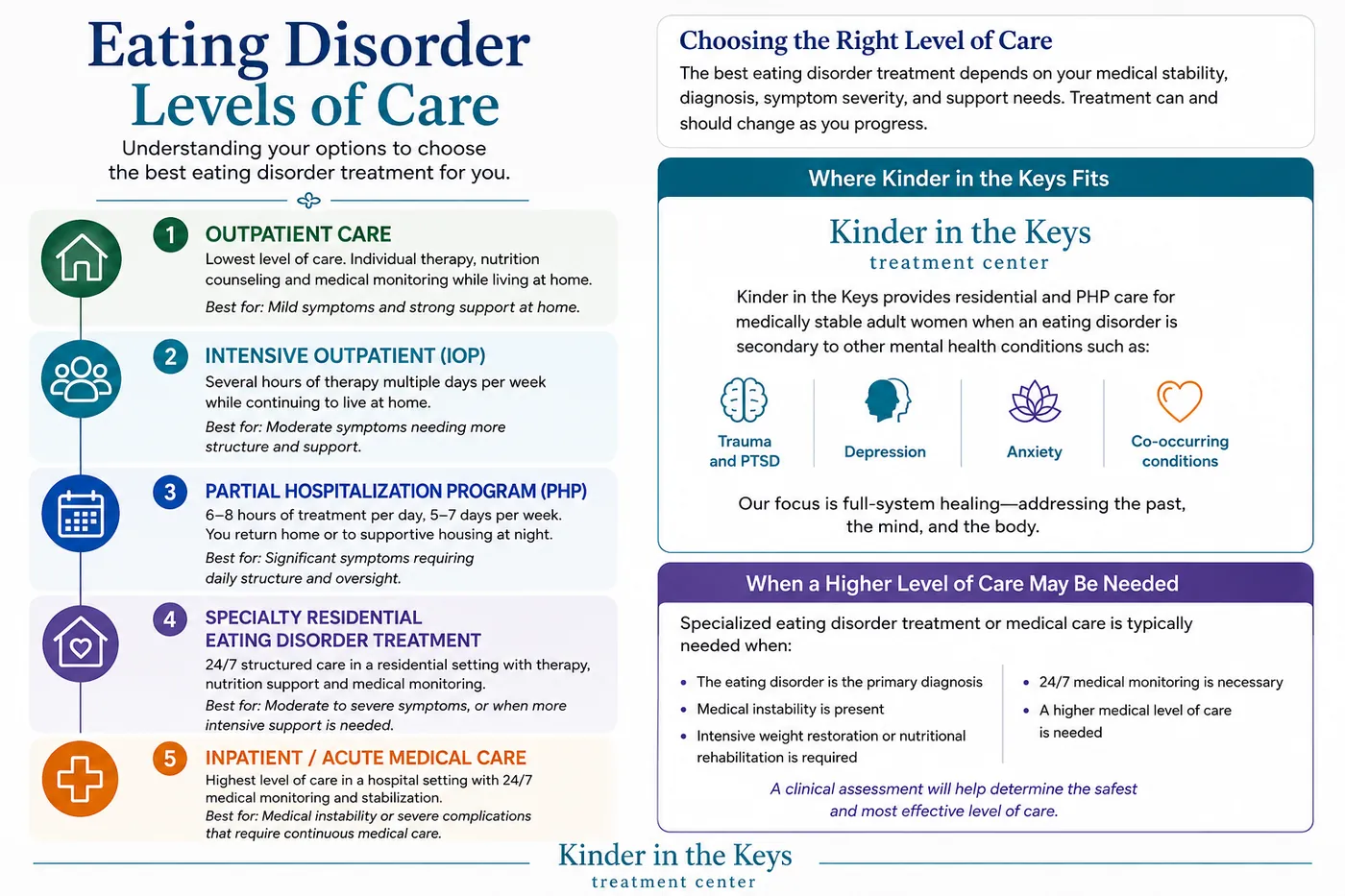
Outpatient Treatment
Outpatient treatment may be appropriate when a person is medically and psychiatrically stable and can safely continue living at home while participating in treatment.
Care may involve psychotherapy, nutritional counseling, psychiatric treatment, and medical monitoring depending on the person’s needs.
Intensive Outpatient Treatment
An intensive outpatient program, or IOP, provides more structure than standard weekly outpatient care while still allowing the individual to live outside the treatment facility.
IOP may include several treatment sessions each week and can be appropriate for medically stable individuals who need additional therapeutic structure.
Partial Hospitalization
Partial hospitalization programs, often called PHP or day treatment, typically provide several hours of structured treatment during the day while allowing the person to return home or to supportive housing at night.
PHP may be appropriate when someone needs frequent therapeutic and nutritional support but does not require 24-hour residential supervision or acute medical stabilization.
Specialty Residential Eating Disorder Treatment
Specialty residential eating-disorder programs provide 24-hour structure for individuals who are medically stable but require more intensive eating-disorder treatment than PHP or outpatient care can provide.
Depending on the program, services may include psychotherapy, nutritional rehabilitation, supervised or supported meals, psychiatric services, medical oversight, and specialized eating-disorder interventions.
Inpatient or Acute Medical Care
When an eating disorder has caused medical instability, the immediate priority may need to be medical stabilization.
Examples of concerns that may require a medical level of care include unstable vital signs, significant electrolyte abnormalities, serious complications from malnutrition or purging, cardiovascular problems, or other acute medical risks.
In those situations, a residential mental health facility is not a substitute for appropriate medical treatment.
Where Kinder in the Keys Fits
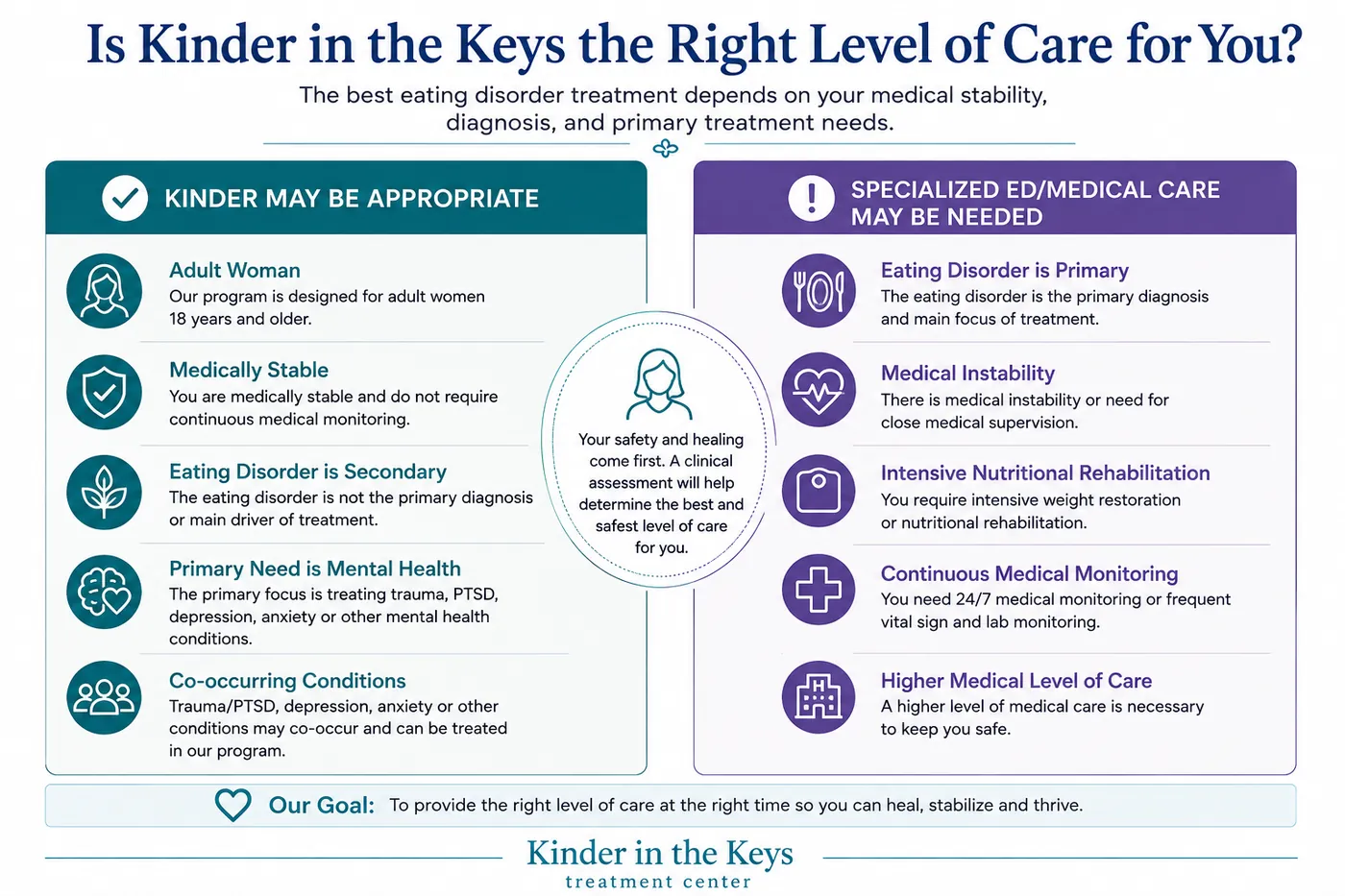
Kinder in the Keys is a residential mental health treatment center for adult women.
Eating-disorder symptoms can be addressed at Kinder when a woman is medically stable and the eating disorder is secondary to the broader mental health condition being treated.
For example, a woman may come to Kinder primarily for:
trauma or PTSD
depression
anxiety
emotional dysregulation
narcissistic or emotional abuse recovery
other co-occurring mental health concerns
while also experiencing medically stable disordered-eating symptoms that need to be addressed as part of her overall treatment plan.
Learn more about eating disorder therapy for medically stable women at Kinder in the Keys.
When Kinder Is Not the Appropriate Level of Care
Kinder is not a primary eating-disorder treatment or medical stabilization facility.
A specialized eating-disorder program or medical facility may be more appropriate when:
the eating disorder is the primary condition requiring treatment
acute medical stabilization is needed
intensive nutritional rehabilitation or weight restoration is required
continuous medical monitoring is necessary
significant electrolyte or cardiovascular abnormalities are present
eating-disorder behaviors cannot be safely managed within a residential mental health program
a specialized primary eating-disorder protocol or higher medical level of care is required
This distinction is important.
The goal should never be to place someone in a program simply because treatment is available. The goal is to place her in the appropriate program for her current clinical and medical needs.
How to Find the Best Eating Disorder Treatment Center
Once the appropriate level of care has been identified, the next step is evaluating individual programs.
1. Ask Exactly What Level of Care the Program Provides
Terms such as inpatient, residential, PHP, and IOP can be confusing.
Ask the facility directly:
What level of care do you provide?
Do you provide medical stabilization?
What medical monitoring is available?
How do you determine medical stability?
What happens if the patient’s condition deteriorates?
What circumstances would require transfer to another facility?
The answers should be clear.
2. Ask Who Is on the Treatment Team
Eating disorders can involve psychiatric, psychological, nutritional, and medical needs.
Depending on the severity of the disorder and level of care, a treatment team may include therapists, physicians, psychiatrists, nurses, registered dietitians, and other specialists.
Do not assume every facility advertising “eating disorder treatment” provides the same clinical, nutritional, or medical resources.
3. Ask Which Eating Disorders and Severity Levels the Program Treats
A facility may have extensive experience with one eating disorder or severity level and limited ability to manage another.
Ask specifically which diagnoses and behaviors the program treats and, just as importantly, what it does not treat.
A responsible program should be able to clearly explain the limits of its scope.
4. Ask How Medical Stability Is Determined
This is especially important when considering residential treatment.
Ask whether medical clearance is required before admission and what information the treatment team reviews.
If someone is experiencing significant weight loss, frequent purging, fainting, abnormal laboratory findings, cardiovascular symptoms, severe restriction, or other concerning physical symptoms, medical evaluation may be necessary before residential placement.
5. Look at Co-Occurring Mental Health Conditions
Eating disorders and disordered eating can occur alongside depression, anxiety, PTSD, trauma-related disorders, and other psychiatric conditions.
The relationship is not identical for every person, and trauma should not automatically be assumed to cause an eating disorder.
However, when significant mental health conditions and disordered eating coexist, treatment planning should account for the full clinical picture.
This is particularly relevant to Kinder’s role. Our program is designed around women’s mental health treatment, with medically stable eating-disorder symptoms addressed when they occur as a secondary condition.
6. Ask Whether Treatment Is Individualized
Two women with the same diagnosis may have very different medical needs, histories, symptoms, psychiatric conditions, family dynamics, and treatment goals.
Treatment should not simply move every patient through an identical protocol without considering those differences.
Ask how the treatment plan is developed and how it changes as the patient progresses.
7. Ask What Happens When the Current Level of Care Is Not Enough
This is one of the most important questions you can ask:
“What happens if I need more medical or eating-disorder-specific care than your program provides?”
A reputable treatment provider should recognize when someone’s needs exceed its capabilities and recommend a more appropriate level of care.
That is good clinical care—not a failure of the program.
Eating Disorders and Co-Occurring Mental Health Conditions
For some women, disordered eating exists within a larger clinical picture that includes depression, anxiety, trauma, PTSD, emotional abuse, shame, or difficulty regulating emotions.
Eating-related behaviors may sometimes function as attempts to cope with distress, create a sense of control, avoid difficult emotions, or manage overwhelming internal experiences.
That does not mean every eating disorder is caused by trauma or another psychiatric disorder.
It does mean that when these conditions coexist, both deserve appropriate assessment and treatment.
Women experiencing significant trauma-related symptoms can learn more about women’s trauma treatment at Kinder in the Keys.
Therapy Used in Eating Disorder Treatment
Treatment depends on diagnosis, age, medical status, psychiatric conditions, severity, and individual needs.
Evidence-based approaches may include cognitive and behavioral therapies, family-based interventions, skills-based therapies, and specialized eating-disorder treatments.
Cognitive Behavioral Approaches
Cognitive behavioral approaches can help individuals identify and modify patterns of thinking and behavior associated with eating-disorder symptoms.
Dialectical Behavior Therapy
DBT skills may be useful when disordered-eating behaviors occur alongside emotional dysregulation, distress intolerance, impulsivity, or difficulty managing intense emotions.
Family-Based Treatment
Family-based treatment has an important role in eating-disorder care, particularly for adolescents.
Kinder treats adult women, so children and adolescents should be evaluated by programs equipped specifically for their developmental and clinical needs.
Trauma-Focused Treatment
Not every person with an eating disorder has a trauma history, and an eating disorder should not automatically be attributed to trauma.
When trauma is clinically relevant, however, addressing it may be an important part of the broader treatment plan.
Nutrition and Eating Disorder Recovery
Nutrition is an important component of eating-disorder recovery, but nutritional needs vary considerably depending on diagnosis and severity.
Some individuals require specialized nutritional rehabilitation, weight restoration, meal supervision, and close medical monitoring.
Others may be medically stable but still benefit from support in developing more consistent and balanced eating patterns.
A treatment program should be transparent about the nutritional services it provides and whether those services are sufficient for the person’s current needs.
Questions to Ask an Eating Disorder Treatment Center
Before choosing a program, consider asking:
What diagnoses do you treat?
What severity levels do you treat?
What levels of care do you provide?
Do you provide medical stabilization?
How do you determine medical stability?
What medical monitoring is available?
Do you have eating-disorder-specialized clinicians?
What nutritional services are provided?
How are meals supported?
What therapies do you use?
How do you treat co-occurring psychiatric conditions?
How much individual therapy is provided?
Is family involvement available?
What happens if symptoms worsen?
How do you determine when someone needs a higher level of care?
What does discharge and aftercare planning involve?
A facility should be willing to answer these questions directly.
What If Kinder Is Not the Right Eating Disorder Program?
Sometimes the most clinically responsible answer is:
Kinder is not the right level of care.
If an eating disorder is the woman’s primary condition or she requires medical stabilization, intensive nutritional rehabilitation, continuous medical monitoring, or another specialized eating-disorder service that Kinder does not provide, she deserves a program designed specifically for those needs.
The National Alliance for Eating Disorders’ findEDhelp treatment database can help individuals and families locate specialized eating-disorder providers and treatment programs across different levels of care.
Getting someone to the appropriate level of care is more important than getting her into any particular facility.
When Kinder May Be Appropriate
Kinder may be considered when an adult woman is medically stable, her eating disorder is not the primary condition requiring treatment, and disordered-eating symptoms occur alongside a broader mental health condition that is appropriate for Kinder’s residential program.
Our admissions team can review the woman’s clinical history and current needs to determine whether Kinder is an appropriate level of care.
If her needs exceed what Kinder can safely provide, a specialized eating-disorder or medical program should be considered instead.
Learn more about Kinder in the Keys’ eating disorder therapy program.
Finding the Best Eating Disorder Treatment Is About Finding the Right Care
The best eating disorder treatment is not necessarily the most famous facility, the program at the top of Google, or a center appearing on a “best treatment centers” list.
It is treatment that appropriately matches the person’s medical stability, psychiatric needs, diagnosis, symptom severity, and required level of care.
For some women, that means medical stabilization or specialized primary eating-disorder treatment.
For others whose eating disorder is medically stable and secondary to a broader mental health condition, treatment within an appropriate residential mental health program may be an option.
The right first step is a careful assessment—not choosing a facility based on marketing.
How to Find the Best Eating Disorder Treatment: Frequently Asked Questions
What Should I Look for in an Eating Disorder Treatment Center?
Look for a program whose level of care matches the individual’s medical and psychiatric needs. Ask about staff qualifications, medical monitoring, nutritional services, treatment approaches, experience with the specific diagnosis and severity, co-occurring conditions, and what happens if a higher level of care becomes necessary.
How Do I Know Whether I Need Residential or Inpatient Eating Disorder Treatment?
Medical and psychiatric stability are major considerations. Someone who is medically compromised may require inpatient or acute medical treatment, while specialty residential eating-disorder treatment generally serves individuals who are medically stable but still need intensive 24-hour structure.
A qualified medical or eating-disorder professional should help determine the appropriate level of care.
Does Kinder in the Keys Provide Primary Eating Disorder Treatment?
No. Kinder is a residential mental health treatment center for adult women and does not accept a primary eating disorder as the condition requiring treatment.
Kinder can address eating-disorder symptoms when the woman is medically stable, the eating disorder is secondary, and her needs can be safely managed within our residential mental health program.
Where Can I Find Specialized Eating Disorder Treatment if Kinder Is Not Appropriate?
The National Alliance for Eating Disorders’ findEDhelp database provides a searchable national resource for eating-disorder providers and programs across levels of care.
Can People Recover From Eating Disorders?
Yes. Eating disorders are treatable, and recovery is possible. Appropriate treatment depends on the individual’s diagnosis, medical and nutritional status, psychiatric needs, and severity of symptoms. Identifying the appropriate level of care is an important part of that process
Medically Reviewed By
Dr. Laura Tanzini, DrPH, LMFT
Doctor of Public Health | Specialty in Lifestyle Medicine
Licensed Marriage and Family Therapist (Florida & California)
Founder & CEO, Kinder in the Keys
This article has been clinically reviewed for accuracy and consistency with current behavioral health, eating-disorder, and trauma-informed treatment principles. Dr. Tanzini has extensive clinical experience in women’s mental health, trauma, PTSD, anxiety, depression, and co-occurring behavioral health conditions.
Doctoral Research: Dr. Tanzini’s doctoral research at Loma Linda University examined childhood and adult traumatic events, cumulative trauma exposure, gender, forgiveness, life satisfaction, and long-term well-being.
Medical Disclaimer
This article is provided for educational and informational purposes only and is not a substitute for individualized medical, nutritional, or mental health evaluation, diagnosis, or treatment by a qualified healthcare professional.
Eating disorders can involve serious medical and nutritional complications. Individuals experiencing significant restriction, purging, rapid or substantial weight changes, fainting, cardiovascular symptoms, abnormal laboratory findings, or other signs of medical instability should seek appropriate medical evaluation and specialized eating-disorder care.