
Post-traumatic stress disorder affects women at higher rates than men, but what causes PTSD in women is not explained by one biological or psychological difference. PTSD can develop after exposure to certain traumatic events, and the type, severity, duration, and circumstances of that exposure can influence whether symptoms develop.
Women are particularly likely to experience some forms of interpersonal trauma, including sexual violence and intimate partner violence. These experiences are associated with a high risk of PTSD and may occur repeatedly or within relationships that would ordinarily be expected to provide safety and trust.
Not every woman who experiences trauma develops PTSD. Understanding the difference between a traumatic exposure, a risk factor for developing PTSD, and a trigger that activates existing symptoms can make the condition much easier to understand.
At Kinder in the Keys, our PTSD treatment program for women helps women understand the effects of trauma and develop healthier ways of responding to symptoms that have begun interfering with their lives.
Understanding PTSD in Women
PTSD is a trauma- and stressor-related disorder that can develop following exposure to death, threatened death, serious injury, or sexual violence under circumstances recognized in the diagnostic criteria for PTSD.
The diagnostic criteria for PTSD distinguish these qualifying exposures from other painful or distressing life experiences.
Exposure may occur through directly experiencing an event, witnessing certain traumatic events, learning about particular traumatic events involving someone close, or repeated professional exposure to traumatic details.
Experiencing trauma alone does not mean that someone has PTSD.
PTSD involves a specific pattern of symptoms that persists after the traumatic exposure and causes significant distress or interferes with functioning. Symptoms can include intrusive memories or nightmares, avoidance, changes in mood or beliefs, hypervigilance, sleep problems, concentration difficulties, and heightened reactions to reminders of the trauma.
Research consistently finds that PTSD is more common among women than men. Understanding how common PTSD is in women provides useful context, while recognizing the symptoms of PTSD in women can help identify when a trauma response may require professional evaluation.
What Causes PTSD in Women?
PTSD begins with exposure to a qualifying traumatic event, but many different experiences can meet that threshold.
Traumatic exposures associated with PTSD in women may include:
Sexual assault or sexual violence
Physical violence or serious intimate partner violence
Childhood physical or sexual abuse
Serious accidents or injuries
Life-threatening medical events
Certain traumatic childbirth experiences involving actual or threatened serious injury or death
Exposure to war or combat
Witnessing serious violence
Learning about a violent or accidental death involving a close family member or friend
The event itself is only one part of the picture. Two women can experience similar traumatic events and have very different responses afterward.
Interpersonal Violence and PTSD in Women
Interpersonal violence is particularly important when discussing PTSD among women.
Women experience sexual assault and some forms of intimate partner violence at disproportionately high rates. These types of trauma also carry substantial risk for post-traumatic symptoms.
Research from the National Center for PTSD reports that women experience PTSD at about twice the rate of men, with sexual assault exposure accounting for part—but not all—of the difference.
Trauma occurring within a relationship can be especially complicated because the source of danger may also be someone the woman loves, depends upon, lives with, or previously trusted.
Intimate partner violence can involve physical violence, sexual violence, stalking, coercive control, threats, and psychological abuse. However, an important clinical distinction should be made: experiences can be deeply damaging and produce significant trauma-related symptoms without necessarily meeting the specific trauma-exposure criteria required for a PTSD diagnosis.
For example, emotional or psychological abuse alone does not automatically establish PTSD. A clinician must evaluate both the nature of the traumatic exposure and the resulting symptom pattern.
Women experiencing abusive relationships may nevertheless develop anxiety, depression, trauma-related symptoms, difficulties with trust, hypervigilance, shame, or other significant psychological effects.
Understanding whether emotional abuse can contribute to PTSD symptoms requires looking carefully at what occurred rather than assuming that every painful relationship experience produces the same diagnosis.
Betrayal and Relational Trauma
Betrayal by a trusted person can profoundly affect emotional health.
Women who have experienced infidelity, manipulation, coercive relationships, abuse, or other significant betrayals may struggle with intrusive thoughts, distrust, anxiety, emotional dysregulation, shame, or difficulty feeling safe in subsequent relationships.
These experiences are sometimes described using terms such as betrayal trauma or trauma bonding.
However, these terms should not automatically be equated with a PTSD diagnosis. PTSD has specific diagnostic requirements, and other trauma- and stress-related reactions can also cause substantial distress.
Learning about betrayal trauma symptoms or understanding how to break a trauma bond can help women recognize relationship patterns while a qualified clinician determines whether PTSD or another condition best explains the symptoms.
Childhood Trauma and Later PTSD Risk
Childhood adversity can affect emotional development and increase vulnerability to mental health difficulties later in life.
Physical abuse, sexual abuse, exposure to serious violence, and other qualifying traumatic experiences during childhood can contribute to PTSD. Repeated or prolonged trauma may create particularly complicated patterns involving relationships, self-concept, emotional regulation, and feelings of safety.
But childhood adversity and PTSD should not be treated as interchangeable terms.
Neglect, family instability, emotional abuse, parental conflict, and other adverse childhood experiences can have significant long-term psychological effects even when an individual’s experiences or symptoms do not meet diagnostic criteria for PTSD.
This distinction becomes especially important when discussing complex trauma and conditions such as complex PTSD and borderline personality disorder, which can share certain features but should not be casually treated as the same diagnosis.
Why Are Women More Likely to Develop PTSD?
Research suggests that several factors may contribute to women’s higher PTSD prevalence.
One of the clearest differences involves the types of traumatic events women are more likely to experience.
Women have higher exposure to sexual assault and childhood sexual abuse than men, and sexual violence is among the trauma types associated with particularly high PTSD risk.
That does not completely explain the difference. Research has found that women can remain at greater risk for PTSD even when women and men experience similar categories of traumatic events.
Researchers continue to examine possible explanations involving characteristics of the trauma, repeated or prolonged exposure, relationship context, previous trauma, biological processes, social roles, and the availability of support following trauma.
The important conclusion is not that women are inherently less resilient.
PTSD risk reflects a complicated interaction between what happened, when it happened, the circumstances surrounding it, previous experiences, and what happened afterward.
Risk Factors for PTSD in Women
Not everyone exposed to trauma develops PTSD.
A risk factor is not the cause of PTSD. Instead, it is something associated with a greater likelihood that PTSD symptoms will develop or persist following traumatic exposure.
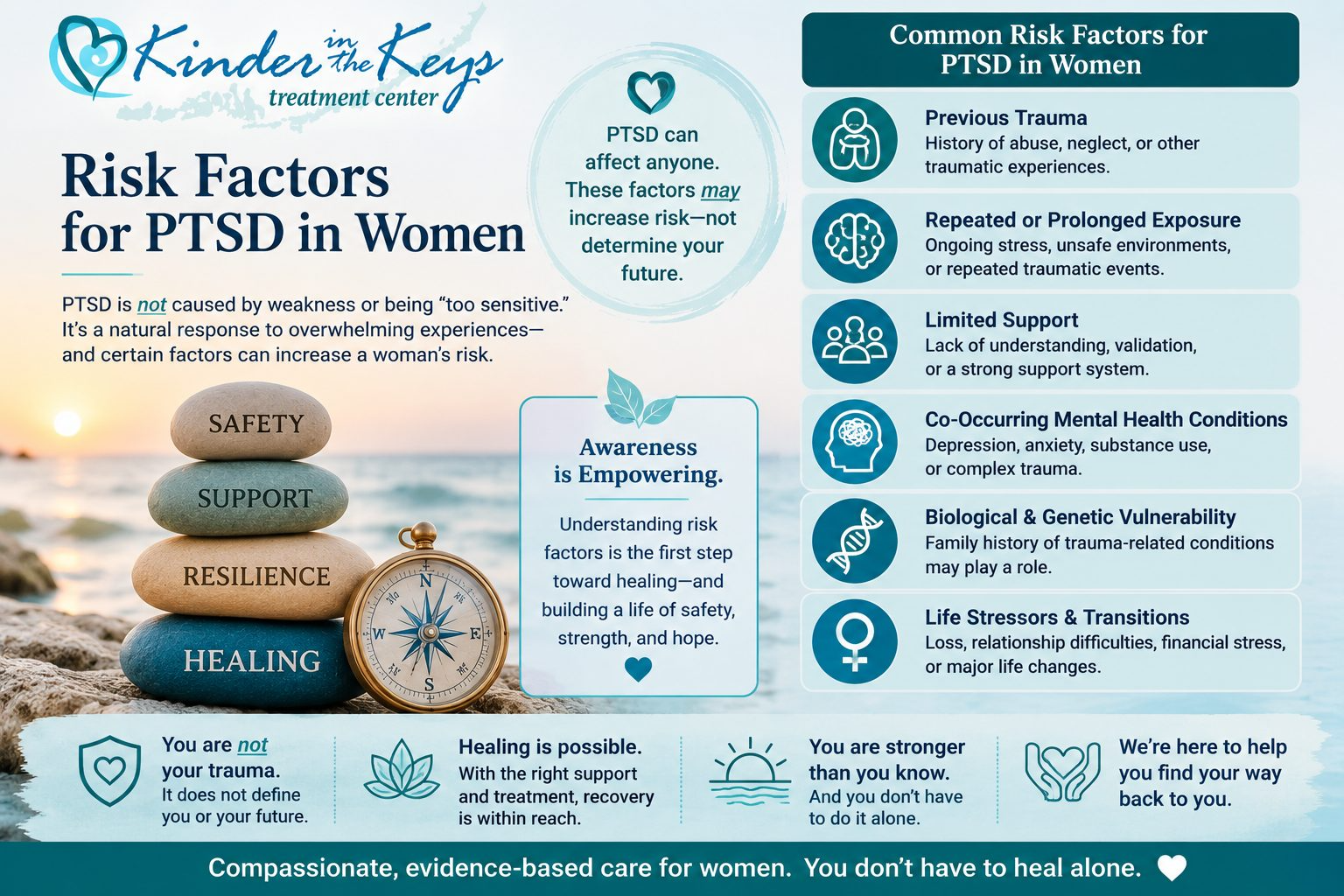
Risk factors can include:
Previous traumatic experiences
Repeated or prolonged trauma exposure
Pre-existing anxiety, depression, or other mental health concerns
Additional major stressors following the trauma
Limited social support
Continued exposure to danger or instability
Characteristics and severity of the traumatic event
Social support after trauma can be particularly important. Feeling believed, protected, and supported may influence how a person adjusts following a traumatic experience.
Risk factors do not determine a woman’s future. They help clinicians understand the context in which symptoms developed and what may need attention during treatment.
PTSD Causes, Risk Factors, and Triggers Are Not the Same Thing
These terms are often used interchangeably online, but they describe different parts of PTSD.
Traumatic exposure refers to the event or events that precede PTSD.
Risk factors are circumstances associated with a greater likelihood of developing PTSD following that exposure.
Triggers are reminders that activate PTSD symptoms after the condition has developed.
A trigger therefore does not cause PTSD.
A smell, sound, location, date, physical sensation, relationship interaction, news story, or other reminder may become associated with the original trauma. Encountering that reminder can activate distress, intrusive memories, hypervigilance, avoidance, or physical reactions.
Understanding this distinction can help women recognize that being triggered does not mean a new traumatic event has necessarily occurred or that treatment is failing. It means the brain has associated a present-day cue with previous danger.
Recognizing PTSD in Women
PTSD can affect much more than memories of a traumatic event.
Women may experience:
Intrusive memories or nightmares
Avoidance of reminders
Hypervigilance
Exaggerated startle responses
Sleep difficulties
Problems concentrating
Irritability
Emotional numbness
Persistent negative beliefs about themselves or others
Guilt or self-blame
Feeling detached from other people
Loss of interest in previously meaningful activities
Symptoms must be considered together rather than individually. Having nightmares, anxiety, or difficulty trusting after a painful experience does not by itself establish a PTSD diagnosis.
A professional evaluation considers the traumatic exposure, symptom pattern, duration, severity, and effect on everyday functioning.
Can PTSD Appear Long After Trauma?
Yes, but this needs to be understood correctly.
Some symptoms may begin soon after a traumatic experience while the complete diagnostic pattern becomes apparent later.
PTSD can receive a delayed-expression specification when the full diagnostic criteria are not met until at least six months after the traumatic event, even though some symptoms may have appeared earlier.
This can help explain why a woman may connect current difficulties to trauma that occurred much earlier in her life.
It does not mean that trauma necessarily remained completely dormant for decades and suddenly created PTSD without any previous symptoms.
Treating PTSD in Women
PTSD is treatable, and several evidence-based trauma-focused psychotherapies are recommended for the condition.
Treatment should be individualized according to the woman’s symptoms, trauma history, current safety, co-occurring mental health concerns, physical health, and level-of-care needs.
Treatment may focus on reducing avoidance, processing trauma-related thoughts and memories, addressing distorted beliefs or self-blame, improving emotional regulation, rebuilding a sense of safety, and developing healthier responses to trauma reminders.
Approaches such as CBT for PTSD may be incorporated when clinically appropriate, along with other evidence-based trauma-focused treatments.
At Kinder in the Keys, treatment is not based simply on identifying a trauma and applying the same intervention to every woman. A woman’s history, symptoms, relationships, coping patterns, physical well-being, and current circumstances all matter when determining how treatment should proceed.

When Residential PTSD Treatment May Be Appropriate
Many women with PTSD can be treated successfully in outpatient settings.
Residential treatment for women may become appropriate when symptoms are persistent or significantly interfere with functioning, when outpatient treatment has not provided enough support, when multiple mental health concerns complicate recovery, or when a woman needs a more structured therapeutic environment.
Residential care provides the opportunity to step away temporarily from everyday demands and participate in a consistent treatment environment.
At Kinder in the Keys, women receive individualized care within a small residential program where clinicians can address PTSD alongside co-occurring concerns such as anxiety, depression, relationship difficulties, and the broader effects of trauma.
When to Seek Support
If a traumatic experience continues to affect your sleep, relationships, mood, sense of safety, concentration, or ability to function, a professional evaluation can help determine what is happening and what level of treatment may be appropriate.
You do not have to diagnose yourself before asking for help.
If you are currently experiencing intimate partner violence or another unsafe situation, immediate safety takes priority over trauma processing. A domestic violence advocate or emergency resource can help you develop a safety plan and identify appropriate local support.
In the United States, the National Domestic Violence Hotline is available at 1-800-799-SAFE (7233) and through thehotline.org. If there is an immediate threat to life or safety, contact emergency services.
What Causes PTSD in Women? Frequently Asked Questions
Why do more women than men develop PTSD?
Women experience PTSD at higher rates than men. One important contributor is women’s greater exposure to sexual violence and childhood sexual abuse, trauma types associated with substantial PTSD risk. However, trauma type does not completely explain the difference, and researchers continue to study biological, psychological, social, and contextual factors that may contribute.
Does every traumatic experience cause PTSD?
No. Many people experience traumatic events without developing PTSD. The nature of the exposure, previous trauma, additional stress, mental health history, social support, and other factors can influence risk.
Can emotional abuse cause PTSD?
Emotional abuse can cause serious and lasting psychological harm, but emotional abuse alone should not automatically be labeled PTSD. A PTSD diagnosis requires both qualifying traumatic exposure and a specific pattern of symptoms. Some abusive relationships include threats, physical violence, sexual violence, or other events that may meet those exposure criteria.
What is the difference between a PTSD cause and a PTSD trigger?
The traumatic exposure precedes the development of PTSD. A trigger is a later reminder associated with that trauma that activates existing PTSD symptoms. Triggers do not themselves cause the disorder.
Can PTSD develop years after trauma?
The full diagnostic criteria can sometimes become apparent well after the traumatic event. PTSD can be specified as having delayed expression when full criteria are not met until at least six months after the trauma, although some symptoms may begin earlier.
Is PTSD in women treatable?
Yes. PTSD has evidence-based treatments that can substantially reduce symptoms and improve functioning. The appropriate treatment depends on the individual woman’s history, symptoms, safety, co-occurring conditions, and level-of-care needs.
PTSD Treatment for Women at Kinder in the Keys
Understanding what causes PTSD in women is only one part of recovery. Treatment requires understanding what happened to the individual woman and how those experiences continue to affect her life today.
Kinder in the Keys provides residential PTSD treatment for adult women in Key Largo, Florida. Our small treatment environment allows care to remain individualized while addressing trauma symptoms alongside the emotional, relational, behavioral, and physical factors that may be affecting recovery.
For women who need more support than outpatient treatment can provide, residential care can offer the structure and therapeutic environment necessary to focus more fully on healing
Medically Reviewed By Dr. Laura Tanzini, DrPH, LMFT
Doctor of Public Health | Specialty in Lifestyle Medicine
Licensed Marriage and Family Therapist (FL & CA)
Founder & CEO, Kinder in the Keys
Clinical Review:
This article has been clinically reviewed for accuracy and consistency with current evidence-based behavioral health and trauma-informed treatment principles. It is intended to provide educational information about PTSD in women and does not replace individualized assessment, diagnosis, or treatment by a qualified healthcare or mental health professional.
Medical Disclaimer:
This article is for educational and informational purposes only and is not intended to diagnose, treat, cure, or prevent any mental health condition. If you are experiencing symptoms of PTSD or another mental health concern, seek evaluation from a qualified healthcare or mental health professional.