
Discovering that someone you trusted has betrayed you can shatter your sense of safety in an instant. Whether the betrayal came from a partner, a parent, or a close friend, the wound can run far deeper than ordinary heartbreak. Betrayal by someone you depend on can profoundly disrupt your sense of safety, trust, attachment, and emotional stability, sometimes producing intense psychological and physical stress responses. At Kinder in the Keys trauma treatment center, we help women recognize and recover from these deep injuries to trust. This guide explores the common betrayal trauma symptoms and the first steps toward healing.
What Is Betrayal Trauma?
Betrayal trauma describes psychological harm that can occur when a person or institution someone depends on for safety, security, or connection violates that trust. Psychologist Jennifer Freyd developed betrayal trauma theory to help explain why people who depend on someone who harms them may have difficulty fully recognizing, processing, or responding to the betrayal. In some circumstances, maintaining the attachment may feel necessary for emotional, physical, financial, or developmental survival.
Betrayal trauma can follow many kinds of experiences, especially when the person or institution held deep trust, power, or dependency, including:
- Infidelity or chronic dishonesty from a romantic partner
- Financial deception or hidden secrets within a marriage
- Abuse or neglect by a parent or caregiver during childhood
- Discovering a long-term lie that reframes an entire relationship
- Betrayal by a trusted friend, mentor, or institution
When the betrayal comes from a partner you are deeply attached to, it can become especially complicated, sometimes intertwining with the dynamics described in how to break a trauma bond.
Common Betrayal Trauma Symptoms
Betrayal trauma symptoms can affect the mind, body, and behavior all at once. They often resemble the broader signs of emotional trauma in adults, and they can be intense enough to disrupt daily life. Recognizing these symptoms can help you understand that intense reactions after betrayal may reflect the nervous system’s attempt to respond to a profound disruption in safety and trust.
| Category | Common Symptoms |
|---|---|
| Emotional | Shock, anger, grief, shame, numbness, mood swings |
| Cognitive | Intrusive thoughts, obsessive replaying, trouble concentrating |
| Physical | Insomnia, fatigue, nausea, racing heart, appetite changes |
| Behavioral | Hypervigilance, withdrawal, difficulty trusting, checking behaviors |
Emotional Symptoms
The emotional aftermath of betrayal can swing wildly from rage to despair to disbelief, sometimes within the same hour. Many people feel a profound loss of self-worth, asking what they did to deserve it or how they failed to see the signs. These feelings are part of the injury, not evidence of fault.
Physical Symptoms
Betrayal can also produce significant physical stress responses. People may experience disrupted sleep, exhaustion, gastrointestinal symptoms, changes in appetite, muscle tension, headaches, or a racing heart. These reactions can occur when the nervous system remains highly activated after an experience that has disrupted a person’s sense of safety. Our discussion of [how trauma affects the body] can help explain the connection between psychological distress and physical symptoms.
Behavioral Symptoms
Behaviorally, betrayal trauma can show up as hypervigilance, an inability to relax, and difficulty trusting anyone. Some people compulsively search for more information or reassurance, while others withdraw and isolate themselves. These responses are attempts to regain a sense of control after safety has been stripped away.
Betrayal Trauma and PTSD
Betrayal trauma can produce symptoms that resemble post-traumatic stress, including intrusive thoughts, nightmares, hypervigilance, avoidance, emotional distress, and strong reactions to reminders of what happened. However, experiencing betrayal does not automatically mean someone has PTSD. A PTSD diagnosis requires specific diagnostic criteria, including qualifying trauma exposure and a particular pattern and duration of symptoms. When betrayal occurs in the context of abuse, sexual violence, threatened or actual violence, or other qualifying traumatic experiences, PTSD may also develop.
Repeated betrayal within abusive, coercive, neglectful, or chronically unsafe relationships can contribute to more complex trauma responses. These may affect emotional regulation, self-concept, relationships, trust, and a person’s ability to feel safe with others. When prolonged interpersonal trauma is part of the history, clinicians may also evaluate for trauma-related disorders based on the person’s full symptom pattern and experiences. We discuss these broader patterns further in our article on complex PTSD in women.
Understanding Post-Betrayal Syndrome
“Post-betrayal syndrome” is a non-diagnostic term used by some betrayal-recovery educators to describe a collection of emotional, cognitive, behavioral, and physical difficulties that may persist after a significant betrayal. It is not a diagnosis recognized in the DSM-5-TR, and experiencing these symptoms does not by itself establish a mental health disorder. The term can nevertheless provide some people with language for understanding the distress they experience after a serious breach of trust.
Recovery does not follow one predictable sequence. Some people initially experience shock or emotional numbness; others feel anger, anxiety, grief, or an urgent need to understand exactly what happened. Intrusive thinking and repeated attempts to make sense of the betrayal are also common. Over time, appropriate support can help a person rebuild emotional stability, confidence in their own judgment, boundaries, and trust in themselves—even when trust in the person who caused the harm is never restored.
How to Heal From Betrayal Trauma
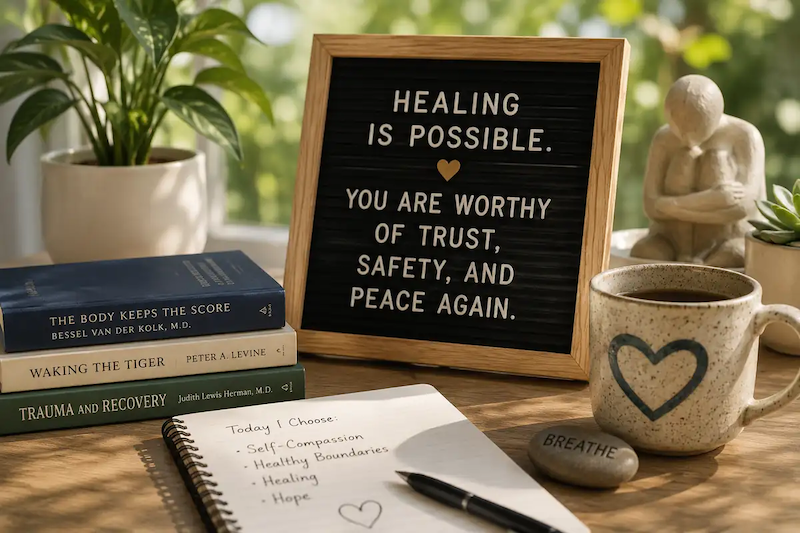
Learning how to heal from betrayal trauma takes time, patience, and usually support, but meaningful recovery is possible. Betrayal trauma recovery is not about pretending the betrayal never happened. It is about reclaiming your sense of safety, identity, and trust in yourself. Helpful steps include:
- Allowing yourself to grieve the relationship and the trust you lost
- Avoiding major decisions until the initial shock has settled, unless your safety or well-being requires immediate action
- Leaning on safe, supportive people rather than isolating
- Reestablishing routines that ground you in the present moment
- Practicing self-compassion instead of self-blame
- Working with a trauma-informed therapist, using approaches like CBT for trauma
Healing is rarely a straight line. Recovery often includes periods of progress as well as periods when painful emotions or memories become more noticeable again. This does not necessarily mean treatment or healing has failed.
Safe, Supportive Trauma Treatment for Women
Heal from trauma in a compassionate, women-centered environment with evidence-based therapies designed to help you feel safe, regain control, and move forward with confidence.
When to Seek Professional Support

If betrayal trauma symptoms are intense, persist over time, interfere with daily functioning, disrupt sleep or relationships, or make it difficult to feel safe and emotionally stable, professional support may help. A therapist trained in trauma can help you process the betrayal safely, calm your nervous system, and rebuild trust at a pace that feels manageable. If you have thoughts of harming yourself or feel unsafe, call or text 988 in the U.S. or contact emergency services right away. You do not have to carry this alone, and reaching out is a sign of strength rather than weakness.
Betrayal Trauma Symptoms: Frequently Asked Questions
Is betrayal trauma a real condition?
Betrayal trauma is a recognized psychological response to a deep breach of trust, though it is not a standalone diagnosis, the way PTSD is. Its symptoms are real and can be severe, often overlapping with anxiety, depression, and post-traumatic stress, and they tend to respond well to treatment.
How long does betrayal trauma last?
There is no fixed timeline. With support, some people notice meaningful improvement within months, while deeper healing can take longer, especially after repeated or long-term betrayal. The duration depends on the severity, your support system, and whether you receive trauma-focused care along the way.
Can a relationship survive betrayal trauma?
Some relationships do recover, but only when the person who caused the harm takes full responsibility and consistent action to rebuild trust. Healing also requires the betrayed partner to feel genuinely safe again. Professional support, such as couples or individual therapy, can help, but if betrayal occurred within abuse, coercive control, or violence, safety should come before relationship repair, and individual support or advocacy may be safer than couples therapy.