
Many adults move through life carrying wounds they cannot quite name. They feel anxious without an obvious reason, struggle in relationships, or react to small stressors with an intensity that surprises them. For some people, these experiences trace back to emotional trauma, sometimes from events that happened decades earlier. Recognizing the signs of emotional trauma in adults is the first step toward understanding why the past keeps shaping the present. At our women’s trauma treatment center, we help women connect these long-standing patterns to their origins so that real healing can begin.
This article explains what emotional trauma is, how developmental trauma surfaces years later, and which signs deserve attention.
What Is Emotional Trauma?
Emotional trauma is the lasting psychological harm that follows experiences that overwhelm a person’s ability to cope. It can stem from a single frightening event or from ongoing exposure to neglect, abuse, instability, or fear. The defining factor is not only the event itself, but also how deeply it overwhelmed the person, their developmental stage, and how much support they had to process it.
When trauma occurs during childhood, it can shape the developing brain and nervous system in ways that echo for years. This is often described as developmental trauma, a broad clinical concept rather than a single formal diagnosis. Because it unfolds during the formative period when a child is learning who they are and how relationships work, its effects can be subtle, pervasive, and easy to mistake for personality traits.
How Developmental Trauma Differs from a Single Event
A one-time traumatic event, such as an accident, may produce recognizable symptoms tied to that moment, though its effects can still spread into many areas of life. Developmental trauma is woven into a person’s sense of self. There may not always be a single memory to point to, only a lifelong feeling that something is wrong. Understanding how emotional abuse impacts mental health helps explain why these early wounds run so deep.
Safe, Supportive Trauma Treatment for Women
Heal from trauma in a compassionate, women-centered environment with evidence-based therapies designed to help you feel safe, regain control, and move forward with confidence.
Signs of Emotional Trauma in Adults
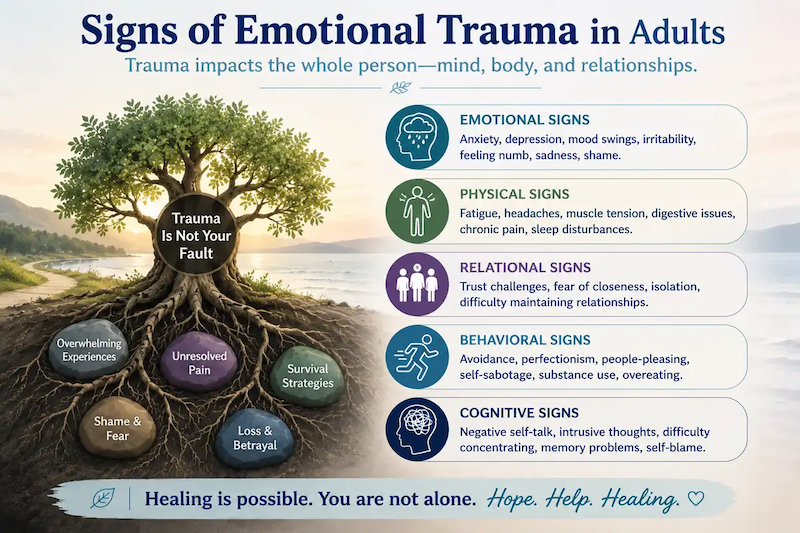
The signs of trauma in adults rarely arrive with a clear label. They show up across the emotional, physical, relational, and behavioral parts of life. The table below organizes common adult trauma symptoms so the broad reach of trauma becomes easier to recognize.
| Category | Common Signs |
|---|---|
| Emotional | Anxiety, depression, shame, numbness, mood swings |
| Physical | Fatigue, chronic pain, tension, sleep problems |
| Relational | Trust issues, fear of abandonment, people pleasing |
| Behavioral | Avoidance, perfectionism, self-sabotage, overworking |
| Cognitive | Negative self-talk, difficulty concentrating, hypervigilance |
These signs are not diagnostic on their own, and they can also have medical, psychological, or situational causes. Because trauma lives in the body as much as the mind, many of these signs are physical. Learning where trauma is stored in the body helps explain why unexplained tension, exhaustion, and pain so often accompany emotional wounds.
Emotional and Psychological Signs
The emotional trauma signs adults most commonly notice include persistent anxiety, low self-worth, and a sense of emotional numbness. Some people feel disconnected from their own feelings, while others are flooded by emotions that seem out of proportion to the moment. Many describe a harsh inner critic that never lets them rest.
Signs of Childhood Trauma in Adults
The signs of childhood trauma in adults often hide inside behaviors that look like simple personality. Because they developed early, they feel like who the person has always been rather than the result of something that happened to them.
- Difficulty trusting others or letting people get close
- A strong need for control or perfectionism
- Chronic guilt, shame, or feeling fundamentally flawed
- Trouble setting boundaries or saying no
- Patterns of choosing unavailable or unsafe partners
- Overreacting to perceived rejection or criticism
These patterns frequently overlap with deeper conditions. Some adults with histories of prolonged early adversity may develop complex PTSD, which captures the layered effects of prolonged developmental trauma rather than a single incident. For many women, these early wounds trace back to enmeshment trauma, where blurred family boundaries quietly shaped their adult relationships for years.
Why Trauma Surfaces Years Later
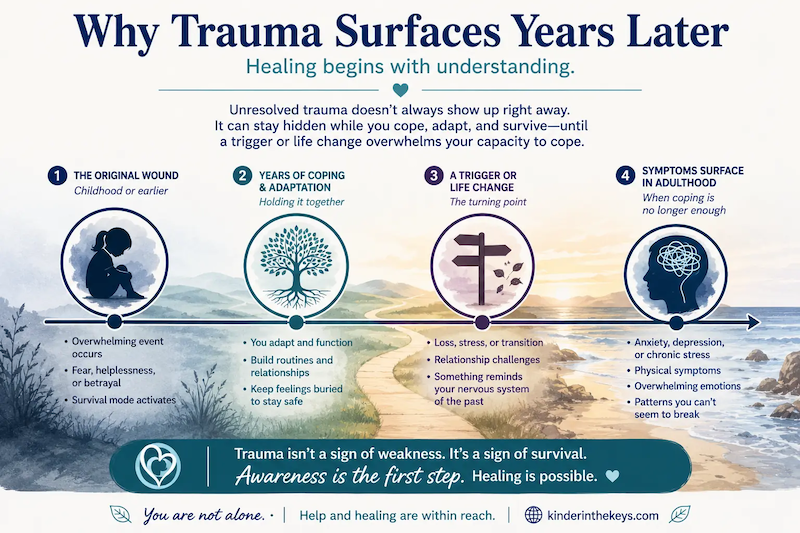
It can feel confusing when trauma symptoms appear long after the original experience. During childhood, people may develop coping responses such as avoidance, emotional numbing, or hypervigilance that help them manage overwhelming or unpredictable experiences. Major life changes, such as a new relationship, parenthood, loss, or beginning therapy, can bring earlier experiences and coping patterns into greater awareness.
Stress also accumulates. Coping strategies that worked for years may stop working, allowing old wounds to surface. This delayed emergence is not a sign of weakness or failure. It may be a signal that old coping strategies are no longer enough and that support is needed.
Emotional Trauma Recognition and Next Steps
Emotional trauma recognition is powerful because it reframes years of confusing struggles as understandable responses to real experiences. Once you see the pattern, you can begin to respond to it with compassion rather than self-blame. Healing is possible at any age, and it usually involves several supportive steps.
- Name it. Acknowledge that your struggles may be rooted in trauma rather than flaws
- Practice self-compassion. Replace self-criticism with patience and understanding
- Build safety. Establish routines, boundaries, and relationships that feel stable
- Regulate the body. Use movement, grounding, and gentle breathing practices when they feel safe
- Seek trauma-informed care. Work with professionals trained to address the root, not just symptoms
Understanding what trauma-informed treatment means can help you find care that treats the whole person rather than isolated behaviors. Unresolved pain also has a way of surfacing in conversations, and recognizing what trauma dumping is can help you find healthier outlets while you heal.
When to Seek Professional Help
If these signs interfere with your relationships, work, health, or sense of self, it may be time for dedicated support. Trauma-related symptoms can persist when the underlying experiences and coping patterns remain unaddressed. Professional support can help when those symptoms begin interfering with relationships, work, health, or daily functioning. Reviewing the signs you need trauma therapy can help you decide whether structured care is the right next step toward lasting recovery.
Signs of Emotional Trauma in Adults: Frequently Asked Questions
Can emotional trauma show up years after the event?
Yes. The nervous system may use avoidance, numbing, or dissociation to survive, and symptoms can surface later during stress, major life changes, therapy, or periods of greater safety.
What are the most common signs of trauma in adults?
Common trauma-related signs can include persistent anxiety, depression, trust issues, perfectionism, emotional numbness, sleep problems, and a harsh inner critic, though these symptoms can also have other causes. Many adults also experience physical symptoms such as chronic tension or fatigue, since trauma affects the body as much as the mind.
Is it too late to heal from childhood trauma as an adult?
It is never too late. The brain remains capable of change throughout life, a quality called neuroplasticity. With trauma-informed therapy, self-compassion, and consistent support, adults can process early wounds and build healthier patterns at any age.