
Narcissistic abuse can leave you questioning far more than the relationship. Over time, you may begin questioning your judgment, your memories, your emotions, and even who you are.
Unlike an occasional argument or an unhealthy moment in an otherwise respectful relationship, narcissistic abuse describes a persistent pattern of manipulation, emotional harm, control, exploitation, or devaluation. The person causing the harm may or may not have a diagnosis of narcissistic personality disorder. What matters to the person experiencing the abuse is the pattern of behavior and the damage it causes.
For many women, recognizing that pattern is one of the first steps toward recovery.
What Is Narcissistic Abuse?
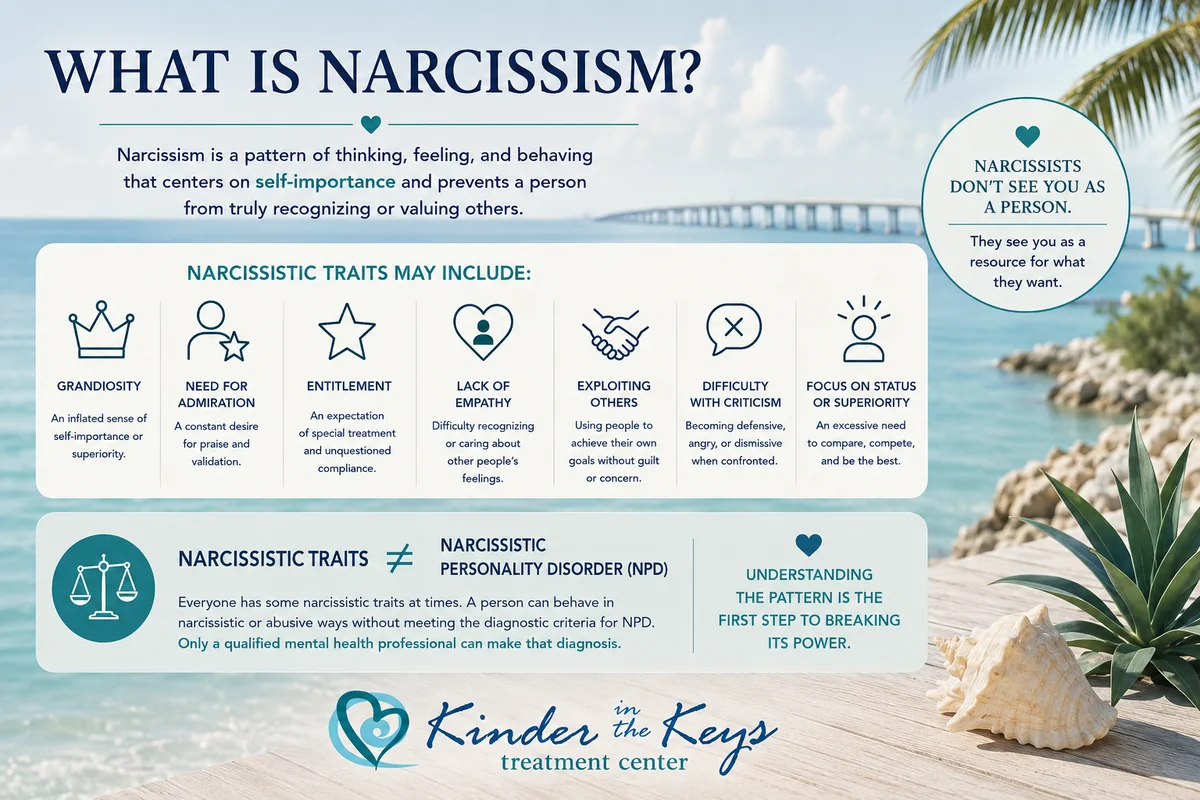
The term narcissistic abuse is commonly used to describe emotionally abusive behaviors associated with pronounced narcissistic traits.
These behaviors can include manipulation, gaslighting, blame shifting, humiliation, exploitation, excessive control, lack of empathy, and repeated disregard for another person’s emotional needs.
It is important to distinguish narcissistic traits from narcissistic personality disorder (NPD). Only a qualified professional can diagnose a personality disorder, and a person does not need an NPD diagnosis for their behavior to be emotionally abusive.
The label is less important than understanding what has happened to you.
A healthy relationship allows two people to have needs, boundaries, feelings, identities, and imperfections. An abusive dynamic increasingly revolves around the needs, reactions, approval, or control of one person.
Over time, the other person may learn to make herself smaller simply to keep the peace.
When Love Begins to Feel Like Survival
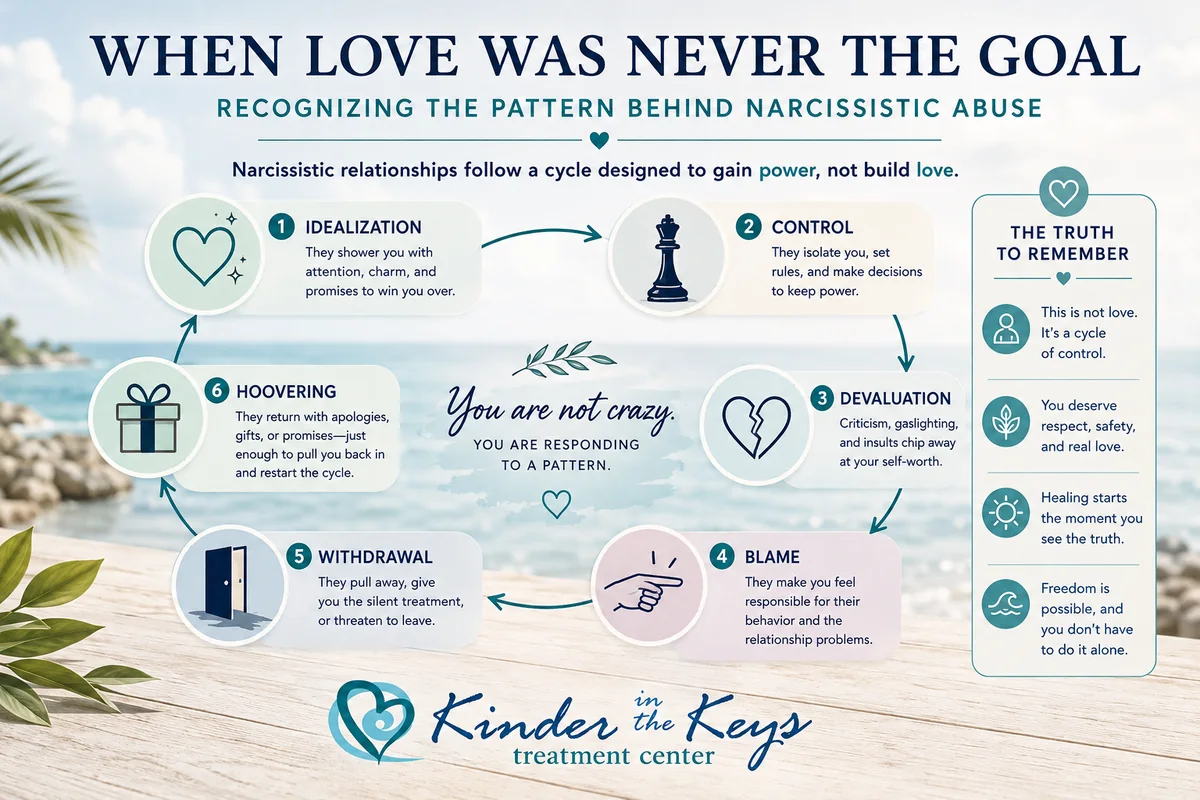
One of the most confusing aspects of narcissistic abuse is that the relationship may not have felt abusive in the beginning.
There may have been tremendous attention, affection, promises, or emotional intensity. You may have felt deeply understood or unusually connected.
Then something changed.
Affection may have become conditional. Criticism increased. Your perceptions were questioned. Boundaries created conflict. You began anticipating the other person’s reactions before making ordinary decisions.
Eventually, you may have found yourself constantly asking:
Did I do something wrong?
Am I overreacting?
Why can’t I explain this correctly?
Maybe I really am the problem.
When a relationship repeatedly causes you to doubt your own reality, the psychological consequences can extend well beyond the relationship itself.
Gaslighting and the Loss of Trust in Yourself
Gaslighting is a form of psychological manipulation that causes someone to question her perceptions, memories, or interpretation of events.
A conversation you clearly remember may be denied.
Something hurtful may be dismissed as a joke.
You may be told that you are too sensitive, irrational, unstable, jealous, dramatic, or imagining things.
When this happens repeatedly, you can gradually stop trusting yourself.
That loss of self-trust is one reason narcissistic abuse can be so destabilizing. A woman who once made decisions confidently may begin seeking reassurance for everything. She may replay conversations repeatedly, trying to determine what actually happened.
The question changes from Why is this person treating me this way? to What is wrong with me?
That shift can keep someone trapped in an abusive dynamic for much longer than outsiders understand.
The Effects of Narcissistic Abuse
Chronic emotional abuse can affect nearly every area of a person’s life.
Women recovering from these relationships may experience:
- anxiety or persistent worry
- hypervigilance
- difficulty sleeping
- depression
- shame and self-blame
- difficulty concentrating
- problems making decisions
- emotional numbness
- social withdrawal
- loss of confidence
- difficulty trusting other people
- intrusive memories
- fear of conflict
- physical tension or chronic stress
- feeling disconnected from the person they were before the relationship
Some women describe feeling as though their minds simply stopped working the way they once did.
That does not mean they are “brain damaged.” Chronic stress and trauma can affect concentration, memory, sleep, emotional regulation, and the ability to feel safe.
Why You May Feel Like You Are Always Waiting for Something Bad to Happen
When you spend enough time monitoring another person’s mood, your nervous system can learn to remain on alert.
You listen to the tone of a voice.
You notice footsteps.
You study facial expressions.
You think carefully about what you say and how you say it.
You may become exceptionally good at detecting tiny changes because, at one time, those changes helped you anticipate what was coming next.
The problem is that your body may continue doing this even after the relationship has ended.
This state of hypervigilance can make ordinary life exhausting. A delayed text, someone’s change in tone, disagreement at work, or minor conflict in a new relationship may activate a disproportionately strong fear response.
Your environment changed.
Your nervous system may not yet know that.
Can Narcissistic Abuse Cause PTSD?
Not every person who experiences emotional abuse develops post-traumatic stress disorder, and experiencing distress after an abusive relationship does not automatically mean you have PTSD.
However, abusive and coercive relationships can be traumatic, and intimate partner violence is associated with PTSD, depression, anxiety, and other significant mental health effects.
Symptoms that warrant professional evaluation may include intrusive memories, nightmares, avoidance, persistent fear, exaggerated startle responses, emotional numbness, negative beliefs about yourself, sleep disruption, and difficulty functioning in everyday life.
For some women, the effects become especially complicated when the abusive relationship connects with earlier trauma.
A current relationship can awaken wounds that began years or even decades earlier.
Trauma Bonding: Why Leaving Can Feel So Difficult
One of the questions survivors hear far too often is:
“Why didn’t you just leave?”
That question dramatically oversimplifies what happens inside an abusive relationship.
Periods of fear, rejection, humiliation, or instability may alternate with affection, promises, apologies, closeness, or relief. That unpredictability can create an extraordinarily powerful attachment.
This is often described as a trauma bond.
You may intellectually understand that the relationship is hurting you while emotionally feeling desperate to restore the loving version of the relationship you remember.
Leaving can therefore involve more than ending a relationship. It can mean grieving the future you believed you were going to have.
Internal link: Understanding Trauma Bonding in Abusive Relationships
“I Don’t Know Who I Am Anymore”
This is something I have heard from women experiencing trauma throughout my clinical career.
It is also one of the most important statements to take seriously.
When you spend years adapting yourself around someone else’s moods, expectations, criticism, or control, you can lose contact with your own preferences.
What do you like?
What do you believe?
What makes you feel peaceful?
What do you want your life to look like?
Those questions can initially feel surprisingly difficult.
Recovery is not simply about getting over another person. It is about reconnecting with yourself.
Healing From Narcissistic Abuse
Healing does not require pretending the relationship never happened.
It also does not require spending the rest of your life organizing everything around avoiding reminders of it.
Recovery involves learning to recognize what happened, understand how it affected you, rebuild trust in your perceptions, establish healthy boundaries, regulate trauma responses, and reconnect with the parts of yourself that became buried beneath survival.
For some women, outpatient therapy provides enough support.
Others continue experiencing severe anxiety, depression, PTSD symptoms, inability to function, repeated unhealthy relationship patterns, or overwhelming emotional responses despite previous treatment.
When symptoms have begun controlling everyday life, a more intensive level of trauma-focused care may be appropriate.
Specialized Treatment for Narcissistic Abuse
You Don’t Have to Spend Your Life Avoiding Every Trigger
At Kinder in the Keys, our philosophy of trauma treatment is not built around teaching women to spend their lives avoiding anything that reminds them of what happened.
Avoidance can make life smaller and smaller.
The goal of trauma recovery is different.
A memory can remain a memory without controlling the present. A trigger can eventually become something you recognize and manage rather than something that dictates where you go, whom you trust, what relationships you have, or how you see yourself.
Healing means developing enough safety, strength, awareness, and emotional regulation that the past no longer gets to make every decision about your future.
When Residential Treatment May Help
Residential treatment is not necessary for every woman recovering from narcissistic abuse.
But there are times when weekly therapy may not provide enough structure or support.
A residential level of care may be worth considering when trauma symptoms are significantly interfering with sleep, relationships, work, daily functioning, or personal safety; when anxiety or depression has become severe; or when previous outpatient treatment has not produced sufficient improvement.
At Kinder in the Keys, treatment for women experiencing the effects of narcissistic abuse can address the whole picture—not simply the relationship that caused the pain.
That may include trauma and PTSD symptoms, anxiety, depression, self-worth, relationship patterns, emotional regulation, physical wellness, and rebuilding a meaningful life after abuse.
When Love Was Never the Goal
Perhaps one of the hardest parts of recovering from an abusive relationship is accepting that you may never receive the explanation, accountability, apology, or closure you deserve.
Your recovery cannot depend on another person finally understanding what they did.
It belongs to you.
You can learn to trust yourself again.
You can have boundaries without apologizing for them.
You can experience disagreement without fear.
You can build relationships in which your needs exist alongside someone else’s.
And eventually, your life can become about much more than what happened to you.
It can become yours again.
Frequently Asked Questions About Narcissistic Abuse
How do I know if I experienced narcissistic abuse?
Look for persistent patterns rather than isolated incidents. Gaslighting, manipulation, humiliation, excessive control, blame shifting, exploitation, disregard for boundaries, and consistently making one person’s needs dominate the relationship can indicate emotional abuse. A professional can help you evaluate the relationship and its psychological effects without needing to diagnose the other person.
Can narcissistic abuse cause anxiety and depression?
Chronic emotional abuse and intimate partner violence are associated with anxiety, depression, PTSD symptoms, sleep problems, shame, emotional numbness, and other psychological difficulties. Symptoms should be evaluated individually because several mental health conditions can produce similar experiences.
Why do I still miss someone who treated me badly?
Attachment does not automatically disappear when you recognize that a relationship was unhealthy. Alternating periods of distress and affection can create powerful emotional attachment, and ending the relationship can involve grief as well as relief.
How long does it take to heal from narcissistic abuse?
There is no universal timeline. Recovery depends on factors including the duration and severity of the abuse, previous trauma, current safety, available support, mental health symptoms, and access to appropriate treatment.
Do I need residential treatment after narcissistic abuse?
Most people recovering from an abusive relationship do not automatically need residential care. Residential treatment may be appropriate when trauma, PTSD, depression, anxiety, or related symptoms have become severe enough to significantly interfere with functioning or when a lower level of care has not been sufficient.
Support Is Available
If the effects of narcissistic abuse continue to control your thoughts, relationships, emotions, or daily life, you do not have to navigate recovery alone.
Kinder in the Keys provides women-only residential mental health treatment in the Florida Keys for trauma, PTSD, anxiety, depression, narcissistic abuse, and related mental health concerns.
Specialized Treatment for Narcissistic Abuse
Medically Reviewed By
Dr. Laura Tanzini, DrPH, LMFT
Doctor of Public Health | Specialty in Lifestyle Medicine
Licensed Marriage and Family Therapist (Florida & California)
Founder & CEO, Kinder in the Keys
This article has been clinically reviewed for accuracy and consistency with current behavioral health and trauma-informed treatment principles. Dr. Tanzini has extensive clinical experience in trauma, PTSD, anxiety, depression, and women’s mental health, including assessment and treatment of trauma-related conditions.
Medical Disclaimer
This article is for educational and informational purposes only and is not intended to diagnose, treat, cure, or prevent any mental health condition. Information provided here should not replace individualized evaluation, diagnosis, or treatment from a qualified healthcare or mental health professional.