
For millions of people across the United States, a cup of coffee in the morning is their lifeline. It’s necessary. But what happens when caffeine intake becomes more than a habit? Sometimes, the line between caffeine dependence and genuine mental health concerns becomes blurred, especially when withdrawal symptoms evolve into something more serious.
Caffeine Withdrawal Symptoms: What to Expect
If you’ve recently cut back or quit caffeine, your body is adjusting to life without a substance it came to rely on, and that adjustment has a fairly predictable pattern.
Onset: 12–24 hours after your last dose. Most people notice the first symptoms within half a day of stopping. The hallmark early sign is a headache, typically a dull, throbbing pressure behind the eyes or across the forehead.
Peak: About 20–51 hours after stopping. Symptoms are often strongest during the first two days after caffeine reduction or cessation.
- Headaches: the most universal symptom, ranging from mild to migraine-level
- Fatigue and low energy: a heavy, dragging tiredness that sleep doesn’t fully fix
- Difficulty concentrating: brain fog, slower thinking, trouble staying on task
- Irritability: shorter fuse, lower frustration tolerance, general edginess
- Depressed mood: feeling flat, low, irritable, or less motivated than usual.
- Flu-like symptoms: nausea, muscle aches, and occasionally mild chills or tremors
Resolution: Days 2–9. For most people, the worst is over by day three, and symptoms fade progressively through the end of the first week. By day nine, the physical withdrawal is largely resolved.
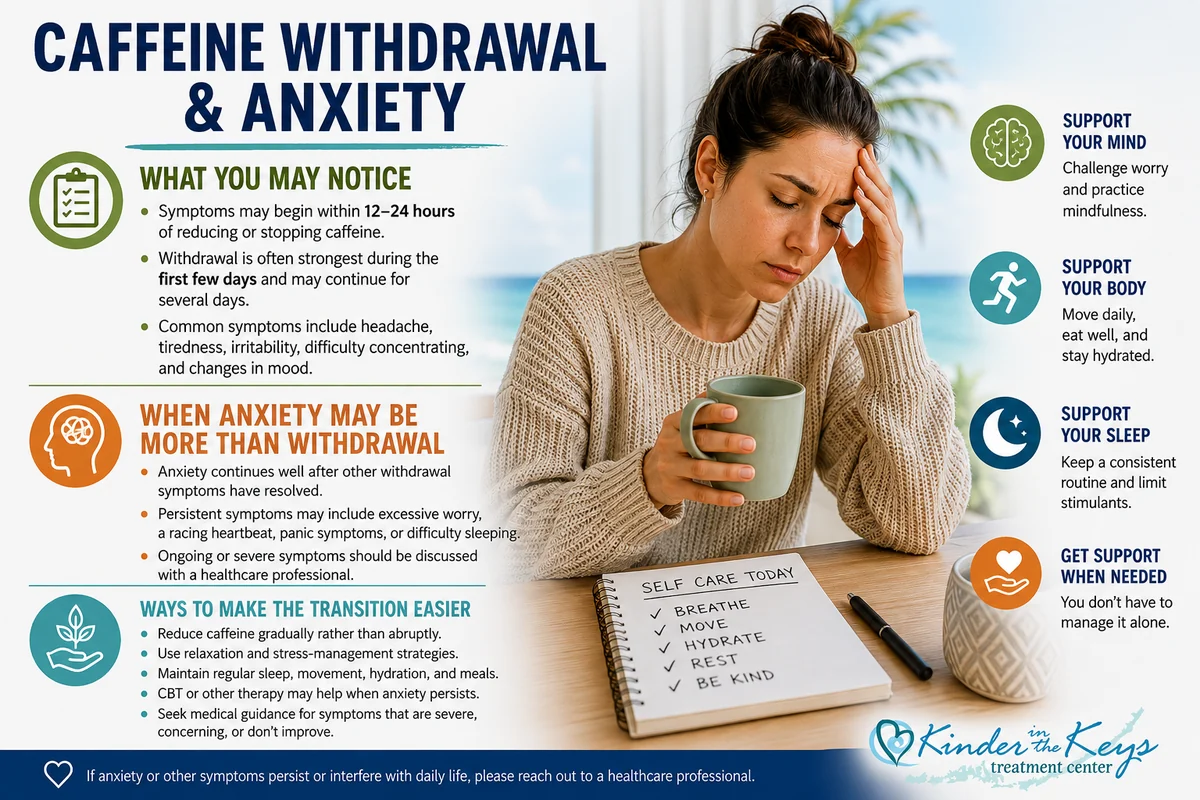
For most people, caffeine withdrawal is uncomfortable but temporary. Symptoms generally improve over several days. Anxiety, irritability, difficulty concentrating, and changes in mood can occur during caffeine withdrawal, but persistent or worsening anxiety deserves a closer look.
If anxiety continues well beyond the expected withdrawal period, it may not be appropriate to assume that caffeine withdrawal is the sole cause. An anxiety disorder, another mental health condition, medication effects, sleep disruption, or a medical condition may also contribute to ongoing symptoms. A healthcare professional can help determine what is causing them.
Find the Best Residential Anxiety Treatment Centers
Explore treatment options, what to look for, and the next right step for lasting recovery.
When Withdrawal Becomes Something More
Most caffeine-withdrawal symptoms resolve within several days. When significant anxiety persists for weeks, becomes more severe, interferes with daily functioning, or includes recurring panic attacks, it is important to consider whether something other than caffeine withdrawal may be contributing.
Persistent anxiety does not necessarily mean that caffeine withdrawal caused an anxiety disorder. In some people, reducing caffeine may make preexisting anxiety symptoms more noticeable, while others may simply become more aware of symptoms they previously attributed to caffeine. A clinician can evaluate the timing, severity, medical history, caffeine use, sleep patterns, medications, and other factors to determine whether an anxiety disorder or another condition may be present.
Caffeine can increase symptoms such as nervousness, restlessness, rapid heartbeat, and difficulty sleeping, particularly at higher doses or in people who are sensitive to its effects. Research has found an association between caffeine consumption and increased anxiety, particularly at higher doses. People who experience anxiety may benefit from discussing their caffeine intake with a healthcare professional and observing whether reducing caffeine improves their symptoms. Our guide, Does caffeine make anxiety worse?, explains this relationship in greater detail.
The Science Behind Caffeine and Anxiety
Caffeine affects the central nervous system primarily by blocking adenosine receptors in the brain. Adenosine helps regulate sleep, alertness, and nervous-system activity. By interfering with adenosine signaling, caffeine promotes wakefulness and can make people feel more alert and energetic. With regular caffeine use, the nervous system adapts to its presence, including changes in sensitivity to adenosine.
When caffeine intake is suddenly stopped or substantially reduced, increased adenosine activity contributes to familiar withdrawal symptoms such as headache, fatigue, drowsiness, difficulty concentrating, irritability, and changes in mood. Some people may also experience anxiety or feelings that resemble anxiety during withdrawal. These symptoms typically begin within 12–24 hours, peak within approximately 20–51 hours, and resolve within 2–9 days.
It is also important to distinguish caffeine use from caffeine withdrawal. Caffeine itself can increase nervousness, restlessness, and anxiety, particularly at higher doses and in people who are sensitive to its effects. If significant anxiety continues after the expected withdrawal period, worsens, or interferes with daily life, it should not automatically be attributed to caffeine withdrawal. A healthcare professional can evaluate whether an anxiety disorder, sleep problem, medication effect, medical condition, or another factor may be contributing.
Factors that can affect Caffeine Withdrawal and Anxiety
Several factors can influence the severity of caffeine withdrawal symptoms and may also affect how a person experiences anxiety while reducing or stopping caffeine:
Mental Health History
People with a history of anxiety, panic attacks, or other mental health concerns may be particularly attentive to changes in nervousness, sleep, heart rate, or mood when reducing caffeine. Caffeine itself can also increase anxiety symptoms in some people, particularly at higher doses.
If anxiety persists beyond the expected withdrawal period, a previous history of anxiety is important information for a healthcare provider. Persistent symptoms may represent a recurrence or worsening of an existing condition rather than a new anxiety disorder caused by caffeine withdrawal.
Amount and Pattern of Caffeine Use
The amount of caffeine a person regularly consumes can influence the likelihood and severity of withdrawal symptoms. Withdrawal can occur even at relatively modest levels of regular caffeine consumption, although heavier or more consistent use may produce more noticeable symptoms when caffeine is abruptly discontinued.
For most healthy adults, the FDA cites 400 milligrams of caffeine per day– about two to three 12-fluid -ounce cups of coffee – as an amount not generally associated with negative effects. Importantly, 400 mg is not a threshold for caffeine dependence or withdrawal.
Coffee, tea, energy drinks, supplements, medications, and other products can all contribute to total caffeine intake. Someone preparing to reduce caffeine should consider all sources rather than counting coffee alone.
Individual Sensitivity
People differ substantially in how they respond to caffeine. Genetics, habitual caffeine consumption, medications, sleep, age, and other individual factors can influence caffeine metabolism and sensitivity.
A family history of anxiety may increase a person’s general vulnerability to anxiety disorders, but it does not mean that caffeine withdrawal will cause an anxiety disorder. When anxiety persists or becomes difficult to manage, clinical evaluation is more appropriate than assuming withdrawal is responsible.The National Institute of Mental Health notes that healthy habits such as reducing caffeine intake and getting adequate sleep may help reduce anxiety symptoms, but lifestyle changes should complement—not replace—appropriate treatment when an anxiety disorder is present.
Stress Levels
Periods of high stress can make symptoms such as irritability, difficulty concentrating, sleep disruption, and anxiety feel more pronounced. Because some of these symptoms can also occur during caffeine withdrawal, it may be difficult to determine whether caffeine reduction, existing stress, or a combination of factors is contributing to how you feel.
If possible, gradually reducing caffeine rather than stopping abruptly may make withdrawal symptoms easier to manage. If anxiety becomes severe, interferes with daily functioning, or continues beyond the expected withdrawal period, consider speaking with a healthcare or mental health professional.
Other Substance Use
Alcohol, nicotine, medications, and other stimulants can affect sleep, mood, energy levels, and anxiety symptoms. When these substances are used alongside caffeine, it may be more difficult to determine which substance—or change in substance use—is contributing to symptoms.
Alcohol, for example, can disrupt sleep and may worsen anxiety in some people. Nicotine and other stimulants can also affect alertness, heart rate, and feelings of nervousness. These effects can overlap with symptoms someone may experience while reducing or stopping caffeine.
If you regularly use caffeine along with alcohol, nicotine, prescription medications, or other stimulants, discuss significant changes in your caffeine intake with a healthcare professional when appropriate. This can be especially important if symptoms are severe, unexpected, or persistent.
Recognizing the Signs
Caffeine withdrawal is usually temporary. Symptoms often begin within 12–24 hours after reducing or stopping caffeine, are typically most intense during the first few days, and generally improve within several days. Some symptoms may last longer depending on the individual and their usual level of caffeine consumption.
If anxiety symptoms continue well beyond the expected withdrawal period, become severe, or interfere with daily life, it is important not to assume that caffeine withdrawal is the cause. Because caffeine withdrawal symptoms can overlap with symptoms of anxiety and mood disorders, the timing and duration of symptoms are important when determining what may be causing them. Persistent symptoms may warrant evaluation by a healthcare or mental health professional.
Signs that may indicate it is time to seek professional evaluation include:
- Persistent or excessive worry that is difficult to control
- Recurrent panic attacks
- Ongoing sleep problems
- Avoidance of activities or situations because of anxiety
- Physical symptoms such as a racing heart, trembling, or sweating that are persistent or concerning
- Persistent depressed mood or significant changes in mood
- Difficulty functioning at work, school, socially, or at home
A qualified professional can evaluate the timing, severity, duration, and possible causes of these symptoms and determine whether they are related to caffeine use, an anxiety disorder, another health condition, medication, or other factors.
Treatment Approaches
When anxiety persists beyond the expected period of caffeine withdrawal, treatment should focus on identifying what is contributing to the symptoms rather than assuming caffeine withdrawal is the cause. A healthcare or mental health professional can evaluate symptoms, medical history, caffeine and other substance use, medications, sleep, stress, and other factors that may be contributing.
Therapy Options
Psychotherapy can be effective for anxiety disorders regardless of whether symptoms first became noticeable during a change in caffeine use.
Cognitive behavioral therapy (CBT) is an evidence-based treatment for many anxiety disorders. CBT can help people recognize patterns of thinking and behavior that contribute to anxiety, develop healthier responses to distressing thoughts and physical sensations, and build practical strategies for managing symptoms.
For some people, therapy may also help address fear surrounding physical sensations such as a racing heart, shakiness, dizziness, or difficulty sleeping. These sensations can occur with anxiety as well as changes in caffeine consumption, which can sometimes make them difficult to interpret.
Medical Evaluation
Persistent or severe anxiety symptoms may warrant medical evaluation. A healthcare provider can assess whether symptoms could be related to an anxiety disorder, medication, another substance, sleep problems, or an underlying medical condition.
Medication may be appropriate for some anxiety disorders, but the decision depends on the individual’s symptoms, diagnosis, medical history, current medications, and other factors. Medication should be discussed with a qualified prescribing healthcare professional rather than started or changed solely because symptoms occurred during caffeine withdrawal.
Lifestyle Modifications
Healthy daily routines can support both physical and emotional well-being while reducing caffeine consumption. Regular physical activity, adequate nutrition, consistent sleep, hydration, and stress-management practices may help make the adjustment more manageable.
If you consume large amounts of caffeine regularly, gradually reducing intake may help lessen withdrawal symptoms compared with abruptly stopping. Individual responses vary, so people with significant medical or mental health concerns should discuss major changes in caffeine consumption with a healthcare professional.
Sleep is particularly important because caffeine use, sleep disruption, fatigue, and anxiety can influence one another. Strategies that support consistent sleep and healthy stress management can be useful while the body adjusts to reduced caffeine intake.

Gradual Caffeine Reduction
For people who regularly consume caffeine, gradually reducing intake rather than stopping abruptly may help reduce the intensity of withdrawal symptoms. One approach is to slowly decrease the amount of caffeinated coffee, tea, energy drinks, or other sources of caffeine over time.
For example, some people gradually substitute decaffeinated coffee for regular coffee or reduce the number of caffeinated beverages they consume each day. The appropriate pace will vary depending on usual caffeine intake, individual sensitivity, medical history, and other factors.
If you consume large amounts of caffeine or have significant anxiety, heart symptoms, or other health concerns, talk with a healthcare professional about the safest approach to reducing your intake.
The Path Forward with Kinder in the Keys
Caffeine withdrawal can be uncomfortable, and symptoms such as nervousness, irritability, difficulty concentrating, fatigue, and changes in sleep can overlap with symptoms associated with anxiety. For most people, withdrawal symptoms improve as the body adjusts to reduced caffeine intake.
When anxiety continues beyond the expected withdrawal period, becomes increasingly severe, or begins interfering with work, relationships, sleep, or daily functioning, a professional evaluation can help determine what is happening. Persistent anxiety should not automatically be attributed to caffeine withdrawal.
For women experiencing significant anxiety that requires more support than outpatient care can provide, Kinder in the Keys offers residential mental health treatment in Key Largo, Florida. Treatment can address anxiety within the broader context of a woman’s mental, physical, and emotional health rather than focusing on a single possible cause.
Learn more about how to choose a residential anxiety treatment center, including the clinical services, level of care, treatment environment, and professional support to consider when evaluating a program.
If anxiety symptoms are persistent or interfering with daily life, seeking an appropriate clinical evaluation is an important next step. Effective treatment begins with understanding the individual—not simply attributing symptoms to caffeine.
Need Help Choosing the Right Anxiety Program?
See what separates high-quality residential anxiety care from the rest and speak with our team today.