
Preparing to Talk to Loved Ones About an Eating Disorder
Reflect on Why You’re Speaking Up
Before starting, spend some time reflecting on why you’re ready to tell your loved ones. Are you seeking emotional support, practical help, or are you simply tired of hiding your struggle? Knowing what you hope to get from the conversation can help you decide what to share, what kind of support to ask for, and what boundaries you may need. It’s also helpful to consider the benefits of sharing your eating disorder journey. Having your loved ones aware of what you’re going through means they can better help you navigate challenges and provide emotional and tangible support, such as going with you to therapy sessions or being a comforting presence on difficult days.Acknowledge Your Emotions
Fear, shame, uncertainty, or worry about how others will respond can make talking about an eating disorder difficult. Acknowledging those emotions before the conversation may help you understand what feels most vulnerable and what support you need. You do not have to eliminate fear or feel completely confident before speaking with someone you trust. Many people with eating disorders experience difficult emotions related to body image, food, relationships, trauma, or self-worth, and those experiences deserve compassionate support.Ground Yourself Before the Conversation
If it feels helpful, take a few minutes before the conversation to settle yourself. Slow breathing, mindfulness, journaling, a short walk, or simply organizing what you want to say may make the conversation feel more manageable. You might also write down two or three things you most want your loved one to understand so you do not feel pressured to explain everything at once.Choose the Right Time and Place
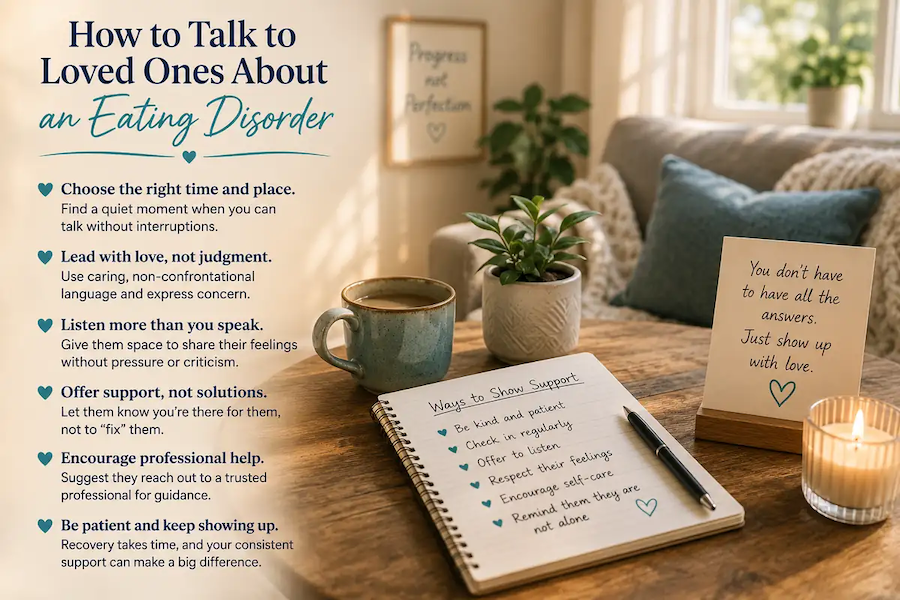
Environment and timing play a big role in how your message is received. Select a quiet, comfortable space where you can talk without distractions. Choose a time when both you and your loved ones are not under pressure or in a rush. This thoughtful approach will set the stage for a productive conversation, free from outside stressors. The right environment also signals to your loved ones that this is an important conversation that requires their full attention, helping them engage more thoughtfully. To ensure a smooth discussion, consider creating a supportive environment for eating disorder discussions.How to Approach the Conversation
Use “I” Statements
When you talk to loved ones about an eating disorder, you do not need to explain everything perfectly or all at once.
Be Honest, but Keep It Simple
There’s no need to overload your loved ones with every detail of your eating disorder right away. Start with the basics and explain how eating disorders affect daily life. Over time, you can reveal more as they begin to understand. The goal is to provide enough information for them to grasp the seriousness of the situation without overwhelming them. You don’t need to share everything in one go—recovery is a process, and these conversations can be ongoing.Prepare for Different Reactions
Not everyone will respond exactly as you hope. Some people may immediately offer support, while others may react with confusion, fear, questions, or uncertainty because they do not understand eating disorders. Their first reaction does not necessarily determine how supportive they may become. You can give someone time to process what you have shared while still maintaining boundaries around comments or responses that feel harmful or dismissive.Offer Basic Information
Many people don’t fully understand eating disorders, so offering some simple explanations can help them better grasp what you’re experiencing. You don’t need to dive into the complexities of the disorder—just share enough to dispel common misconceptions and explain how it’s been impacting your life physically and emotionally. Providing helpful information, like understanding eating disorders, will go a long way in fostering their support.Responding to Their Reactions
Stay Calm
After you talk to loved ones about an eating disorder, give yourself permission to process the conversation too.
Give Them Time
Eating disorders are complex, and loved ones may need time to understand what you are experiencing. They may have questions or misconceptions that need to be addressed gradually. You can allow room for learning without accepting comments about weight, food, appearance, or treatment that undermine your recovery. This conversation can be the beginning of an ongoing dialogue rather than something that must be resolved all at once.Set Boundaries
It’s okay to decide how much you want to share and when. If certain topics feel too overwhelming to discuss right away, set boundaries. Let your loved ones know if you’re not ready to dive into certain areas of the conversation. This helps protect your emotional well-being while also giving them clear guidance on how to support you. Boundaries aren’t just for the initial conversation—they’re a critical part of maintaining healthy communication as you continue your recovery.Provide Helpful Resources
What to Do After the Conversation
Keep Communication Open
Choosing to talk to loved ones about an eating disorder can open the door to ongoing communication and support.
Encourage Them to Be Part of Your Recovery