
SSRI side effects have become a major topic in mental health conversations, especially as more women openly discuss their experiences with antidepressants. Some describe meaningful relief from depression or anxiety. Others report sexual side effects, weight changes, emotional blunting, sleep problems, or difficulty when trying to reduce the medication.
SSRIs can be helpful for some people, but they are not the only path to recovery from depression or anxiety. Psychotherapy, exercise, sleep, nutrition, stress reduction, and other lifestyle interventions can also play an important role in depression treatment. The goal should be individualized care that looks at the whole person rather than assuming one approach is right for everyone.
One of the most important things to understand is that antidepressants should not be stopped abruptly. The nervous system adapts to these medications over time, and reducing them too quickly can lead to significant discontinuation symptoms. Anyone considering a dose reduction or stopping an SSRI should work with a qualified prescribing professional.
At Kinder in the Keys, women can discuss medication concerns, side effects, and questions about future medication changes with our onsite psychiatric nurse practitioner as part of individualized medication management
What Are SSRIs and How Do They Work?
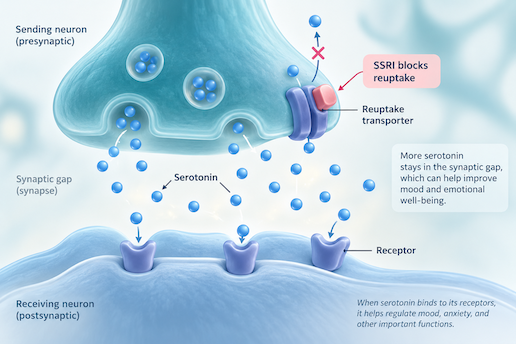
SSRIs, or selective serotonin reuptake inhibitors, are a class of antidepressant medications commonly prescribed for depression and several anxiety disorders. Common examples include sertraline (Zoloft), escitalopram (Lexapro), fluoxetine (Prozac), citalopram (Celexa), and paroxetine (Paxil).
SSRIs work by blocking the reuptake, or reabsorption, of serotonin between nerve cells in the brain. This leaves more serotonin available in the space between those cells, allowing serotonin signaling to continue longer.
Serotonin is involved in mood, sleep, appetite, and other functions. However, SSRIs do not work like an instant mood booster. The brain and nervous system gradually adapt to the medication over time, which is one reason the full effect may take several weeks.
That same adaptation also helps explain why stopping an SSRI too quickly can be difficult. When the body has adjusted to the medication being present, an abrupt reduction can create a sudden change in serotonin signaling and other nervous-system processes. That can lead to discontinuation symptoms, which is why any reduction should be planned with a qualified prescribing clinician.
Common SSRI Side Effects
SSRI side effects vary from person to person. Some women experience few problems, while others notice changes that affect sleep, appetite, sexual functioning, energy, or how emotionally connected they feel.
Common SSRI side effects can include:
Nausea or stomach upset
Headaches
Changes in sleep
Fatigue or drowsiness
Restlessness or feeling more activated
Increased sweating
Changes in appetite or weight
Reduced sexual desire
Difficulty reaching orgasm
Emotional blunting or feeling less emotionally responsive
Some side effects improve after the first few weeks as the body adjusts. Others may continue and need to be discussed with the prescribing clinician.
A side effect should not automatically be dismissed simply because the medication is helping in another area. Treatment should consider both symptom improvement and quality of life.
Sexual Side Effects of SSRIs
Sexual side effects are among the most commonly discussed concerns with SSRIs and can be significant enough to affect relationships, self-esteem, and overall quality of life.
Women may notice:
Reduced sexual desire
Difficulty becoming aroused
Reduced lubrication
Delayed orgasm
Difficulty reaching orgasm
Less overall sexual satisfaction
These side effects can be frustrating, especially when the medication is otherwise helping with depression or anxiety.
It is important not to stop an SSRI abruptly because of sexual side effects. Instead, bring the concern to the prescribing clinician. Depending on the individual situation, the prescriber may consider adjusting the dose, changing the medication, or discussing other strategies.
Sexual health is part of overall health, and these concerns deserve to be taken seriously rather than minimized.
Weight and Appetite Changes
Some women notice changes in appetite or weight after starting an SSRI. The effect can vary depending on the medication, dose, length of treatment, activity level, sleep, and the depression or anxiety itself.
Depression can reduce appetite for some people and increase it for others. As mood improves, eating patterns may also change. That means weight changes are not always caused by the medication alone.
If weight gain, weight loss, or appetite changes become significant or upsetting, they are worth discussing with the prescribing clinician. The goal is to evaluate the whole picture rather than assuming every change is simply something you have to tolerate.
Sleep Problems
SSRIs can affect sleep in different ways. Some women feel more tired or drowsy after starting a medication, while others experience insomnia, restlessness, vivid dreams, or changes in their normal sleep pattern.
Because sleep and mood are closely connected, it can sometimes be difficult to tell whether a sleep change is coming from the medication, the underlying depression or anxiety, or both.
If sleep becomes significantly worse after starting or changing an SSRI, bring that change to the prescribing clinician. The timing of the dose, the medication itself, or other factors may need to be reviewed rather than simply accepting poor sleep as part of treatment.
Emotional Blunting
Some women describe feeling less emotionally reactive while taking an SSRI. For some, that can feel like relief because intense anxiety, panic, or sadness has become more manageable. For others, it can feel as though positive emotions have become muted too.
Women may describe:
Feeling emotionally flat
Less excitement or joy
Reduced motivation
Feeling detached from people or activities
Caring less about things that used to matter
Feeling unlike themselves
It can be difficult to tell whether emotional blunting is coming from the medication, the underlying depression, or both. That is why changes like these should be discussed with the prescribing clinician rather than assumed to be an unavoidable part of treatment.
The goal of treatment is not to eliminate emotion. It is to reduce symptoms while helping a person function and engage more fully in her life.
Emotional Blunting
Some women describe feeling less emotionally reactive while taking an SSRI. For some, that can feel like relief because intense anxiety, panic, or sadness has become more manageable. For others, it can feel as though positive emotions have become muted too.
Women may describe:
Feeling emotionally flat
Less excitement or joy
Reduced motivation
Feeling detached from people or activities
Caring less about things that used to matter
Feeling unlike themselves
It can be difficult to tell whether emotional blunting is coming from the medication, the underlying depression, or both. That is why changes like these should be discussed with the prescribing clinician rather than assumed to be an unavoidable part of treatment.
The goal of treatment is not to eliminate emotion. It is to reduce symptoms while helping a person function and engage more fully in her life.
Why Are SSRIs So Hard to Stop?
SSRIs can be difficult to stop because the brain and nervous system adapt to the medication over time. When serotonin signaling has been altered for weeks, months, or years, the body becomes accustomed to functioning with the medication present.
If the dose is reduced too quickly, that adjustment is suddenly disrupted. The result can be antidepressant discontinuation symptoms, which may be uncomfortable or, for some people, significant.
Symptoms can include:
Dizziness
Nausea
Headaches
Anxiety or irritability
Sleep disturbance
Flu-like feelings
Fatigue
Sensory disturbances sometimes described as “brain zaps”
Feeling emotionally or physically unwell
The likelihood and intensity of discontinuation symptoms can vary depending on the medication, dose, length of use, and the individual.
Some antidepressants are especially well known for being difficult to reduce too quickly. Venlafaxine (Effexor), which is an SNRI rather than an SSRI, is one example. Paroxetine (Paxil) can also cause noticeable discontinuation symptoms in some people.
The important point is that difficulty stopping an antidepressant does not mean a person can never come off it. It means the process may need to be gradual, individualized, and medically supervised.
Why You Should Not Stop an SSRI Cold Turkey
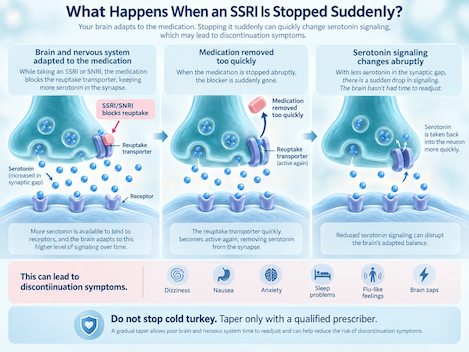
Stopping an SSRI suddenly can cause a rapid change in the way the brain and nervous system are functioning with the medication. That can lead to antidepressant discontinuation symptoms, which may be uncomfortable and sometimes significant.
For that reason, SSRIs and SNRIs should not be stopped abruptly unless a qualified prescribing clinician specifically directs you to do so.
A tapering plan may need to consider:
Which medication you are taking
Your current dose
How long you have been taking it
Whether you have had withdrawal symptoms before
Other medications you take
Your current mental health symptoms
How your body responds as the dose is reduced
There is no single tapering schedule that is right for everyone.
Some people can reduce medication more easily than others. Others may need a much slower process, especially with medications known to produce stronger discontinuation symptoms when reduced too quickly.
At Kinder in the Keys, women can discuss medication concerns with our onsite psychiatric nurse practitioner as part of individualized medication management. That can include side effects, whether a medication still seems beneficial, and questions about future dose reduction. Any medication change should be guided by a qualified prescribing clinician rather than attempted independently.
Why Slow Titration Matters
Reducing an antidepressant gradually gives the brain and nervous system more time to adjust to each dose change.
That matters because discontinuation symptoms are not simply about the final step of stopping the medication. Symptoms can emerge during the taper itself if the dose is reduced faster than the body can comfortably adapt.
A slower taper may help reduce problems such as:
Dizziness
Nausea
Anxiety
Irritability
Sleep disruption
Flu-like symptoms
Fatigue
Sensory disturbances such as “brain zaps”
The appropriate pace can vary widely from one person to another. Some women tolerate dose reductions with relatively little difficulty, while others may need a more gradual approach.
The goal is not to rush the process. It is to reduce the medication in a way that is clinically appropriate and tolerable for the individual.
Any tapering plan should be developed with a qualified prescribing clinician who can monitor symptoms and adjust the pace when needed.
Are SSRI Withdrawal and Addiction the Same Thing?
No. Antidepressant discontinuation and addiction are not the same thing.
Addiction typically involves patterns such as craving, compulsive use, loss of control, and continued use despite harm. SSRIs do not usually produce that type of addictive pattern.
However, the body can become physically accustomed to an antidepressant over time. When the medication is reduced too quickly or stopped suddenly, that adaptation can lead to discontinuation symptoms.
That distinction matters.
Experiencing symptoms such as dizziness, nausea, anxiety, sleep problems, or “brain zaps” after reducing an SSRI does not mean a person is addicted to the medication. It means the nervous system is reacting to a change in a medication it has adapted to.
At the same time, discontinuation symptoms should not be dismissed simply because SSRIs are not considered addictive. For some people, those symptoms can be significant and may require a slower, medically supervised taper.
Can Therapy and Lifestyle Changes Help Depression Too?
Yes. Medication is one treatment option for depression, but it is not the only one.
Many people improve through psychotherapy, behavioral changes, exercise, sleep improvement, nutrition, stress reduction, stronger social support, or a combination of these approaches. The most effective treatment plan depends on the individual, the severity of symptoms, how long they have been present, and what factors may be contributing to them. Women exploring different forms of treatment for depression may benefit from understanding how these approaches can work together
Psychotherapy can help address patterns of thinking, unresolved trauma, grief, relationship problems, avoidance, chronic stress, and other factors that may contribute to depression.
Exercise is also one of the more consistently studied lifestyle interventions for depression. Research has found that regular physical activity, including more vigorous forms of exercise for some people, can significantly improve depressive symptoms.
Lifestyle changes may also support recovery by improving:
Sleep quality
Energy
Stress regulation
Daily structure
Physical health
Social connection
Confidence and functioning
The important point is that depression does not automatically have to be viewed as a permanent or fixed condition. Some people experience recurrent or biologically driven forms of depression, while others improve substantially when the underlying contributors are identified and treated.
Medication may be useful as part of that process, but treatment should also ask a broader question:
What is contributing to the depression, and what can be changed to help the person function and feel better over time? For practical strategies that support recovery, see our guide on how to deal with depression.
When One Medication Leads to Another
Sometimes a new medication is added to treat a symptom that may actually be a side effect of another medication. This is sometimes called a prescribing cascade.
For example, a person may begin one medication, develop a new symptom, and then receive another prescription to manage that symptom without first determining whether the original medication contributed to it.
That does not mean every additional prescription is unnecessary. Sometimes adding another medication is clinically appropriate. The concern is whether the full medication picture is being reviewed carefully.
Questions worth discussing with a qualified prescriber can include:
Did this symptom begin after starting or increasing another medication?
Is the current medication still providing enough benefit to justify the side effects?
Could the dose, timing, or medication itself be contributing to the problem?
Are there non-medication options that might also help?
Is every medication in the current regimen still necessary?
Medication management should involve periodic review, especially when several medications are being taken at the same time.
The goal is not simply to add another prescription every time a new symptom appears. It is to understand what is causing the symptom and whether the overall treatment plan still makes sense.
How to Know Whether an SSRI Is Helping You
The question is not simply whether you feel different after starting an SSRI. A more useful question is whether the medication is helping you function better while keeping side effects manageable.
Signs that an SSRI may be helping can include:
Improved mood
Reduced anxiety or panic
Better sleep
More consistent energy
Improved concentration
Greater interest in activities
Less emotional distress
Better ability to work, maintain relationships, and manage daily responsibilities
It is also important to look at the tradeoffs.
A medication may reduce anxiety but create sexual side effects. It may improve mood but leave you feeling emotionally flat. It may help sleep while causing daytime fatigue.
That does not automatically mean the medication is wrong for you. It means the benefits and side effects should be reviewed together.
Questions to discuss with your prescriber can include:
What symptoms have improved?
What side effects have appeared?
How much are those side effects affecting daily life?
Has the medication improved overall functioning?
Is the current dose still appropriate?
Does the treatment plan still make sense based on how you are doing now?
Medication management should be an ongoing process, not a one-time decision.
Discussing Medication Concerns at Kinder in the Keys
Medication questions are often part of a larger treatment conversation.
At Kinder in the Keys, women can discuss medication concerns with our onsite psychiatric nurse practitioner as part of individualized medication management. That may include questions about side effects, whether a medication still seems to be helping, changes in mood or anxiety, or concerns about future dose reduction.
These conversations are not about automatically increasing, decreasing, or stopping medication. They are about reviewing the full clinical picture and making decisions based on symptoms, functioning, side effects, treatment history, and individual needs.
If a woman is considering reducing or discontinuing an antidepressant, that process should be guided by a qualified prescribing clinician. Some medications require especially careful tapering, and the pace may need to be adjusted based on how the individual responds.
Medication management is only one part of treatment. At Kinder in the Keys, it can be considered alongside psychotherapy, daily structure, behavioral change, exercise, nutrition, sleep, and other factors that may support recovery from depression or anxiety. omen experiencing significant anxiety may also benefit from learning more about what anxiety disorders involve.
Frequently Asked Questions About SSRI Side Effects
What is the most commonly prescribed SSRI?
Sertraline, commonly known by the brand name Zoloft, is one of the most frequently prescribed SSRIs in the United States. It is commonly used for depression and several anxiety disorders.
How long do SSRI side effects last?
Some side effects improve within the first few weeks as the body adjusts to the medication. Others may continue longer or become bothersome enough to require a conversation with the prescribing clinician. The timeline varies depending on the medication, dose, individual response, and type of side effect.
Can SSRIs make anxiety worse at first?
They can for some people. Early in treatment, certain SSRIs may temporarily increase restlessness, nervousness, sleep disruption, or a feeling of being more activated. If anxiety becomes significantly worse after starting or changing a medication, the prescribing clinician should be informed.
Can SSRIs cause emotional numbness?
Some people describe emotional blunting while taking SSRIs. This can feel like reduced sadness or anxiety, but it may also include less joy, excitement, motivation, or emotional connection. Emotional changes should be discussed with the prescribing clinician, especially if they affect quality of life.
Can I ever come off an SSRI?
Yes, some people are able to reduce and eventually discontinue an SSRI under medical supervision. Whether that is appropriate depends on the individual, including the reason the medication was started, how long it has been used, symptom history, and current functioning.
What happens if I stop an SSRI suddenly?
Stopping an SSRI abruptly can lead to antidepressant discontinuation symptoms such as dizziness, nausea, sleep problems, anxiety, irritability, flu-like feelings, fatigue, or sensory disturbances such as “brain zaps.” Any reduction should be planned with a qualified prescribing clinician rather than attempted cold turkey
The Bottom Line on SSRI Side Effects
SSRIs can be useful for some women with depression or anxiety, but they are not the only path to improvement and they are not without potential side effects.
The most important questions are whether the medication is helping, whether the side effects are manageable, and whether the overall treatment plan is addressing the factors contributing to the depression or anxiety.
If a medication is causing problems, that does not mean it should be stopped abruptly. It means the concern should be discussed with a qualified prescribing clinician who can review the benefits, risks, and appropriate next steps.
For some women, treatment may include medication. For others, psychotherapy, exercise, sleep, nutrition, stress reduction, or other lifestyle changes may play a larger role. Often, the best approach combines several of these strategies.
At Kinder in the Keys, medication concerns can be discussed with our onsite psychiatric nurse practitioner as part of individualized medication management. Women who are experiencing side effects, questioning whether a medication is still helping, or considering a future reduction can bring those concerns into treatment.
Recovery from depression or anxiety does not have to mean assuming the condition is permanent. The goal is to understand what is contributing to the symptoms, use the treatment tools that are appropriate for the individual, and continue adjusting the plan as needs change.
Medically Reviewed By
Dr. Laura Tanzini, DrPH, LMFT
Doctor of Public Health | Specialty in Lifestyle Medicine
Licensed Marriage and Family Therapist (Florida & California)
Founder & CEO, Kinder in the Keys
Doctoral Research: Dr. Tanzini’s doctoral research at Loma Linda University examined childhood and adult traumatic events, cumulative trauma exposure, gender, forgiveness, life satisfaction, and long-term well-being.
This article has been clinically reviewed for accuracy and consistency with current behavioral health and trauma-informed care principles. Content is intended to provide general educational information and should not replace individualized evaluation, diagnosis, or treatment by a qualified healthcare professional.
Medical Disclaimer
The information provided in this article is for educational and informational purposes only and is not intended as medical advice, diagnosis, or treatment. Mental health needs vary by individual. If you are experiencing symptoms of depression, anxiety, or another mental health condition, consult a qualified healthcare professional who can evaluate your individual circumstances.