
A holistic approach to mental health recognizes that emotional well-being does not exist separately from the rest of a person’s life. Mental health can be influenced by physical health, sleep, nutrition, relationships, stress, environment, daily habits, past experiences, and a person’s sense of meaning and connection.
Rather than focusing only on reducing symptoms, holistic mental health treatment looks at the whole person and asks a broader question: What factors may be contributing to this woman’s distress, and what does she need to build lasting stability and well-being?
Importantly, holistic mental health care does not mean replacing psychotherapy, psychiatric care, medication, or other evidence-based treatments with alternative therapies. A responsible holistic approach integrates appropriate clinical treatment with attention to the physical, emotional, behavioral, social, and lifestyle factors that can influence recovery.
At Kinder in the Keys, this whole-person perspective is particularly important because women entering residential treatment often arrive with more than a single isolated symptom. Depression may coexist with anxiety. Trauma may affect sleep and relationships. Chronic stress may influence physical health, appetite, concentration, and emotional regulation. Effective treatment means understanding how these pieces interact rather than treating each one as though it exists independently.
What Does a Holistic Approach to Mental Health Mean?
Holistic mental health treatment begins with the understanding that a diagnosis is only one part of a person’s clinical picture.
Two women with the same diagnosis may have very different histories, triggers, relationships, physical-health concerns, coping patterns, strengths, and treatment needs. A treatment plan should reflect those differences.
A comprehensive approach may consider:
Mental health symptoms and diagnoses
Trauma and significant life experiences
Physical health and medical conditions
Sleep quality
Nutrition and eating patterns
Physical activity and movement
Stress and nervous-system regulation
Relationships and social support
Substance use when applicable
Daily routines and behaviors
Environmental stressors
Personal values, meaning, and spirituality when important to the individual
The goal is not to find one lifestyle change that will “fix” a mental health condition. The goal is to identify the factors that influence a person’s overall functioning and address them as part of an individualized treatment plan.
What Does Holistic Mental Health Treatment Include?
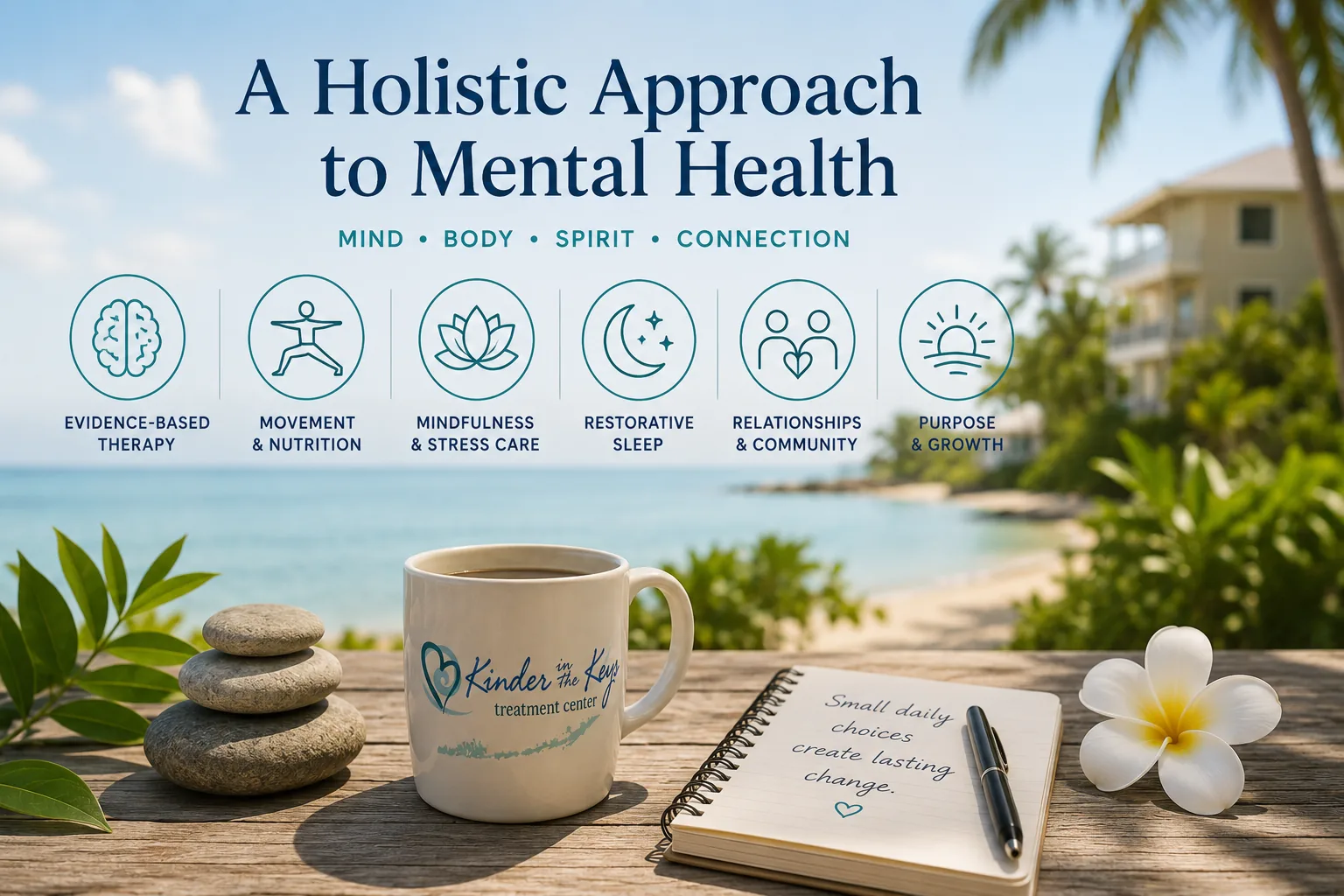
A holistic approach to mental health can incorporate several components depending on a person’s diagnosis, symptoms, medical needs, preferences, and treatment goals.
Evidence-Based Psychotherapy
Psychotherapy remains a central component of mental health treatment.
Depending on the individual’s needs, treatment may incorporate approaches such as cognitive behavioral therapy (CBT), dialectical behavior therapy (DBT), trauma-focused interventions, family therapy, and other evidence-based or clinically appropriate modalities.
Therapy can help individuals understand patterns of thinking and behavior, process difficult experiences, develop healthier coping strategies, improve emotional regulation, establish boundaries, and change patterns that interfere with their lives.
Holistic care does not minimize this clinical work. Instead, it recognizes that therapy may be more effective when other factors affecting emotional health are addressed at the same time.
Psychiatric and Medical Care
Mental health symptoms can sometimes be influenced or complicated by physical-health conditions, medications, hormonal changes, substance use, sleep disorders, nutritional deficiencies, and other medical factors.
Appropriate medical and psychiatric assessment can therefore be an important part of comprehensive mental health care.
Medication may also be appropriate for some individuals. A holistic treatment philosophy should not create an artificial choice between medication and whole-person care. When medication is clinically indicated, it can be one component of a broader individualized treatment plan.
Physical Health and Movement
Mental and physical health are closely connected.
Regular movement can support mood, sleep, stress management, physical health, and overall functioning. Exercise does not need to be intense to be meaningful. Walking, stretching, swimming, yoga, strength activities, or other forms of movement may be incorporated according to an individual’s health and abilities.
Physical activity is one component of a holistic approach to mental health, particularly when it is integrated with psychotherapy and other clinically appropriate treatment.
Physical activity should complement appropriate treatment rather than be presented as a substitute for treatment of a mental health disorder.
Nutrition and Mental Health
Nutrition is another component of overall health that can influence energy, concentration, physical functioning, and well-being.
A balanced eating pattern can support both physical and mental health during treatment. At the same time, nutrition should not be presented as a cure for depression, anxiety, PTSD, or another psychiatric disorder.
At Kinder in the Keys, healthy nutrition is considered part of caring for the whole person. The objective is to support the body during recovery without turning food into another source of fear, rigid rules, or unrealistic promises.
Addressing sleep is therefore an important part of a holistic approach to mental health and overall recovery.
Sleep and Rest
Sleep disruption and mental health problems frequently occur together.
Depression, anxiety, trauma, PTSD, and chronic stress can interfere with sleep. In turn, inadequate or disrupted sleep can make concentration, mood regulation, anxiety, and coping more difficult.
A holistic treatment plan therefore considers sleep patterns and routines rather than treating poor sleep as an unrelated problem.
Stress Regulation and Mindfulness
Mindfulness, meditation, breathing exercises, guided imagery, and other stress-management practices may help some individuals become more aware of their internal experiences and develop healthier ways of responding to stress.
These practices are not replacements for psychotherapy or medical treatment. They are tools that may be incorporated into a broader clinical plan when appropriate.
Relationships and Social Connection
Mental health does not develop or heal in isolation.
Relationships can be a source of tremendous support, but they can also contribute to distress. Family conflict, unhealthy relationship patterns, isolation, grief, trauma, or narcissistic abuse may affect a person’s emotional health long after the immediate experience has ended.
Treatment may therefore include examining relationship patterns, developing healthier boundaries, improving communication, reconnecting with supportive people, and learning how to recognize relationships that interfere with recovery.
A holistic approach to mental health recognizes that healthy relationships, boundaries, and social connection can play meaningful roles in recovery.
Meaning, Values, and Spirituality
For some people, spirituality or religious belief is an important source of meaning and support. For others, it is not.
A genuinely holistic approach respects that difference.
Exploring purpose, identity, values, meaning, creativity, connection, or spirituality can be valuable when these areas matter to the individual. They should never be imposed as a requirement for mental health recovery.
Holistic Does Not Mean Replacing Evidence-Based Mental Health Care
One of the most important distinctions in holistic mental health treatment is the difference between integrative care and alternative care.
Holistic treatment should not encourage someone to discontinue prescribed medication, abandon psychotherapy, ignore a medical condition, or rely on supplements or alternative practices to treat a serious psychiatric disorder without appropriate professional guidance.
Yoga, meditation, nutrition, exercise, time outdoors, and other wellness practices can support well-being. They are not interchangeable with appropriate clinical treatment when someone is experiencing significant depression, PTSD, severe anxiety, suicidal thoughts, or another condition requiring professional care.
The strongest whole-person treatment plans integrate these supportive practices with evidence-based mental health care.
How the Mind and Body Affect Each Other
The distinction between “mental” and “physical” health is often less clear than it sounds.
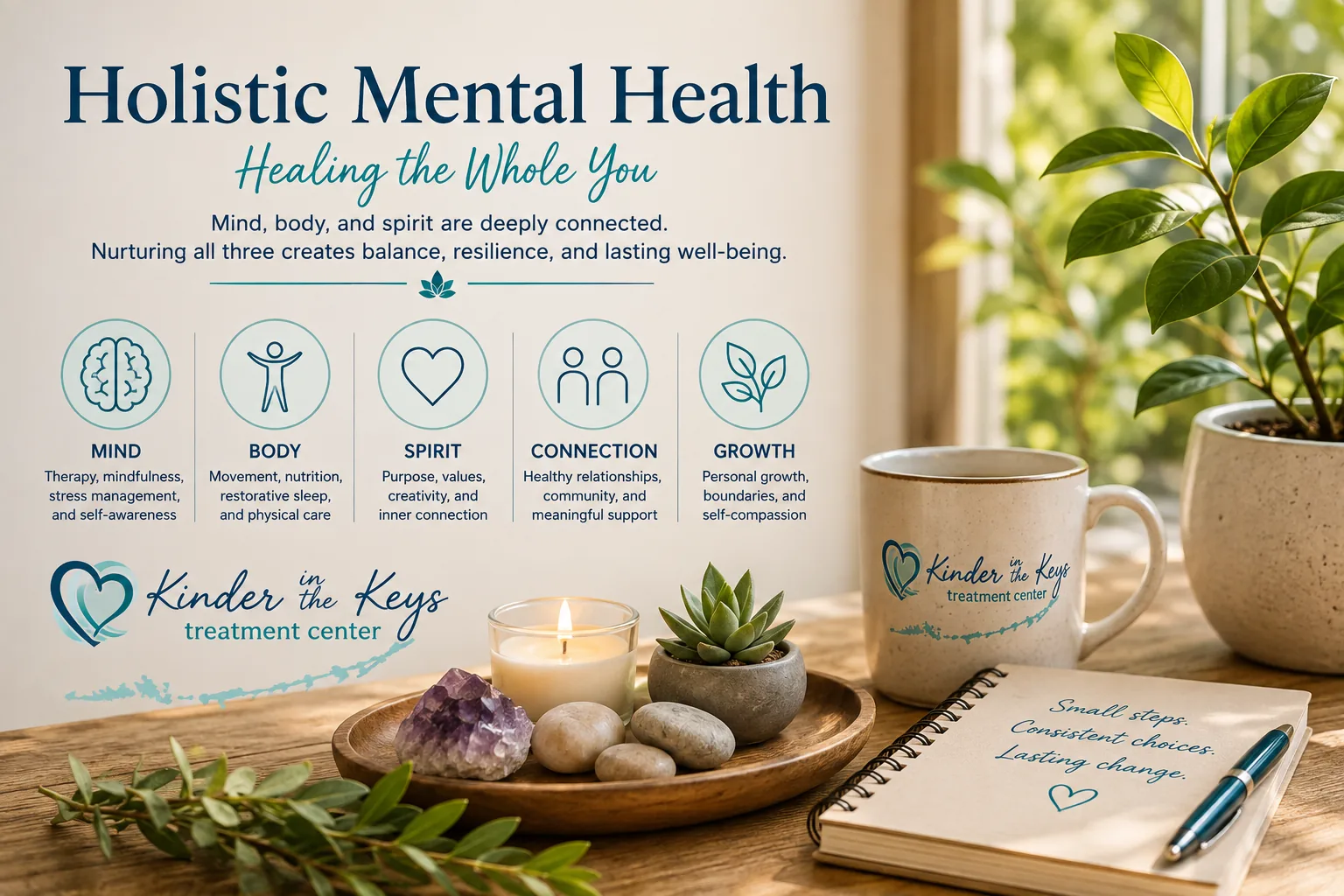
Stress can affect sleep, appetite, muscle tension, concentration, digestion, and energy. Poor sleep can make emotional regulation more difficult. Chronic anxiety may create physical sensations that then increase fear. Trauma can affect how a person responds to perceived threats long after the original danger has passed.
Likewise, improvements in physical routines, sleep, social connection, and coping skills can support the work being done in psychotherapy.
This is one reason a holistic approach to mental health can be valuable: it gives clinicians and patients a wider view of the factors maintaining distress and the resources that may support recovery.
Who May Benefit From a Holistic Approach to Mental Health?
Whole-person care can be useful across many mental health conditions because virtually everyone is affected by more than symptoms alone.
It may be particularly valuable for women experiencing:
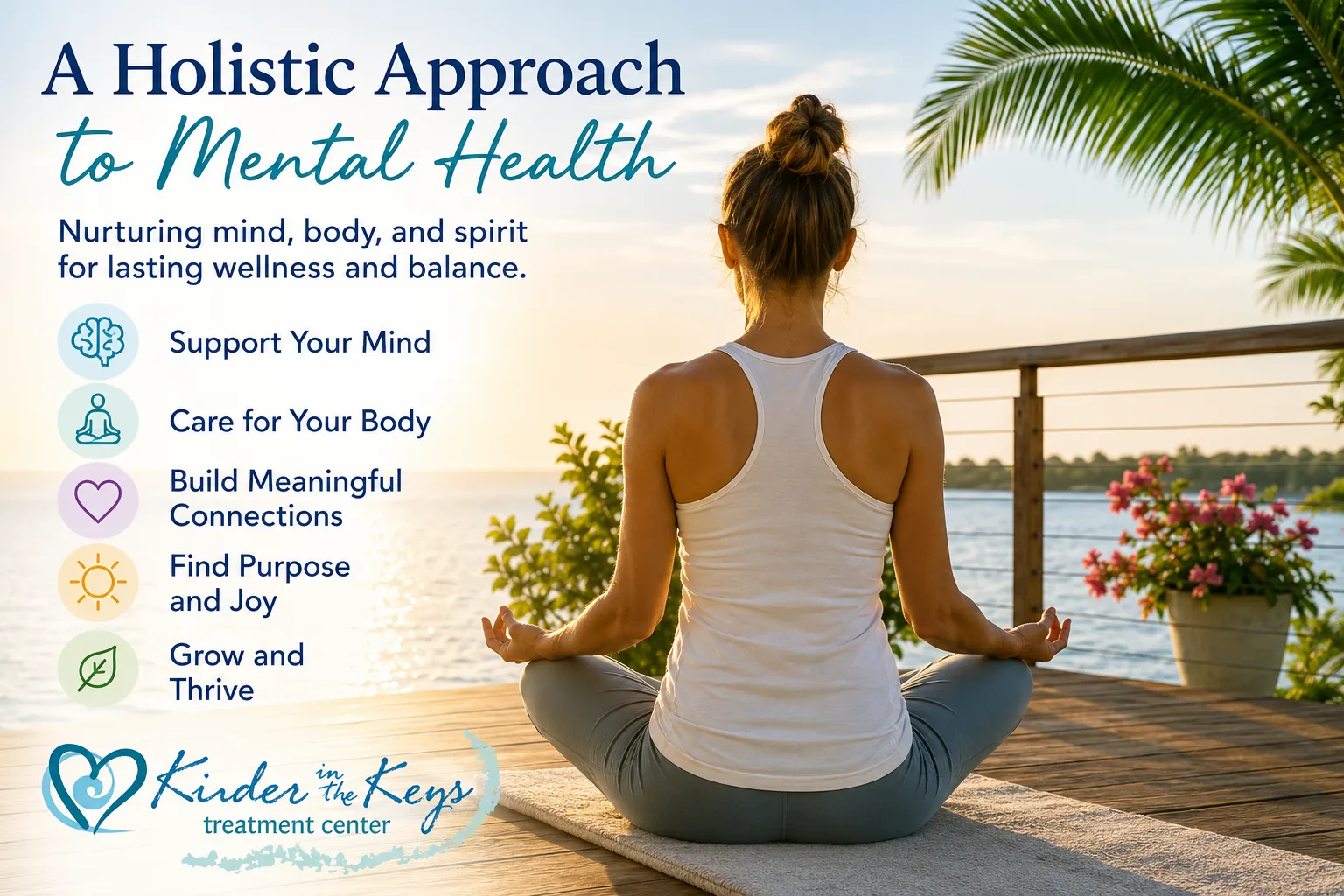
Depression
Trauma-related difficulties
Chronic stress
Relationship trauma
Narcissistic abuse
Significant sleep disruption
Co-occurring emotional and physical-health concerns
The specific components of treatment should always depend on the individual’s clinical needs rather than on a predetermined package of “holistic” therapies.
What Holistic Mental Health Treatment Looks Like at Kinder in the Keys
At Kinder in the Keys, treating the whole person does not mean replacing clinical care with alternative treatments. It means recognizing that meaningful recovery often requires attention to more than symptoms.
Our holistic approach to mental health combines evidence-based clinical care with attention to the broader factors that influence a woman’s well-being.
Women in our residential mental health program participate in individual therapy and daily therapeutic groups while also having opportunities to address the broader areas that influence their well-being.
Treatment can incorporate psychotherapy, psychiatric and medical oversight when appropriate, healthy nutrition, movement, experiential activities, stress-management skills, relationship work, and the development of healthier daily routines.
Our small treatment environment also allows clinicians to know the women they are treating as individuals rather than simply as diagnoses.
The objective is not merely to help someone feel better while she is in treatment. It is to help her understand the patterns affecting her mental health and develop skills and routines she can continue using after she leaves.
When Is Residential Mental Health Treatment Appropriate?
Not everyone who wants a holistic approach needs residential treatment.
Outpatient therapy may be appropriate when a person is functioning safely in daily life and symptoms can be effectively managed while living at home.
Residential mental health treatment may be worth considering when symptoms have become difficult to manage in the person’s usual environment, outpatient treatment has not provided sufficient improvement, daily functioning has significantly declined, or a more structured and immersive level of care is clinically appropriate.
Residential treatment provides something that an occasional therapy appointment cannot: time and space to focus intensively on recovery while practicing new skills within a structured therapeutic environment.
The appropriate level of care should always be based on clinical need and safety.
Questions to Ask When Considering Holistic Mental Health Treatment
The word “holistic” is used very broadly, so it is important to look beyond the label when evaluating a program or provider.
Consider asking:
Are licensed mental health professionals providing treatment?
Are evidence-based therapies available?
How are treatment plans individualized?
Is psychiatric or medical care available when needed?
How does the program address physical health, sleep, nutrition, and movement?
Are complementary practices optional and clinically appropriate?
How does the program measure progress?
What happens if symptoms worsen?
How does the program prepare clients for continued care after discharge?
A program should be able to explain not only what it offers, but why those services are clinically appropriate.
A Whole-Person Approach to Recovery
Mental health treatment should never reduce a woman to a diagnosis.
A holistic approach to mental health recognizes the complexity of recovery. Thoughts, emotions, physical health, relationships, behaviors, environment, and life experiences can all influence how someone feels and functions.
Addressing those areas together does not mean abandoning science or evidence-based treatment. Done responsibly, it means using evidence-based mental health care within a broader understanding of the person receiving it.
At Kinder in the Keys, our goal is to help women understand what is contributing to their distress, address the patterns that keep them stuck, and develop healthier ways of living that can continue beyond residential treatment.
If mental health symptoms are interfering significantly with daily life or outpatient treatment has not been enough, a comprehensive residential program may provide the structure and support needed to focus more fully on recovery.
Frequently Asked Questions
What is a holistic approach to mental health?
A holistic approach to mental health considers emotional symptoms together with physical health, sleep, nutrition, relationships, stress, lifestyle, environment, and other factors that may influence well-being. It combines this whole-person perspective with appropriate clinical mental health treatment.
Is holistic mental health treatment evidence-based?
It can be. Responsible holistic treatment uses evidence-based psychotherapy, psychiatric care, and medical care when appropriate while also addressing lifestyle and wellness factors that can support recovery. The term “holistic” alone does not guarantee that a treatment is evidence-based.
Does holistic treatment mean avoiding medication?
No. Medication may be an appropriate part of treatment for some mental health conditions. A holistic approach considers medication within the person’s broader treatment plan rather than automatically rejecting or requiring it.
Can exercise and nutrition treat depression or anxiety?
Exercise, adequate nutrition, sleep, and other healthy routines can support mental and physical well-being and may improve some symptoms. They should not be considered substitutes for professional treatment when a mental health disorder requires clinical care.
Is spirituality required in holistic mental health treatment?
No. Spirituality may be meaningful to some individuals and irrelevant to others. Whole-person treatment should respect the individual’s beliefs and values rather than impose spiritual practices.
How do I know whether I need residential treatment?
Residential treatment may be appropriate when symptoms significantly interfere with daily functioning, outpatient treatment has not been sufficient, or a structured and immersive level of care is clinically indicated. A qualified mental health professional can help determine the appropriate level of care.
Medically Reviewed By
Dr. Laura Tanzini, DrPH, LMFT
Doctor of Public Health | Specialty in Lifestyle Medicine
Licensed Marriage and Family Therapist (Florida & California)
Founder & CEO, Kinder in the Keys
Doctoral Research: Dr. Tanzini’s doctoral research at Loma Linda University examined childhood and adult traumatic events, cumulative trauma exposure, gender, forgiveness, life satisfaction, and long-term well-being.
This article has been clinically reviewed for accuracy and consistency with current behavioral health and trauma-informed care principles. Content is intended to provide general educational information and should not replace individualized evaluation, diagnosis, or treatment by a qualified healthcare professional.
Medical Disclaimer
The information provided in this article is for educational and informational purposes only and is not intended as medical advice, diagnosis, or treatment. Mental health needs vary by individual. If you are experiencing symptoms of a mental health condition, consult a qualified healthcare professional who can evaluate your individual circumstances.