
Recovering from narcissistic abuse does not look the same for every woman. Some women begin feeling more stable once the relationship ends, particularly when they have strong social support, physical safety, financial independence, and healthy ways of coping. Others continue struggling long after the relationship has changed or ended.
So how do you know when what you are experiencing has moved beyond something you can work through with time and support?
The signs you need narcissistic abuse therapy are not simply that you feel sad, angry, confused, or hurt. Those emotions can be understandable responses to a painful relationship.
The greater concern is what happens when symptoms persist, intensify, or begin interfering with your ability to function.
The American Psychological Association similarly recommends considering professional help when emotional difficulties persist despite your efforts, interfere with everyday functioning, or lead to harmful ways of coping.
If you cannot sleep, concentrate, work, maintain relationships, make decisions, regulate your emotions, or feel safe even when the immediate danger has passed, professional mental health treatment may be appropriate.
And not every woman needs the same level of treatment. For some, a support group may provide what she needs. Others benefit from weekly outpatient therapy. Women experiencing more severe symptoms or substantial impairment may need a higher level of care.
Understanding the difference can help you make a more informed decision about what kind of support is appropriate for you.
10 Signs You Need Narcissistic Abuse Therapy
There is no single symptom that determines whether someone needs therapy. Instead, look at the severity, duration, and impact of what you are experiencing.
The following signs may indicate that professional evaluation or treatment would be beneficial.
1. Your Symptoms Are Not Improving With Time
Emotional distress after an abusive or highly dysfunctional relationship is not unusual.
You may initially experience grief, anger, confusion, anxiety, loneliness, or uncertainty about what comes next.
What matters is the trajectory.
Are you gradually beginning to feel more like yourself?
Or do you feel just as overwhelmed—or worse—weeks or months later?
Persistent symptoms do not mean you have failed to recover. They may indicate that your nervous system, emotional health, or psychological functioning needs additional support.
2. Anxiety Is Controlling Your Daily Life
Anxiety becomes more concerning when it begins determining what you can and cannot do.
You may constantly anticipate something going wrong, replay conversations, worry about another person’s reaction, experience panic symptoms, or feel unable to relax even when you are physically safe.
Some women continue living as though they must constantly prepare for conflict.
When anxiety interferes with work, sleep, relationships, decision-making, or ordinary activities, professional treatment may help address the underlying patterns rather than simply managing each anxious moment as it occurs.
3. You Are Constantly on Guard
After prolonged exposure to criticism, unpredictability, intimidation, or manipulation, some women remain highly alert to possible threats.
You may notice subtle changes in people’s voices, facial expressions, or moods. You may automatically prepare for an argument when someone seems irritated. You might startle easily or have difficulty relaxing around other people.
This heightened state of alertness is often called hypervigilance.
Hypervigilance can occur in several psychological contexts and does not by itself mean someone has PTSD. But when it persists and substantially affects everyday life, it deserves attention.
4. You No Longer Trust Your Own Judgment
One of the more damaging consequences of prolonged manipulation or gaslighting can be the erosion of self-trust.
You may find yourself asking other people to confirm decisions you once would have made easily.
You may reread messages repeatedly, wonder whether you misunderstood obvious interactions, or automatically assume that another person’s interpretation is more reliable than your own.
You might know intellectually that the relationship was unhealthy while still questioning whether you somehow caused what happened.
Therapy can help you examine these patterns and begin rebuilding confidence in your own observations, decisions, and boundaries.
5. Depression Is Affecting Your Ability to Function
Feeling sad after loss or abuse is not automatically a depressive disorder.
The concern increases when low mood becomes persistent and is accompanied by changes such as:
Loss of interest in activities you previously enjoyed
Significant changes in sleep
Difficulty concentrating
Withdrawal from other people
Loss of motivation
Feelings of hopelessness or worthlessness
Difficulty completing normal responsibilities
Significant changes in appetite or energy
When depression begins interfering with your ability to function, professional assessment is appropriate.
6. You Are Avoiding More and More of Your Life
Avoidance can provide short-term relief from distress.
You may avoid certain places, conversations, relationships, activities, or situations because they remind you of what happened or make you feel vulnerable.
But avoidance can gradually make your world smaller.
You may stop dating because trusting anyone feels impossible. You may avoid conflict entirely because disagreement feels dangerous. You might distance yourself from friends, family, work opportunities, or activities that once mattered to you.
When avoiding discomfort begins preventing you from living the life you want, therapy may help you address what is driving that avoidance.
7. Your Relationships Continue to Be Affected
Narcissistic abuse can affect relationships long after the original relationship has ended.
You may struggle to trust people who have done nothing to harm you.
You may tolerate poor boundaries because saying no feels dangerous.
Or you may move in the opposite direction and become so guarded that emotional intimacy feels impossible.
Some women find themselves repeatedly entering relationships with familiar dynamics even though they consciously want something different.
These patterns are not evidence that you are destined to repeat the past. But they can be important signals that unresolved experiences are continuing to influence present relationships.
The long-term effects of narcissistic abuse can continue influencing trust, self-esteem, and relationships after the original relationship has ended.
8. You Are Using Alcohol, Drugs, or Other Behaviors to Cope
Coping strategies often develop because they provide temporary relief.
Alcohol, drugs, compulsive eating, excessive exercise, shopping, gambling, overworking, or other behaviors may temporarily numb difficult emotions.
The concern is when a coping behavior becomes increasingly necessary to get through the day, regulate emotion, sleep, socialize, or avoid thinking about what happened.
Increasing reliance on substances or other potentially harmful coping strategies is a reason to seek professional evaluation.
9. Trauma-Related Symptoms Are Interfering With Your Life
Some women experience intrusive memories, nightmares, emotional numbing, avoidance, hypervigilance, exaggerated startle responses, or other trauma-related symptoms after abusive relationships.
These symptoms do not automatically mean you have PTSD.
Learn more about the connection between narcissistic abuse and PTSD.
Post-traumatic stress disorder is a specific diagnosis with established criteria, and a qualified mental health professional should determine whether those criteria are met.
What matters for purposes of seeking help is whether trauma-related symptoms are persistent, distressing, and interfering with your functioning.
If they are, an evaluation can help determine what you are experiencing and what treatment may be appropriate.
10. You Know You Are Safe, but Your Body and Mind Do Not Feel Safe
Sometimes the circumstances have changed before the internal response has.
The relationship may have ended.
You may have moved.
Contact may have stopped.
You may objectively know that the immediate threat is gone.
And yet your body still reacts as though something is about to happen.
You may remain tense, restless, easily startled, unable to sleep, emotionally reactive, or unable to settle.
When your internal sense of danger continues despite changed circumstances, treatment may help your psychological and physiological responses begin adjusting to the reality that exists now.
Support Group, Outpatient Therapy, or a Higher Level of Care?
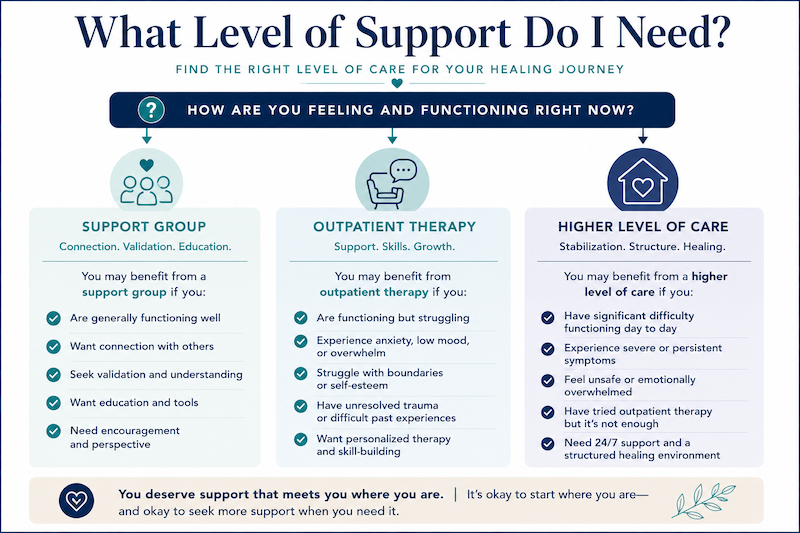
SAMHSA describes different levels of behavioral health care, including peer support, outpatient treatment, intensive outpatient or partial hospitalization, inpatient care, and residential treatment.
Recognizing the signs you need narcissistic abuse therapy does not automatically mean you need residential treatment.
Different levels of support serve different purposes.
When a Support Group May Be Enough
A narcissistic abuse support group may be helpful when you are generally functioning well but want:
Connection with people who understand
Validation and shared experience
Education about unhealthy relationship dynamics
Encouragement
Reduced isolation
Community during recovery
Support groups can be extremely valuable.
But they are not substitutes for individualized clinical treatment when significant mental health symptoms are present.
If you are considering peer support, our guide to finding a narcissistic abuse support group explains what to look for and the difference between support groups and professional therapy.
When Outpatient Therapy May Be Appropriate
Weekly or regular outpatient therapy may be appropriate when you are able to maintain reasonable day-to-day functioning but continue struggling with issues such as:
Anxiety
Depression
Boundaries
Self-esteem
Relationship patterns
Trust
Emotional regulation
Trauma-related symptoms
Decision-making
Processing what happened
Outpatient treatment allows you to continue living at home, working, caring for family, and managing other responsibilities while receiving professional mental health care.
For many women, that is an appropriate level of treatment.
When a Higher Level of Care May Be Appropriate
A higher level of care may be considered when symptoms are severe enough that ordinary daily functioning has become difficult or outpatient treatment has not provided sufficient stability or improvement.
Examples may include:
Severe depression or anxiety
Significant functional impairment
Persistent trauma-related symptoms
Frequent panic
Substantial sleep disruption
Serious difficulty regulating emotions
Increasing reliance on substances or other harmful coping behaviors
Inability to maintain work, relationships, or normal responsibilities
Symptoms that continue despite appropriate outpatient treatment
Multiple mental health concerns occurring simultaneously
The appropriate level of care should be determined individually through clinical assessment.
Residential treatment is not necessary simply because someone has experienced narcissistic abuse.
But for some women whose symptoms have become severe, persistent, or functionally disabling, a structured treatment environment can provide more intensive support than weekly therapy alone.
What Therapy Should Focus On
Effective treatment after narcissistic abuse should not revolve around spending every session analyzing or diagnosing the person who harmed you.
That person may never enter treatment.
You may never receive an explanation that feels satisfying.
And you do not need another person’s diagnosis in order to work on your own recovery.
Treatment should focus on you.
Depending on your needs, therapy may address:
Rebuilding self-trust
Identifying and maintaining boundaries
Anxiety and depression
Trauma responses
Emotional regulation
Relationship patterns
Self-esteem
Grief and loss
Sleep and physical wellness
Decision-making
Reconnecting with interests and relationships
Developing healthier coping strategies
Building a life that is no longer organized around another person’s behavior
That is the distinction between understanding what happened and allowing what happened to remain the center of your life.
You Do Not Have to Wait Until Everything Falls Apart
One common misconception is that therapy is only necessary when someone reaches a crisis.
It is not.
You can seek treatment because you recognize that something is interfering with your life and you want help changing it.
At the same time, experiencing narcissistic abuse does not automatically mean that you need intensive mental health treatment.
The question is not:
“Was what happened to me bad enough?”
A better question is:
“How am I functioning now, and what level of support would help me move forward?”
That shifts the focus away from proving the severity of another person’s behavior and toward evaluating what you actually need.
When Narcissistic Abuse Therapy at Kinder May Be Appropriate
Kinder in the Keys provides residential mental health treatment for women whose symptoms require more support than traditional outpatient care can provide.
Women seeking treatment may be experiencing trauma-related symptoms, anxiety, depression, diminished self-esteem, difficulty regulating emotions, disrupted relationships, or other mental health concerns associated with prolonged unhealthy or abusive relationships.
Treatment is individualized because women do not arrive with identical histories, diagnoses, symptoms, or goals.
Our therapy for narcissistic abuse page explains the treatment approach at Kinder in greater detail, including how care addresses the psychological effects of narcissistic abuse rather than focusing on diagnosing the other person.
Frequently Asked Questions About Narcissistic Abuse Therapy
How do I know if I need narcissistic abuse therapy?
Consider professional evaluation when symptoms are persistent, worsening, significantly distressing, or interfering with your ability to work, sleep, maintain relationships, make decisions, or manage everyday responsibilities.
Does everyone who experiences narcissistic abuse need therapy?
No. People respond differently to abusive or unhealthy relationships. Some recover with time and strong social support, while others benefit from support groups, outpatient therapy, or more intensive mental health treatment.
Do I need PTSD to receive therapy after narcissistic abuse?
No. Therapy is not limited to people with PTSD. Treatment may address anxiety, depression, boundaries, self-esteem, relationship difficulties, trauma-related symptoms, emotional regulation, and other concerns based on individual needs.
Is a narcissistic abuse support group the same as therapy?
No. Support groups generally provide shared experience, connection, education, and encouragement. Therapy is clinical treatment provided by a qualified mental health professional and is designed around an individual’s mental health needs.
Does needing therapy mean I should go to residential treatment?
No. Many people can be appropriately treated in outpatient settings. Residential treatment is a higher level of care that may be considered when symptoms are severe, persistent, significantly impairing functioning, or have not responded adequately to less intensive treatment.
What if I am still in the abusive relationship?
Mental health treatment may be helpful, but safety considerations come first when abuse is ongoing. Domestic violence advocates and other qualified professionals can assist with individualized safety planning and practical resources when appropriate. Decisions about leaving an abusive relationship should account for the person’s individual circumstances and safety.
Medically Reviewed By
Dr. Laura Tanzini, DrPH, LMFT
Doctor of Public Health | Specialty in Lifestyle Medicine
Licensed Marriage and Family Therapist (Florida & California)
Founder & CEO, Kinder in the Keys
This article has been clinically reviewed for accuracy and consistency with current behavioral health and trauma-informed treatment principles. Dr. Tanzini’s clinical work focuses on trauma, PTSD, anxiety, depression, relationship trauma, and women’s mental health.
Medical Disclaimer: This article is provided for educational and informational purposes only and is not a substitute for individualized evaluation, diagnosis, or treatment by a qualified healthcare or mental health professional. The appropriate level of mental health care should be determined based on individual symptoms, functioning, safety, and clinical needs.